Best Decision Spot Alternatives to Optimize Your Supply Chain Network, Inventory, and Transportation
If you are considering Decision Spot (Foresta) alternatives, it may be due to practical modeling and scalability concerns.
Some advanced users note limitations around user-defined costs and custom constraint tables, which can restrict highly bespoke supply chain modeling.
Others point to uncertainty around infrastructure sizing, since server scaling and solver selection are not always automated, creating ambiguity about performance versus cost.
Where It Slows You Down
Complexity Over Speed and Usability
Interface preferences also play a role. While Foresta integrates with external tools like Google Sheets, some users prefer a more intuitive in-platform editing experience.
In addition, companies focused on rapid scenario testing often evaluate how quickly models can be built and adjusted, especially when thousands of what-if analyses are required.
For smaller or mid-sized firms, feature complexity relative to cost can also influence reevaluation decisions.
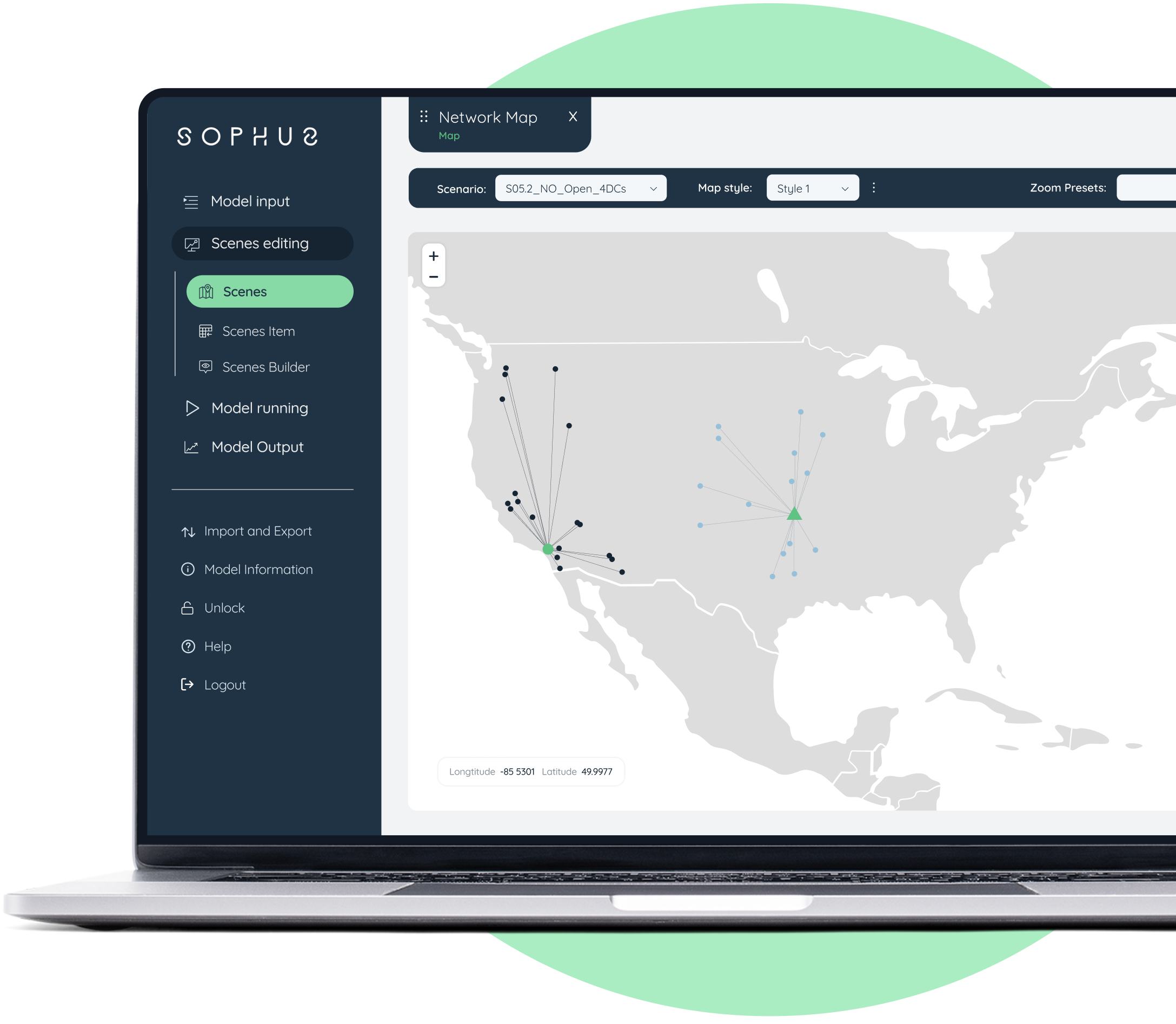
In comparison, Sophus emphasizes mature scalability, no-code configuration, and stable enterprise support.


With faster model construction, built-in data automation, and a modern UI designed for direct in-platform interaction, Sophus provides a more streamlined path to optimizing supply chain network, inventory, and transportation decisions without unnecessary overhead.
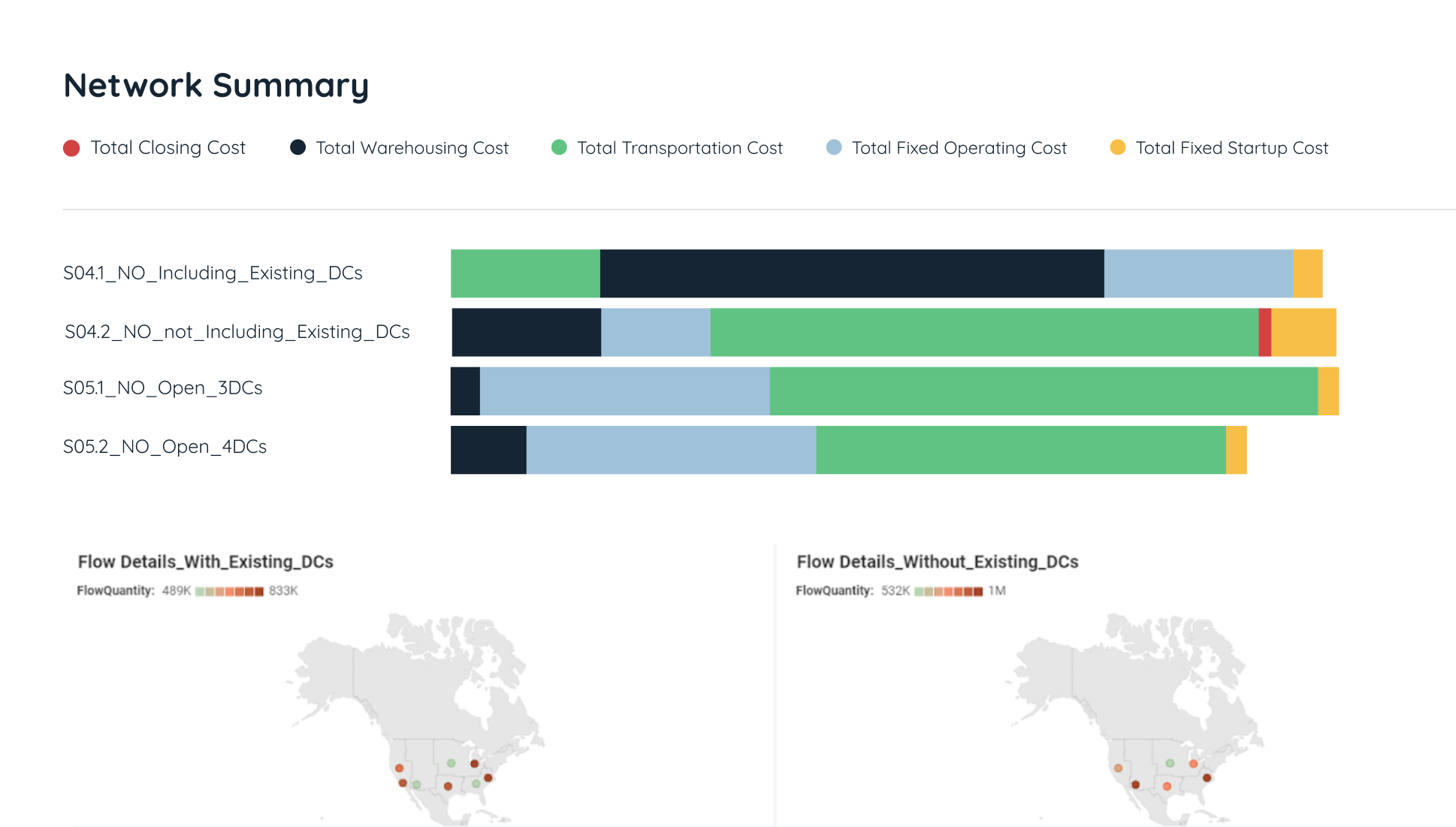
Sophus vs Decision Spot Features for Supply Chain Optimization

Faster Solving Speed
- Issue with Decision Spot:
Large and granular scenarios can require careful infrastructure sizing, and performance may depend on selecting the right virtual machine configuration.
- Sophus Advantage:
Sophus delivers 10–20x faster solving performance compared to traditional network design technologies. Teams can run complex, highly detailed scenarios without splitting models or aggregating data just to make them executable.
Automated Data Pipeline Instead of Manual Data Work
- Advanced modeling in Decision Spot often requires significant manual configuration, and some workflows rely on external tools for heavy data manipulation.
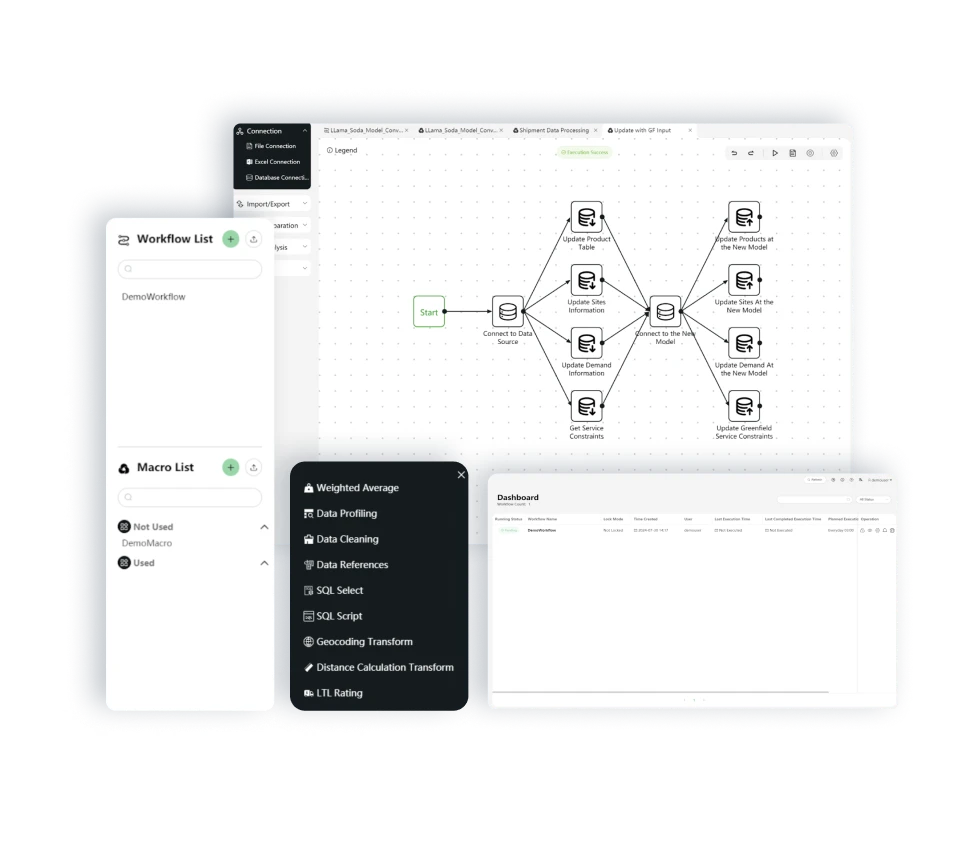
- The Sophus Advantage: Sophus includes Dastro, a built-in automated ETL engine that extracts, cleans, and transforms ERP and operational data automatically. It can refresh your digital twin on a schedule, ensuring decisions are based on current data rather than static snapshots.

Rapid Implementation, Not Extended Configuration
-
The Difference: As a platform built for bespoke app creation, setup can require more technical effort and longer configuration cycles.
-
The Sophus Advantage: Sophus is engineered for rapid baselining. Teams can move from raw data to a fully costed supply chain network map in as little as 48 hours, accelerating time to insight.
Lower Technical Barrier
- Foresta is often positioned as a platform for building custom optimization apps, which can require deeper technical expertise to configure and maintain.
- Sophus Edge: Sophus abstracts mathematical complexity behind a no-code, business-friendly interface. Planners and managers can build and run scenarios without relying on specialized developers.
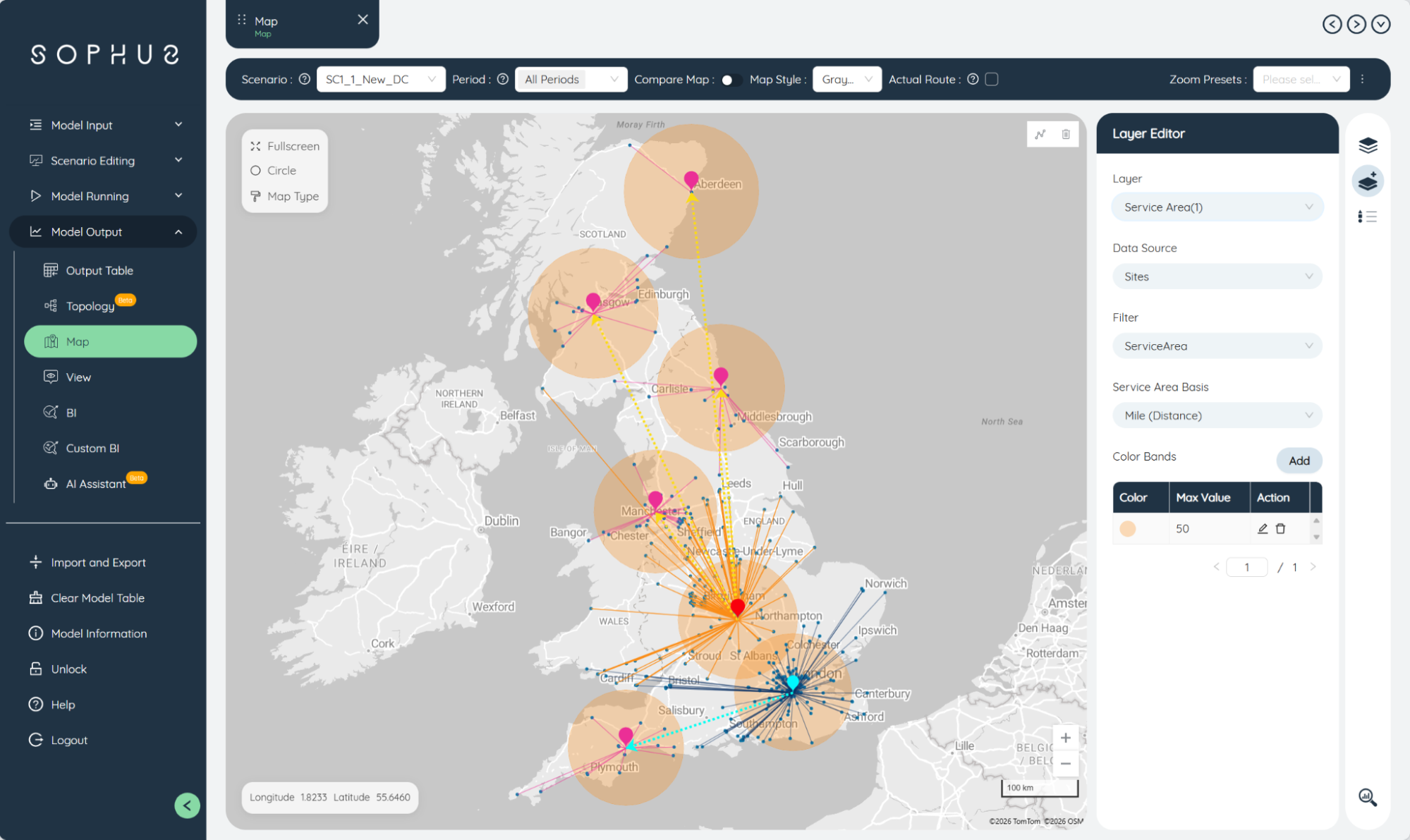
Unified and Intuitive User Experience
-
Issue with Decision Spot:In-table editing and navigation may feel less intuitive to some users, and heavy editing often shifts to Google Sheets integrations.
-
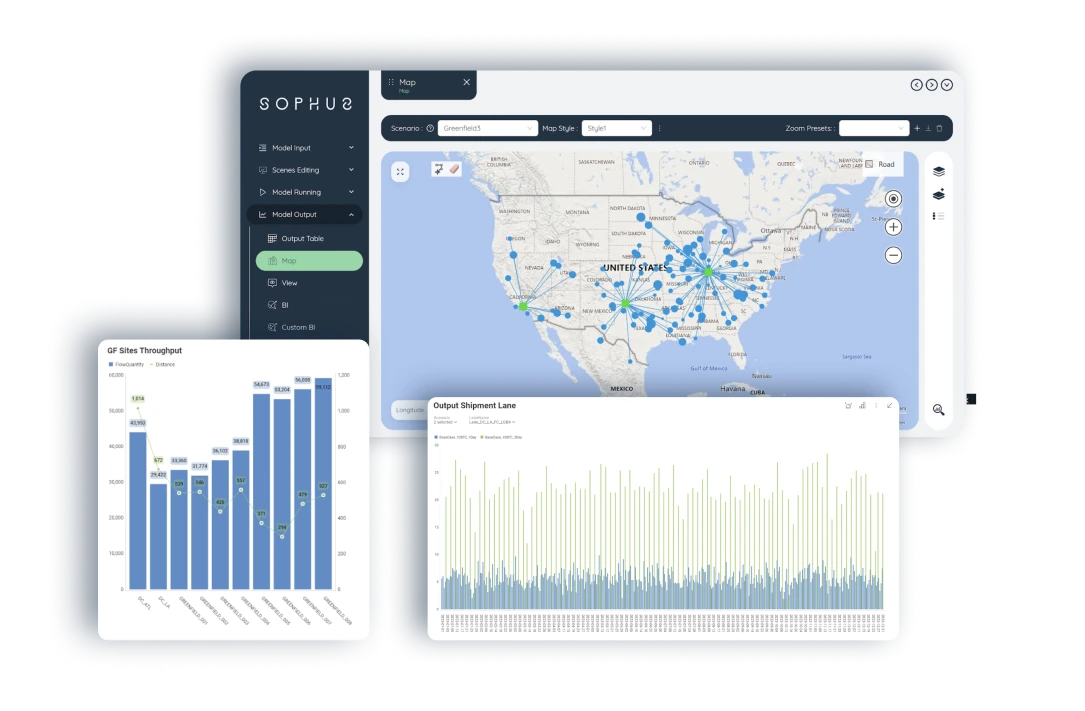
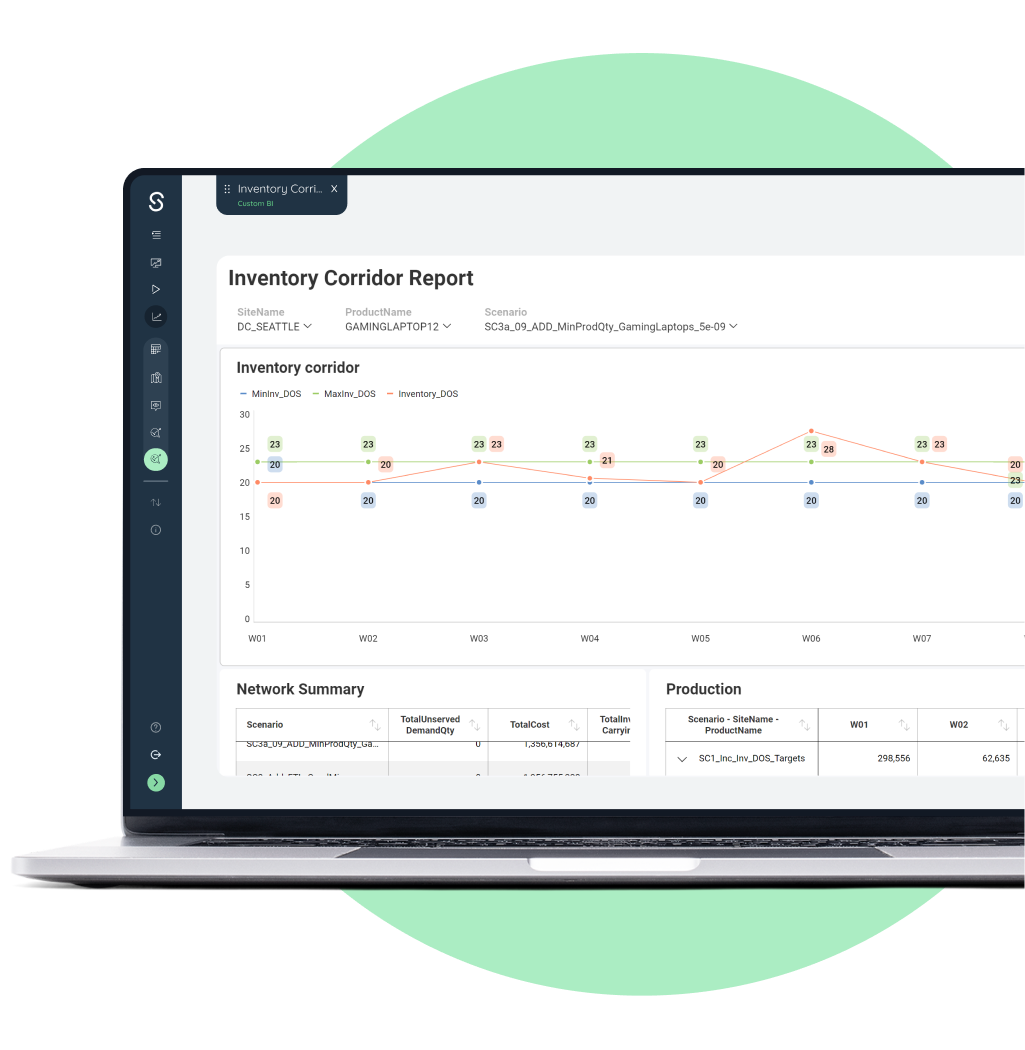
Sophus Advantage: Sophus emphasizes a cohesive, modern UI where modeling, validation, scenario testing, and result analysis happen within one unified environment.
Considering Decision Spot Foresta alternatives?
Sophus stands out as one of the best Decision Spot alternatives by combining extreme solving speed, automated data pipelines, a no-code interface, and direct support helping teams move from complex modeling to confident supply chain decisions without unnecessary technical overhead.
Who Should Stay on Kinaxis
(And Who Shouldn’t)

Decision Spot may be the right fit if teams:
- Need a builder-style environment to create highly customized decision-support applications rather than using structured network design templates.
- Include advanced modelers who prefer manually tuning algorithms and debugging constraints at a granular level.
- Prefer data workflows that are deeply embedded in the Google Sheets and Drive ecosystem, and you rely heavily on that integration.

Sophus is better fit if:
Want a focused platform for network, inventory, or production optimization — without the complexity of managing a full enterprise suite.
Need speed to value, with measurable impact delivered in days, not months.
Prefer a modern, intuitive user experience that planners and decision-makers can adopt quickly.
Require true design-to-plan agility — bridging the gap between strategic network optimization and tactical planning within a single platform.
Value flexible data handling with built-in automation that reduces manual effort.
Are looking for a more affordable, predictable cost structure that scales with usage.
Why Sophus is the Superior Decision Spot Alternative?
Sophus stands out as a leading Decision Spot alternative for organizations that need faster time to insight and less operational friction. With solving speeds up to 20 times faster than traditional approaches, teams can test thousands of what-if scenarios without long execution delays.
Combined with rapid baselining that transforms transactional data into a fully costed network view within 48 hours, Sophus enables companies to move from raw data to confident supply chain decisions far more efficiently.
Sophus stands out as a leading Decision Spot alternative for organizations that need faster time to insight and less operational friction. With solving speeds up to 20 times faster than traditional approaches, teams can test thousands of what-if scenarios without long execution delays.
Combined with rapid baselining that transforms transactional data into a fully costed network view within 48 hours, Sophus enables companies to move from raw data to confident supply chain decisions far more efficiently.
Ready to make the switch?