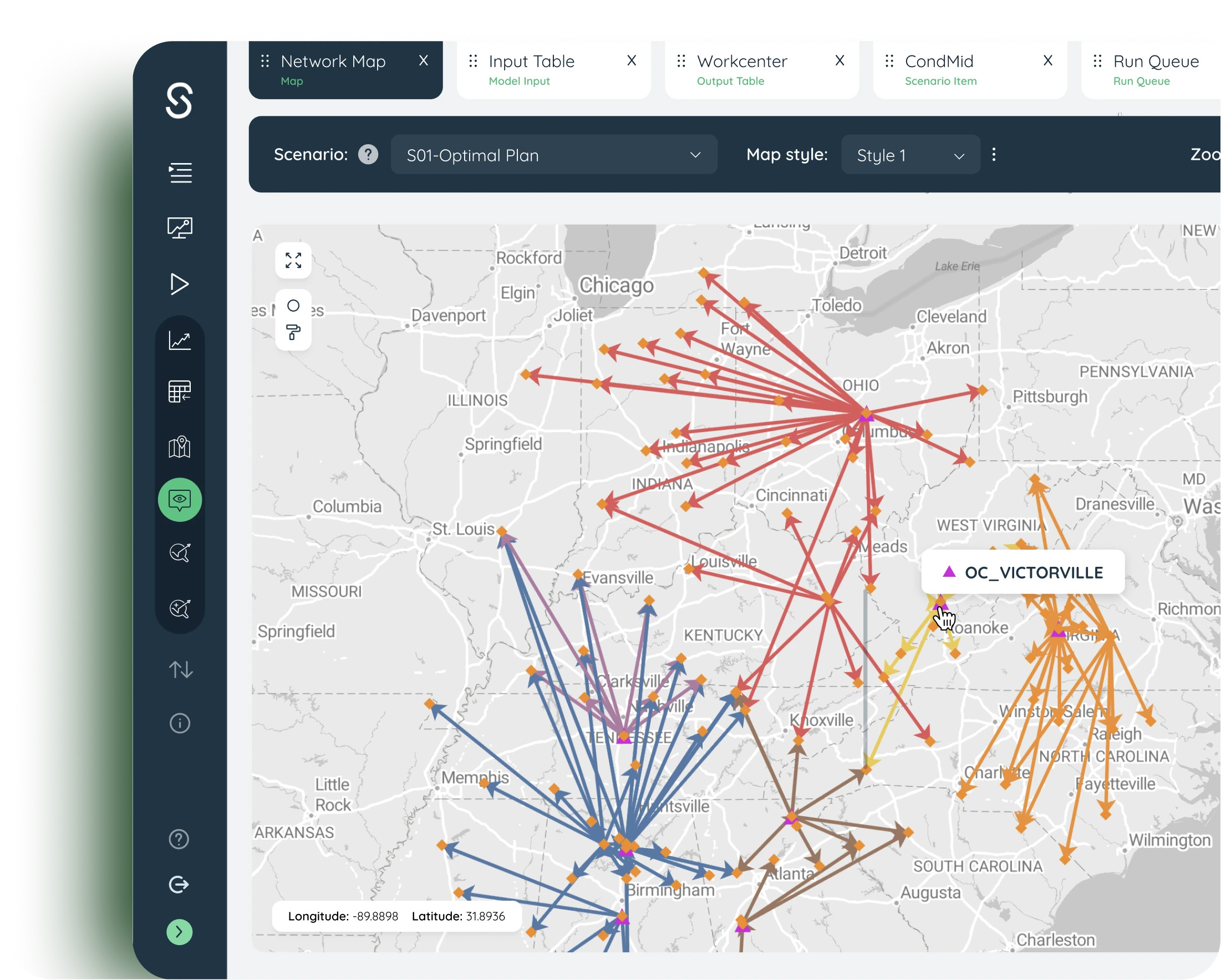

Know What Breaks Your Network Before It Does.
Trusted by Growing Companies at Every Stage of Network Design Maturity








From reactive firefighting to a real plan
Most organizations recognize the risks they can see, hurricanes, labor strikes, weather disruptions, but struggle to act on them because they can’t tell which ones are worth the cost of preparing for.
What if every risk to your network, foreseeable or not, tariff shocks, supplier failures, demand swings, came with a real dollar figure attached, so you knew exactly which ones deserved a response and which didn’t?
That’s what Sophus Supply Chain Risk & Resilience does. It quantifies the financial impact of each risk and models the mitigation options against your actual network, so resilience stops being a guess and becomes a plan.
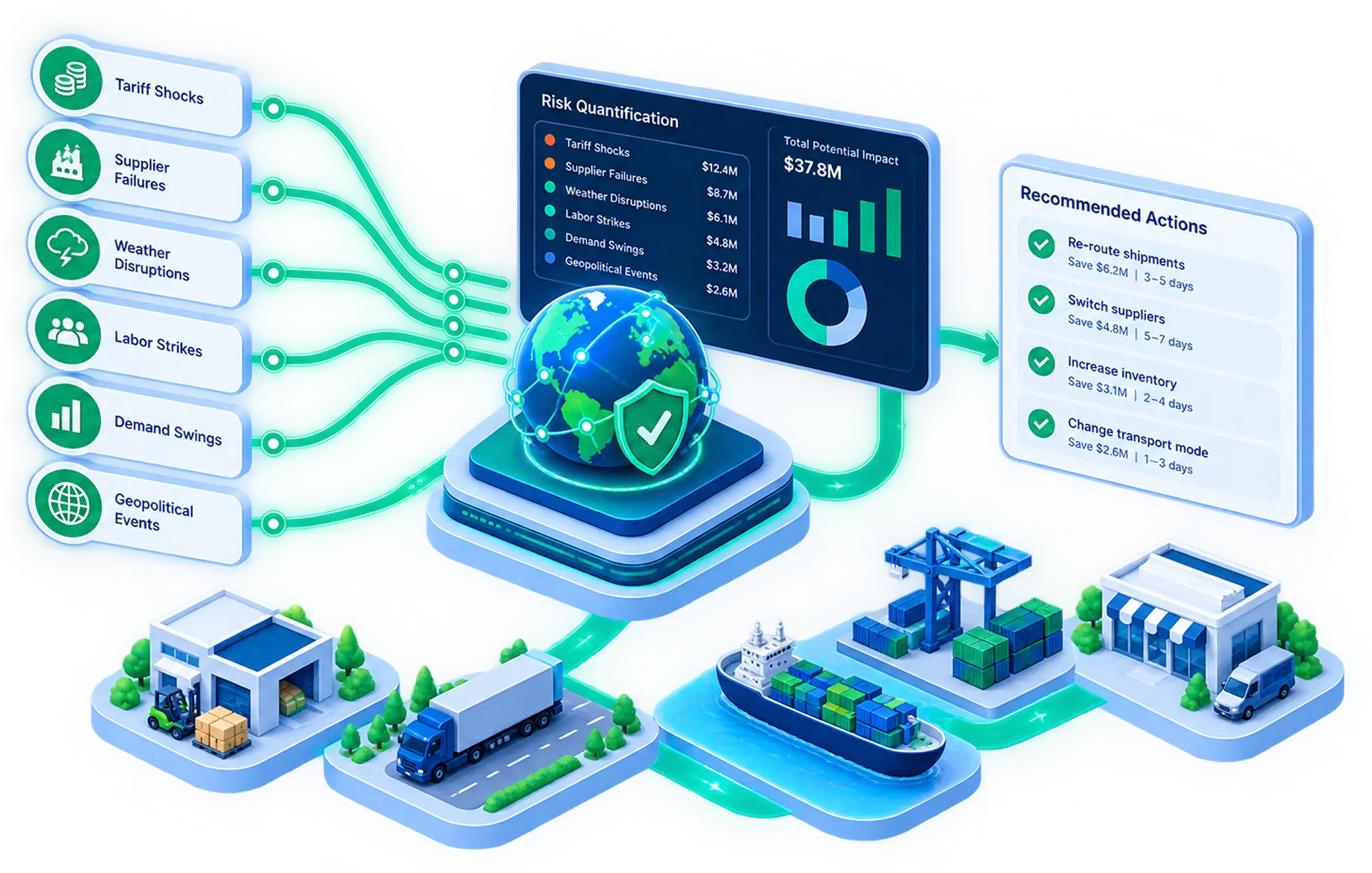
Risk isn’t one thing. It’s four.
A tariff hike changes your landed cost overnight
Geopolitical tension and regulatory shifts can move cost structures without warning.
A key supplier or plant goes down
Strikes, closures, or capacity loss at a single source can cascade through the whole network.
Demand moves faster than the plan assumed
A spike or collapse in demand can strand inventory or leave shelves empty within weeks.
Weather, ports, or geopolitics close a lane
Physical disruptions to a route, port, or region can strand product mid-network.
The Problem
Why resilience keeps getting stuck at “maybe later”

Reactive risk management
Most companies already track the risks they can see: hurricanes, strikes, weather. What stalls them is acting on it, because they can’t tell which risks are actually worth preparing for. Over-prepare and you’ve wasted budget on something that never mattered; under-prepare and one bad week costs a lot more than the prep would have.

Unpredictable external shocks

Balancing cost vs. risk
Not what could go wrong. What to do about it.
Integrated Risk Intelligence
Every risk, quantified against your network
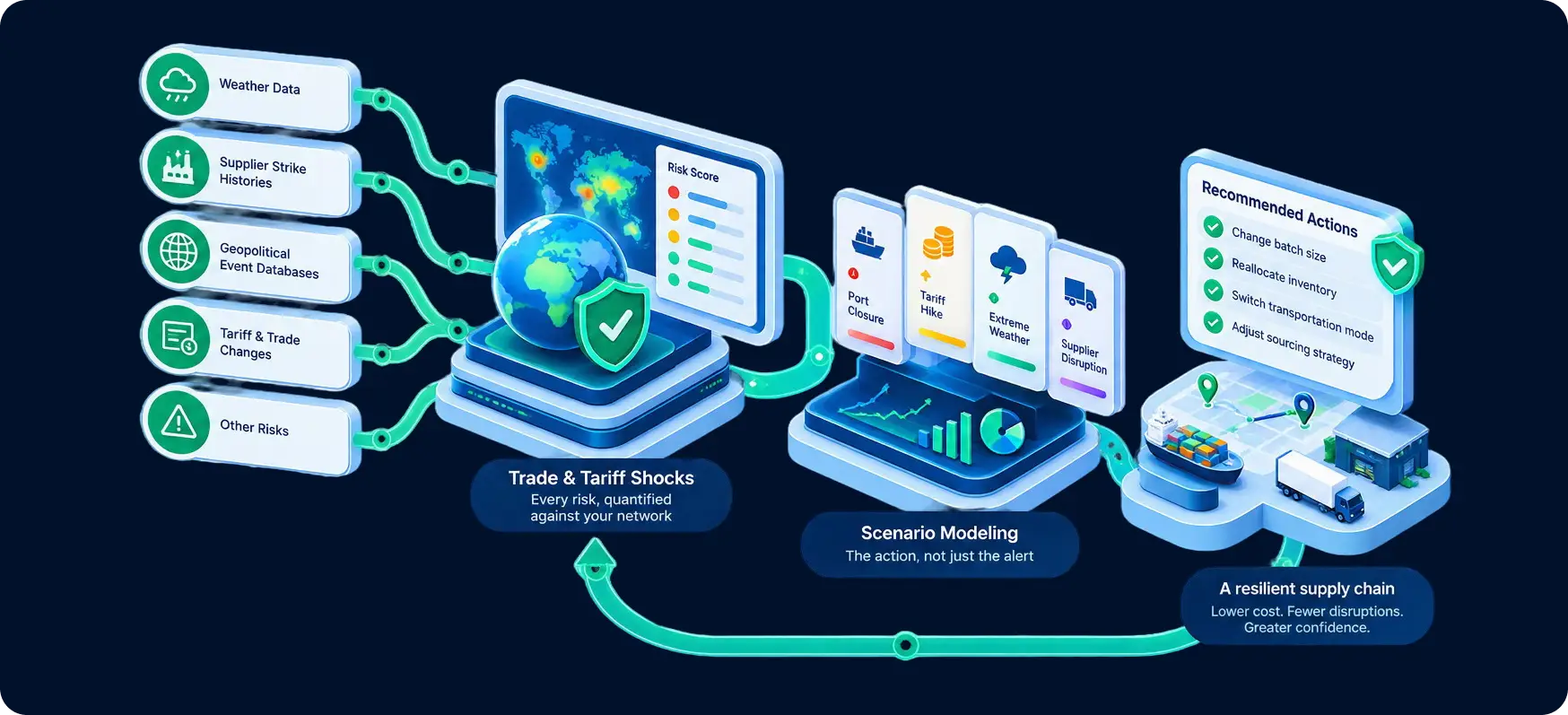
Sophus models both foreseeable and unforeseeable risks, weather data, supplier strike histories, geopolitical event databases, but more importantly quantifies them and aligns them with the supply chain you actually have today.
Scenario Modeling
The action, not just the alert
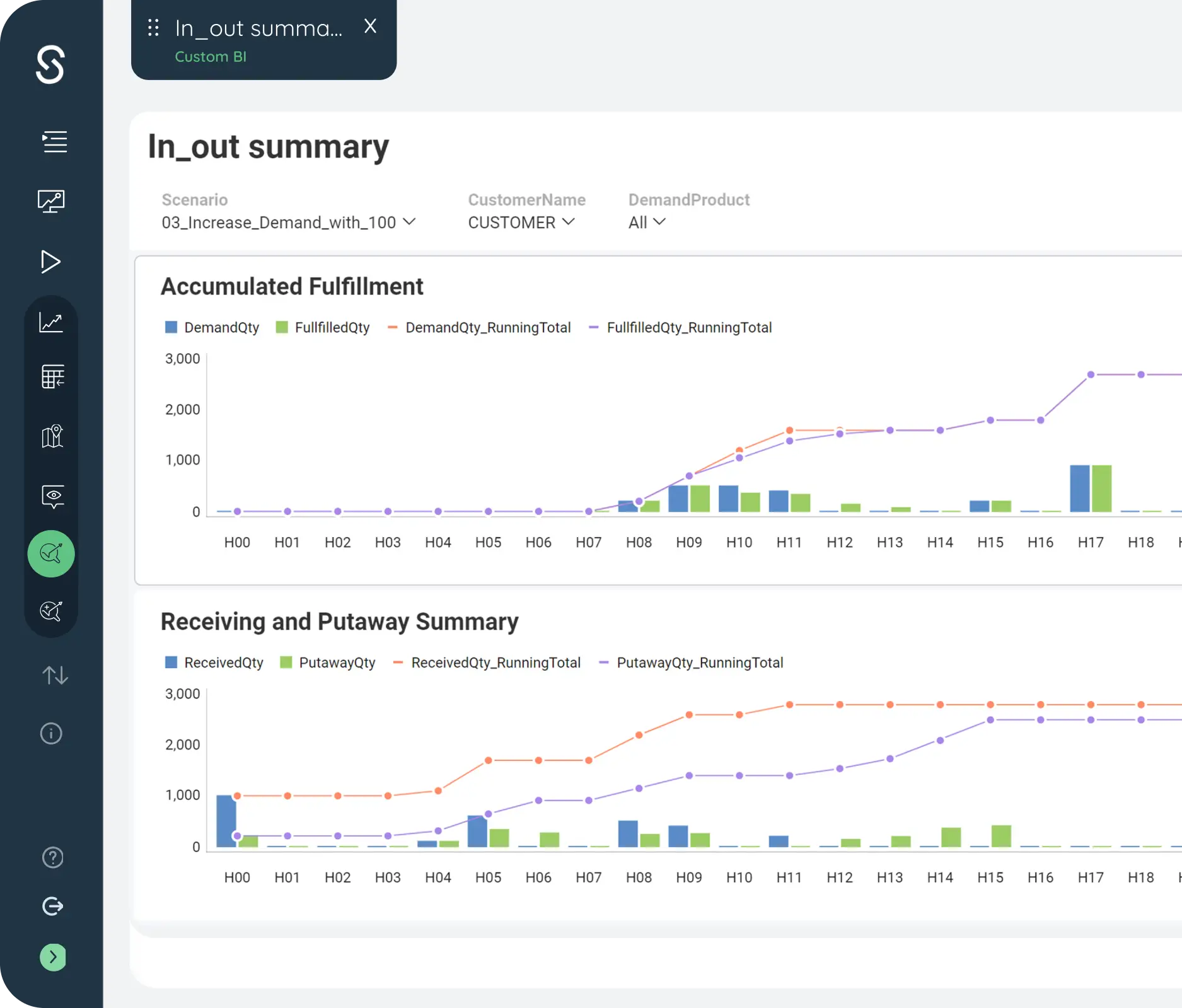
The platform models risk scenarios, like port closures or tariff hikes, and evaluates mitigation options to recommend actions that minimize cost while safeguarding operations. It answers not what risks there will be, but what your supply chain should do about them.
Get real answers to these four questions.
The Real Question
Could your network absorb this?
Four scenarios worth asking about before they happen, not after.
How It Actually Works
From red flag to green light
Step 01
Risk Signal Detected
Weather data, strike histories, and geopolitical event feeds flag a potential disruption.
Step 02 · Dastro
Dastro Consolidates The Data
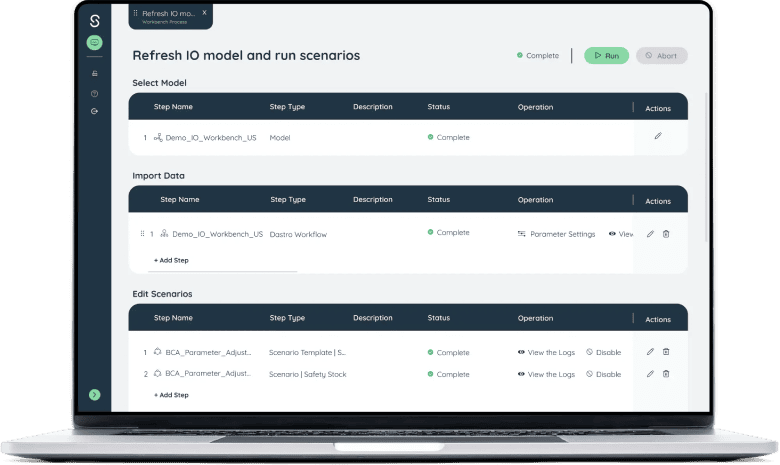
Risk data gets aligned against your current network, cost structure, and supplier base automatically.
Step 03 · Sophus X
Sophus X Recommends The Action
The platform evaluates mitigation options and recommends the one that protects operations at the lowest cost.
FAQs
Ready To Stress-Test Your Network?
Stop finding out what breaks your supply chain after it breaks. Get a real answer on what to do about the risks that actually matter.