
Optimize Your Food & Beverage Supply Chain for Lower Costs and Better Resilience

4.9 ratings on Gartner Peer Insight Reviews









One Model for your Most Complex Decisions
Food and beverage supply chain decisions rarely stay isolated. Increase inventory to prevent stockouts, and you risk more expired product. Consolidate shipments to cut freight costs, and service levels may suffer. Change a supplier or production site, and costs shift across the network.
With fluctuating demand and limited shelf life, spreadsheets cannot keep up, something always gets missed. Sophus connects these decisions so you can optimize the entire chain at once.
Reduce waste
Free up working capital
Your Food and Beverage Supply Chain Challenges Are Bottling Your Growth
Food and beverage supply chain decisions rarely stay isolated. Increase inventory to prevent stockouts, and you risk more expired product. Consolidate shipments to cut freight costs, and service levels may suffer. Change a supplier or production site, and costs shift across the network.
With fluctuating demand and limited shelf life, spreadsheets cannot keep up, something always gets missed. Sophus connects these decisions so you can optimize the entire chain at once.

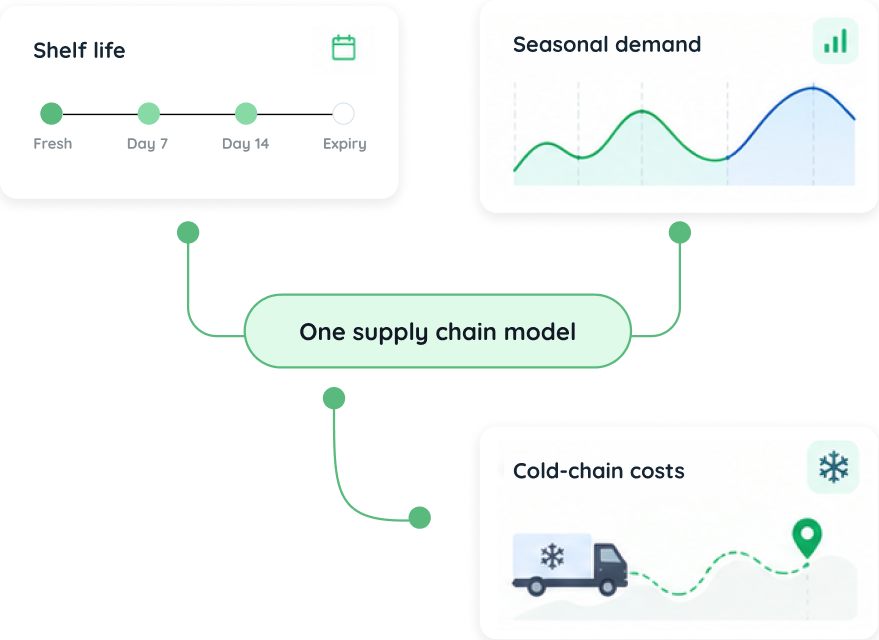
Short shelf lives
Perishable and dated stock forces a constant trade-off between availability and spoilage.
Highly variable demand
Seasonality, promotions, and weather move volumes faster than manual forecasts can track.

Large product portfolios
Many SKUs, pack sizes, and regional variants multiply every planning decision.

Multiple manufacturing sites
Production is split across plants with different capacities, costs, and constraints.

Temperature-controlled logistics
Cold-chain handling adds cost, risk, and rules that general logistics tools ignore.

Supplier and input dependence
Agricultural inputs and single-source ingredients expose the chain to price and supply shocks.
You need better and effective optimization and planning software for your food & beverage supply chain to tackle these challenges. That’s where Sophus helps you.
The Food and Beverage Supply Chain Problems We Help Solve
Most food and beverage supply-chain problems share one root cause: the chain is a set of linked decisions, planned as if the pieces were separate. Here are the seven that cost the most, each matched to the one Sophus capability built to solve it.
- 1. Inventory Optimization
- 2. Demand Forecasting
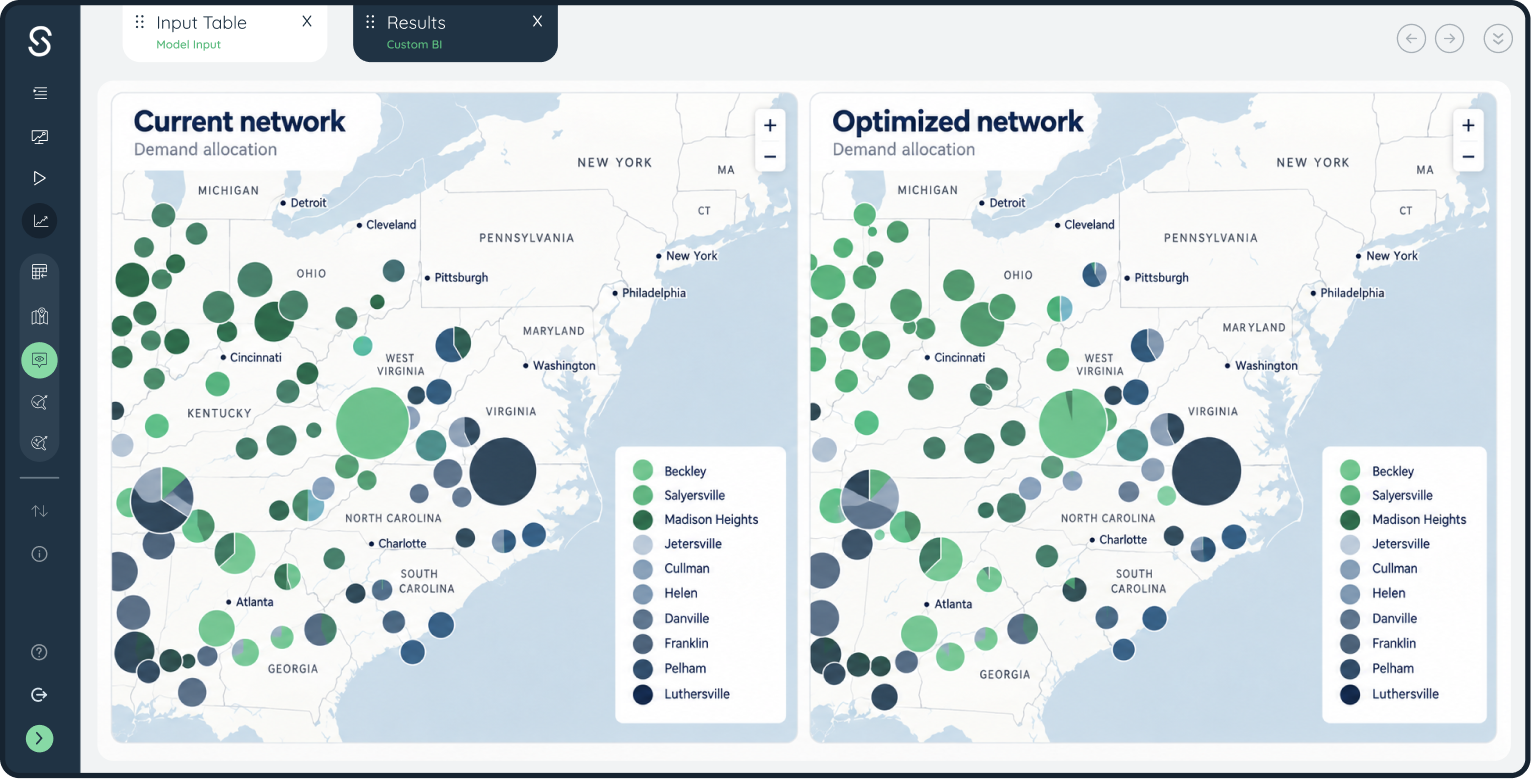
- 3. Distribution Network Optimization
- 4. Supply Chain Risk and Resilience
- 5. Sourcing Optimization
- 6. Production Optimization
- 7. GHG Emission Modeling & Optimization

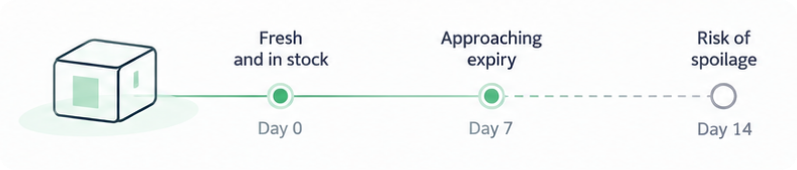
Perishable Inventory, Waste, and Excess Stock

What you're facing

How Sophus helps

Demand Volatility Makes Planning Difficult
What you're facing
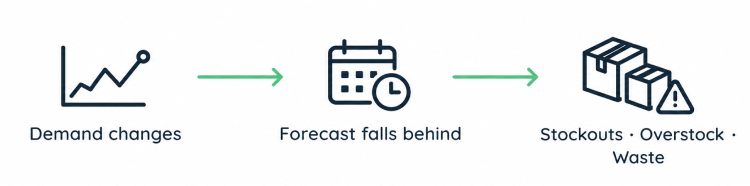
Demand moves with seasons, promotions, launches, and weather. A forecast that was held last quarter is often wrong by the time production runs. The miss shows up downstream as stockouts, excess inventory, and waste.
How Sophus helps

Complex Distribution Networks Drive Up Costs
What you're facing
How Sophus helps

Disruptions Put Supply Continuity at Risk
What you're facing
How Sophus helps

Sourcing Complexity Increases Procurement Costs
What you're facing

How Sophus helps

Production Allocation decisions can drive cost either way
What you're facing

How Sophus helps

Sustainability Goals Must Be Balanced With Cost and Service
What you're facing

How Sophus helps
Optimize the Decisions That Shape Your Food Supply Chain
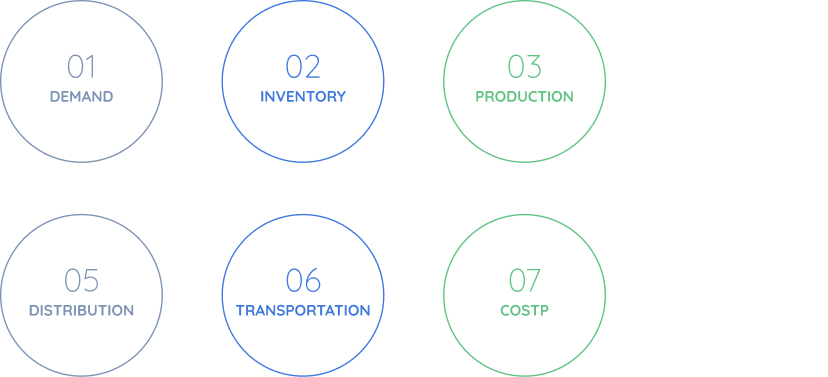
In a food and beverage supply chain, one decision impacts the other. Demand impacts inventory, inventory shapes production, and sourcing and distribution drive both cost and emissions.
Change one and the others move with it, which is why Sophus optimizes them together in a single connected model. With Sophus you can;
Make Better Network Decisions
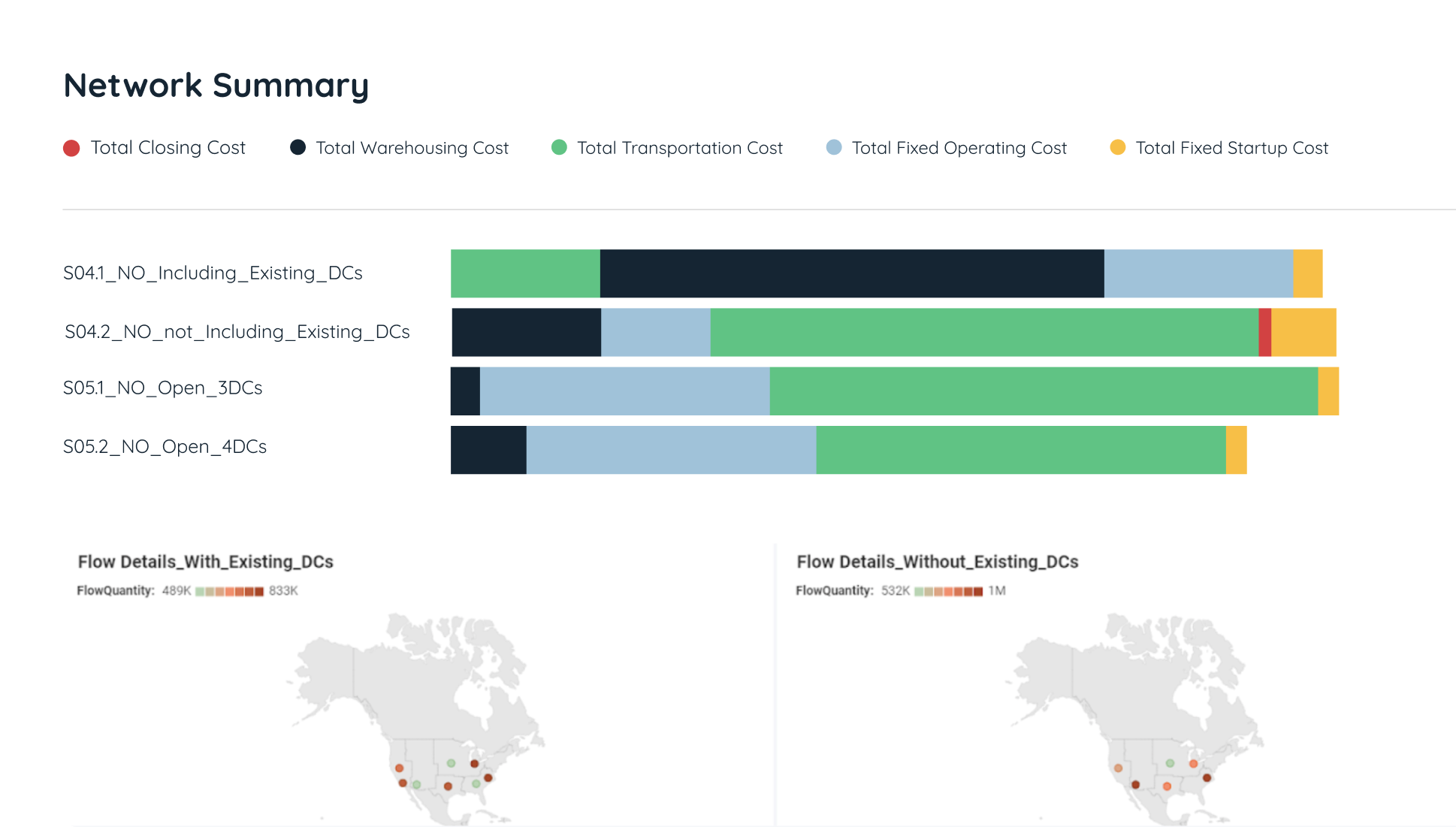
Design and stress-test your network as it grows. Use Supply Chain Network Design and Supply Chain Network Optimization to set the right structure, Greenfield and Brownfield Analysis to weigh new or existing sites, and Rapid Baselining to build the model in hours.
Improve Planning and S&OP
Put commercial and operational plans on one set of numbers. Run Sales and Operations Planning and Supply Network Planning to balance demand against supply, bring Production Optimization in to align what you actually make with that plan, and use Annual Budget Planning and CAPEX Planning to line up spend and investment.

Reduce Logistics and Transportation Costs
Take cost out of the moves you make every day. Use Vehicle Routes Optimization to plan tighter routes, Freight Consolidation to combine shipments, and Cost to Serve to see the true cost of every customer and lane.
Model Your Food & Beverage Supply Chain Before You Make the Decision
Every major decision or disruption starts with a “what happens if?” question. What if you;

Open a new distribution center


Consolidate two facilities

Freight costs rise on a lane

Shift demand to another region

Prioritize lower-emission options
Test the Change Before You Make the Decision
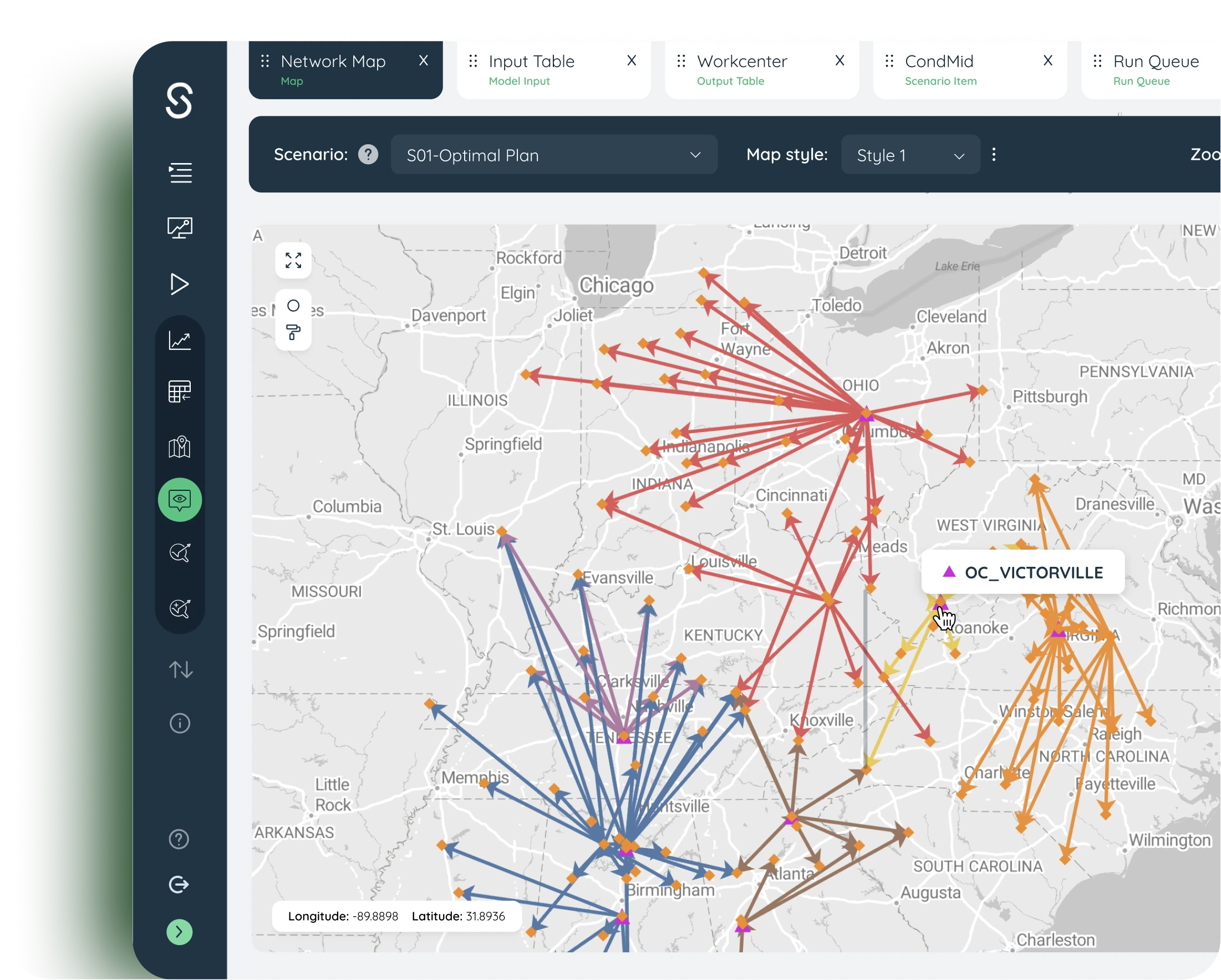
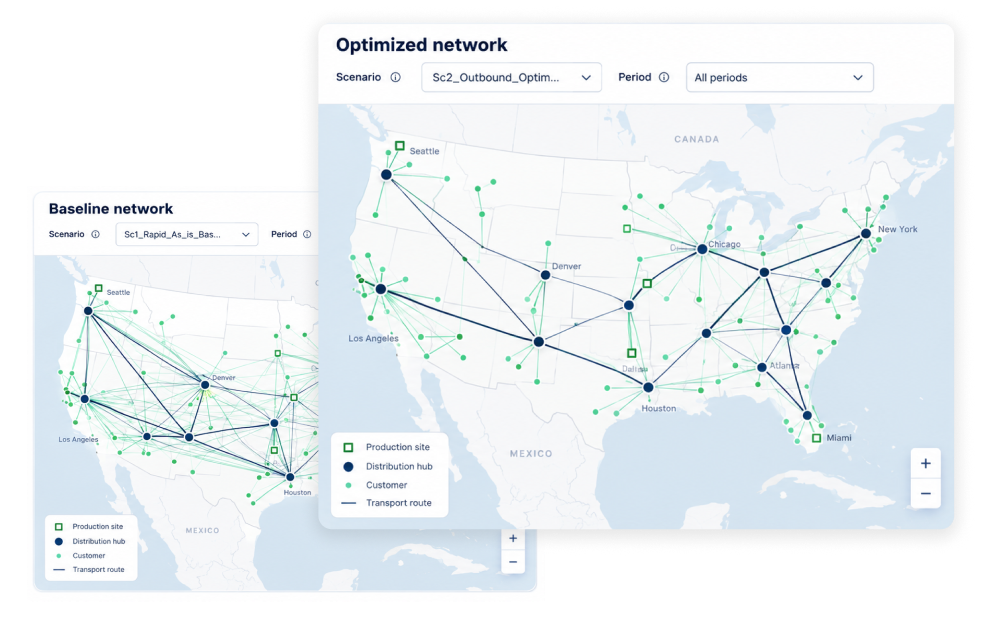
Test each scenario on a working model of your real supply chain. The Supply Chain Network Digital Twin shows how the change affects cost, service, risk, and emissions. Compare scenarios side by side, understand the trade-offs, and make the decision with data.
Turn Better Supply Chain Decisions Into Better Business Results
Growth becomes harder when you cannot see the full impact of your supply chain decisions. Disconnected data and spreadsheets leave teams guessing about costs, inventory, capacity, and demand.
Sophus brings these decisions together in one optimization platform. You get the data and scenarios that help you make better decisions, control costs, and scale your food and beverage business with confidence.
What it costs you today
What you gain with Sophus

Spoilage, write-offs, and cash tied up in stock that may not sell in time.

Forecasts that miss, leaving you short in one region and overstocked in another.

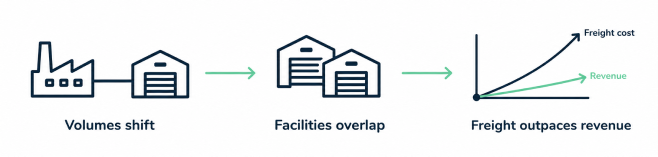
Overlapping facilities and freight cost that grows faster than revenue.

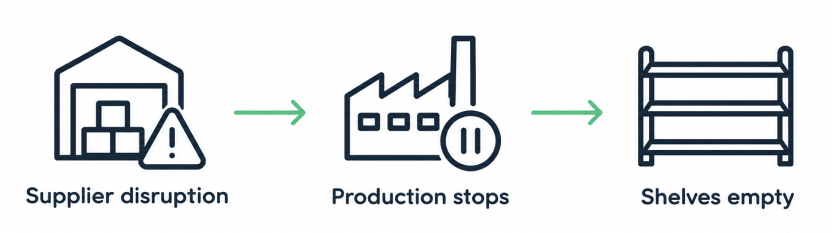
A single supplier or facility failure that can stall production without warning.

Supplier choices made on unit price that quietly inflate true landed cost.

Emissions targets that feel like a tax on service and margin.

Less waste, lower depreciation, and working capital freed for the business.

Steadier supply and inventory decisions that hold up as demand shifts.

A leaner network and lower total delivered cost across facilities and lanes.

Early visibility of weak points and a plan that keeps supply moving.

Sourcing decisions based on total delivered cost, with risk and service in check.

Lower-emission options chosen with cost and service still in balance.
Sophus
One Platform for Your Most Important Supply Chain Decisions
Traditional planning tools help you manage individual parts of the supply chain, but they do not always show how those decisions affect the wider network.
Sophus connects the major decisions across your supply chain, helping you evaluate trade-offs, test scenarios, and choose the option that delivers the best overall outcome.
Connected decisions
Traditional tools
It tells you what to do

It optimizes the entire chain
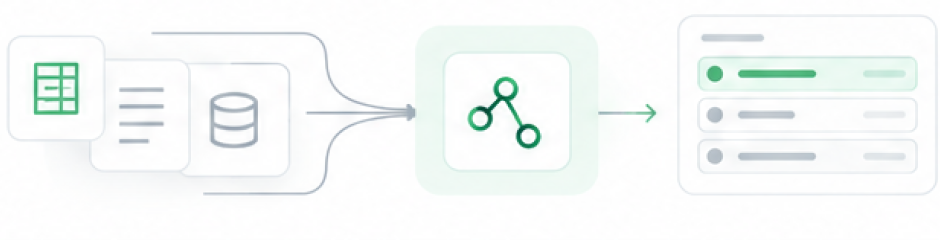
You get a working model in hours
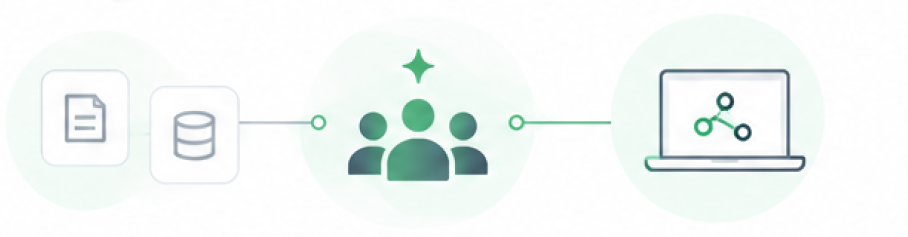
The capability stays inside your team
See the Impact of Sophus in Food and Beverage
Sophus has helped food and beverage companies solve complex supply chain challenges and improve the metrics that matter. These examples show the measurable impact of applying optimization to real planning, inventory, and network decisions.
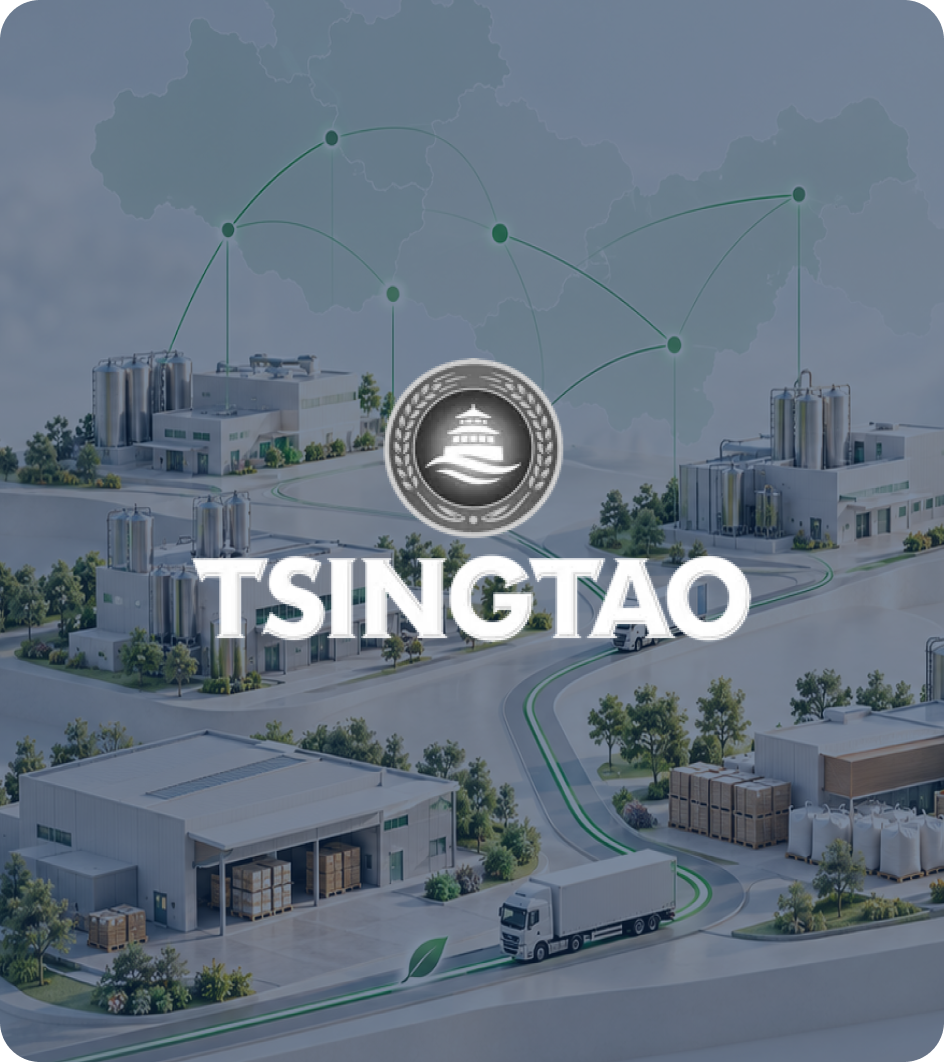
Tsingtao Beer (Qingdao Beer Co.)
Tens of millions saved each year
Planning across 57+ production facilities in 20 provinces was fragmented, and heavy, freshness-sensitive products made logistics decisions costly. Sophus standardized the data and ran end-to-end optimization across production, logistics, and procurement, and cut carbon emissions through better transport choices along the way. The Head of Supply Planning credits the platform with tens of millions in savings annually.
Food distributor, 12-warehouse network
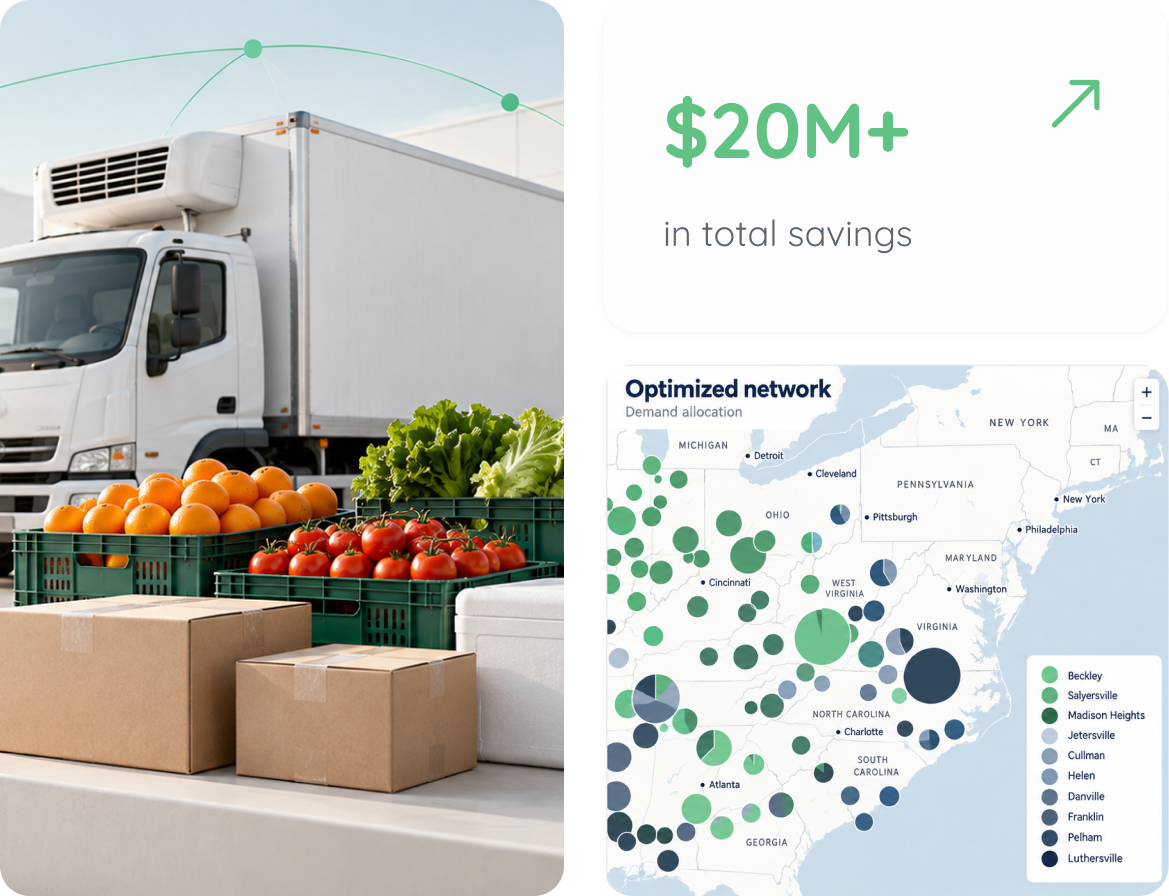
~$10 million in total savings
An “everything, everywhere” stocking policy created stockouts in some regions, overstock in others, and write-downs on premium items. Sophus built a digital twin of the network and redesigned inventory product by product. The result was an 8.8% cut in total supply chain cost, a 30% improvement in inventory turns, and close to $10 million in savings.
Food & Beverage Supply Chain Optimization FAQs
Ready to Optimize Your Food & Beverage Supply Chain?
Model your network, test scenarios, and identify better supply-chain decisions with Sophus.