

Optimize Your Automotive Supply Chain for Resilience, Lower Cost, and Faster Decisions

4.9 ratings on Gartner Peer Insight Reviews









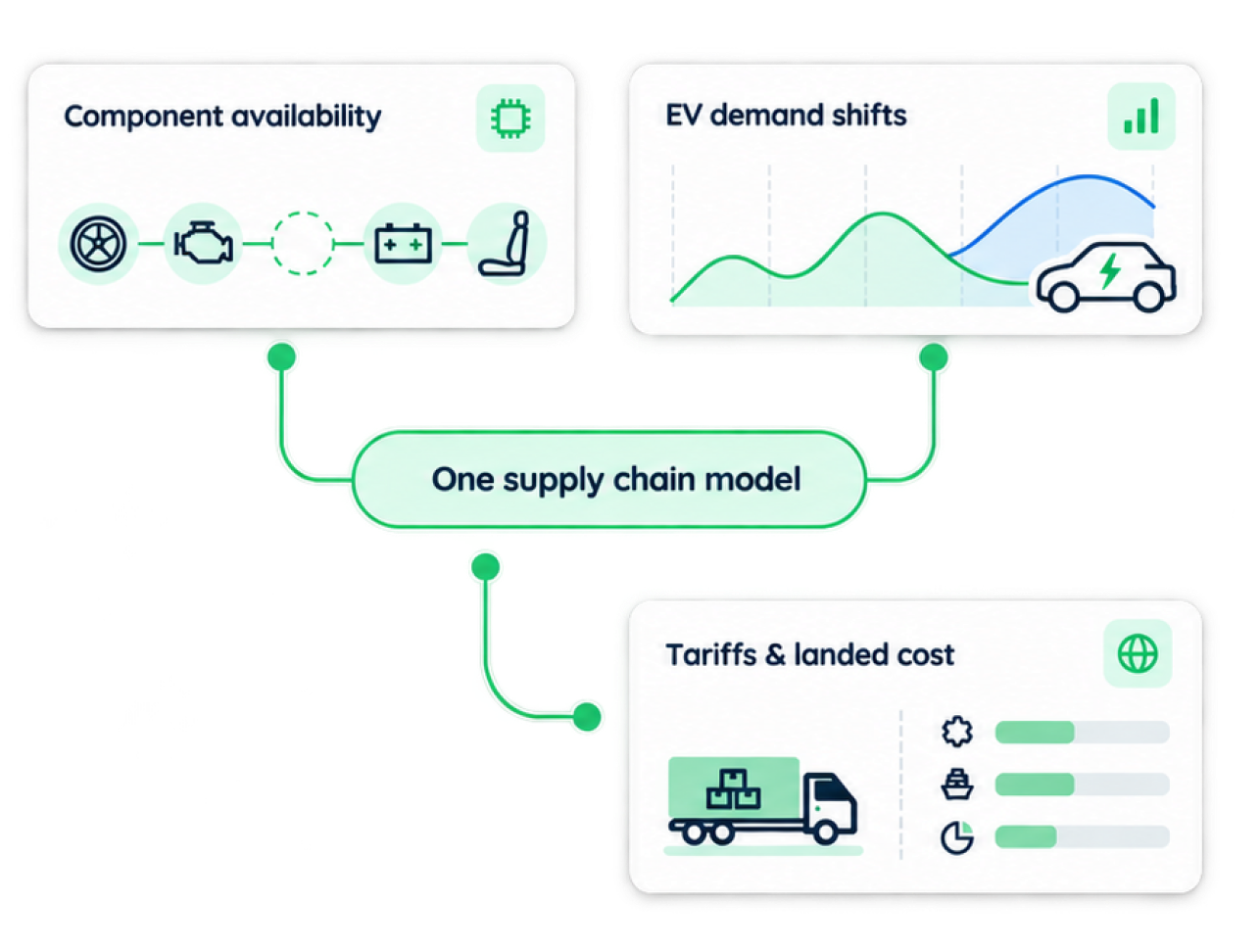
One Model for your Most Complex Decisions
Automotive supply chains run on thousands of parts, hundreds of suppliers, and margins that punish every wrong move. A component shortage, a new tariff, or a demand swing from the EV shift can stall a line or strand capital overnight. Get these decisions right and you protect production, lower landed cost, and free up working capital. Sophus models the whole network, so you’re deciding on data instead of guessing.
Protect Production
Lower landed cost
Automotive Supply Chain Management Has Outgrown the Spreadsheet
An automotive supply chain runs on thousands of parts, hundreds of suppliers, and three or more supplier tiers. Add tariffs, new EV models, and just-in-time delivery, and there are too many moving parts to manage in a spreadsheet. Here is what makes an automotive supply chain so hard to plan:

Deep multi-tier supplier networks
Thousands of parts move through Tier 1, 2, and 3 suppliers, so a problem at one supplier can reach your line.

Global sourcing and tariffs
Parts cross borders, so duty and trade-policy changes affect your landed cost.

Lean and JIT operations
Low inventory keeps costs down, but any supply problem can stop the line.

The EV and model-mix shift
New powertrains and models make last year’s demand a poor guide.

High-value and aftermarket parts
Expensive components and long service commitments tie up working capital.

Finished-vehicle logistics
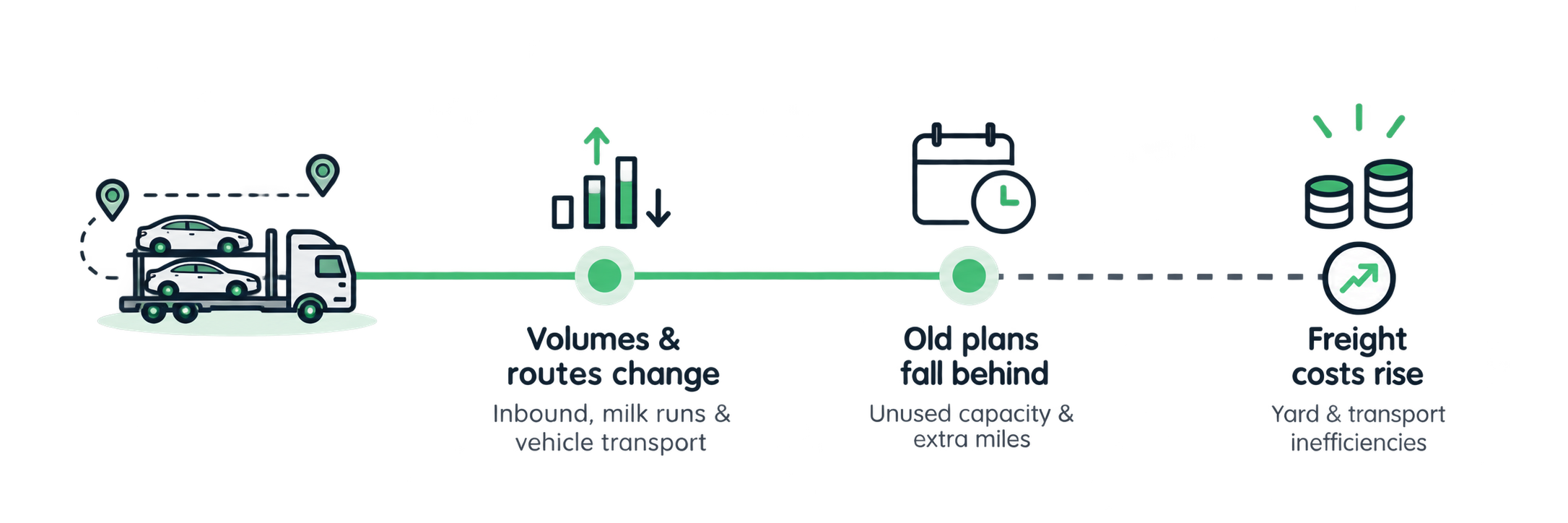
Limited yard space and transport make moving finished vehicles expensive.
Staying ahead of all that takes optimization software built for automotive, not another dashboard. That’s where Sophus comes in.

The Automotive Supply Chain Challenges We Help Solve
Most automotive supply chain problems come back to the same cause: a network of connected decisions, planned in silos. Here are the six that cost the most, each matched to the one Sophus capability built to solve it.
- 1. Supply Chain Risk and Resilience
- 2. Supply Chain Network Design
- 3. Sourcing Optimization
- 4. Demand Forecasting
- 5. Multi-Echelon Inventory Optimization
- 6. Vehicle Routes Optimization

Component Shortages and Supply Disruption

What you're facing
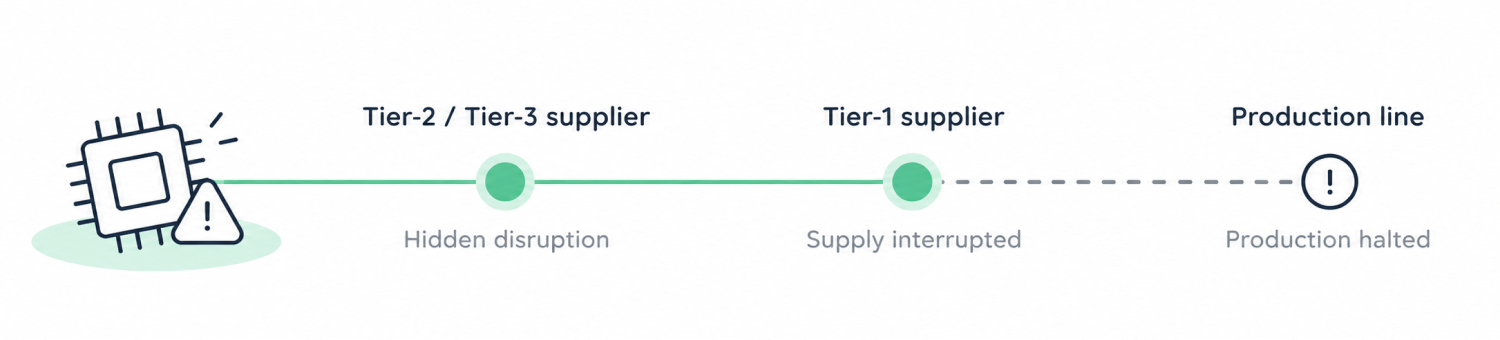
A semiconductor shortage, supplier failure, or trade disruption can quickly bring production to a halt. The problem may start with a Tier-2 or Tier-3 supplier, making it difficult to see the risk before it reaches your production line.

How Sophus helps

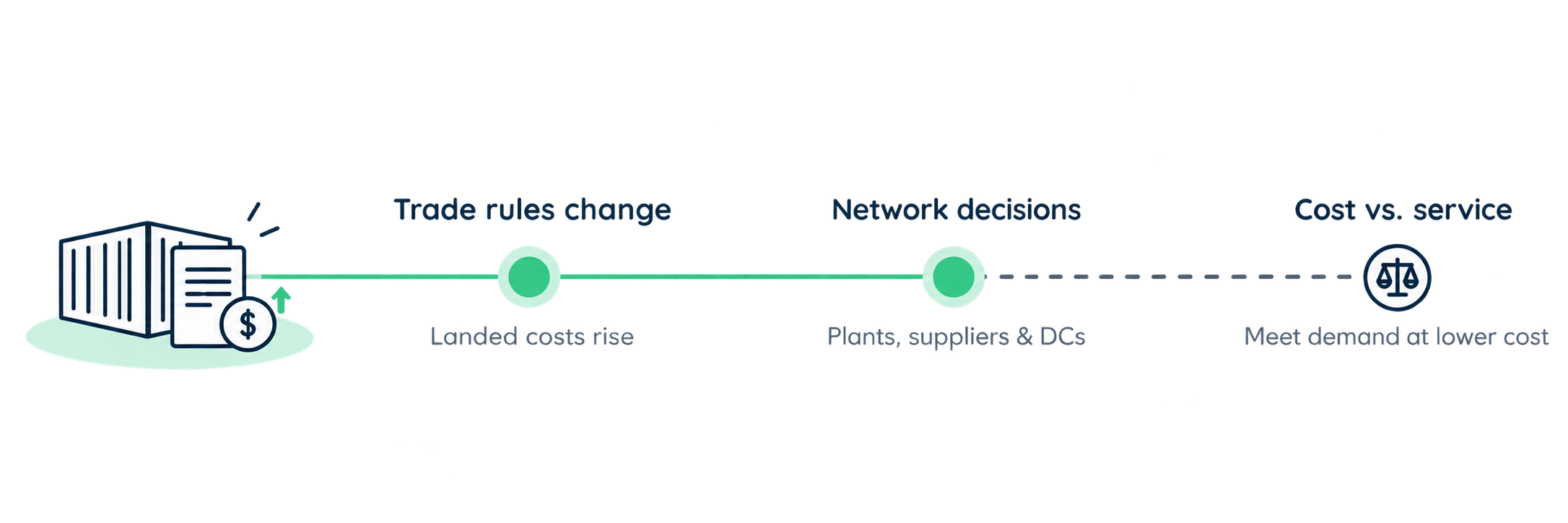
Tariffs, Nearshoring, and Network Restructuring
What you're facing
How Sophus helps

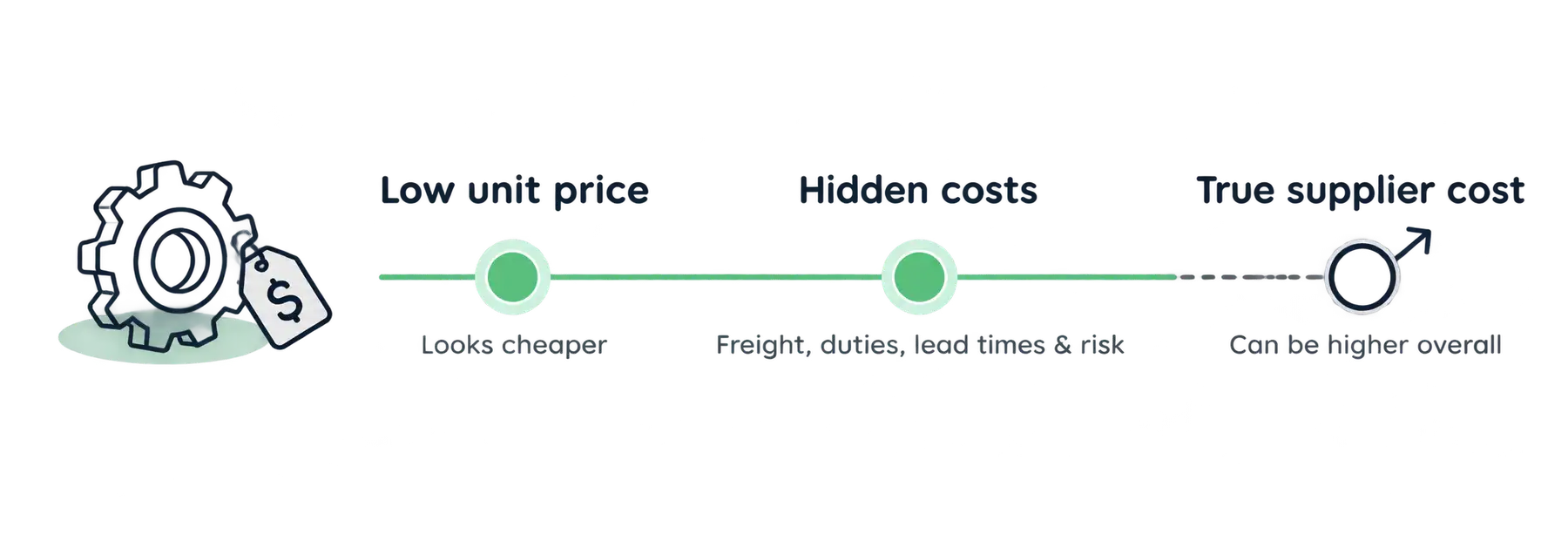
Multi-Tier Sourcing Complexity Increases Procurement Cost
What you're facing
How Sophus helps

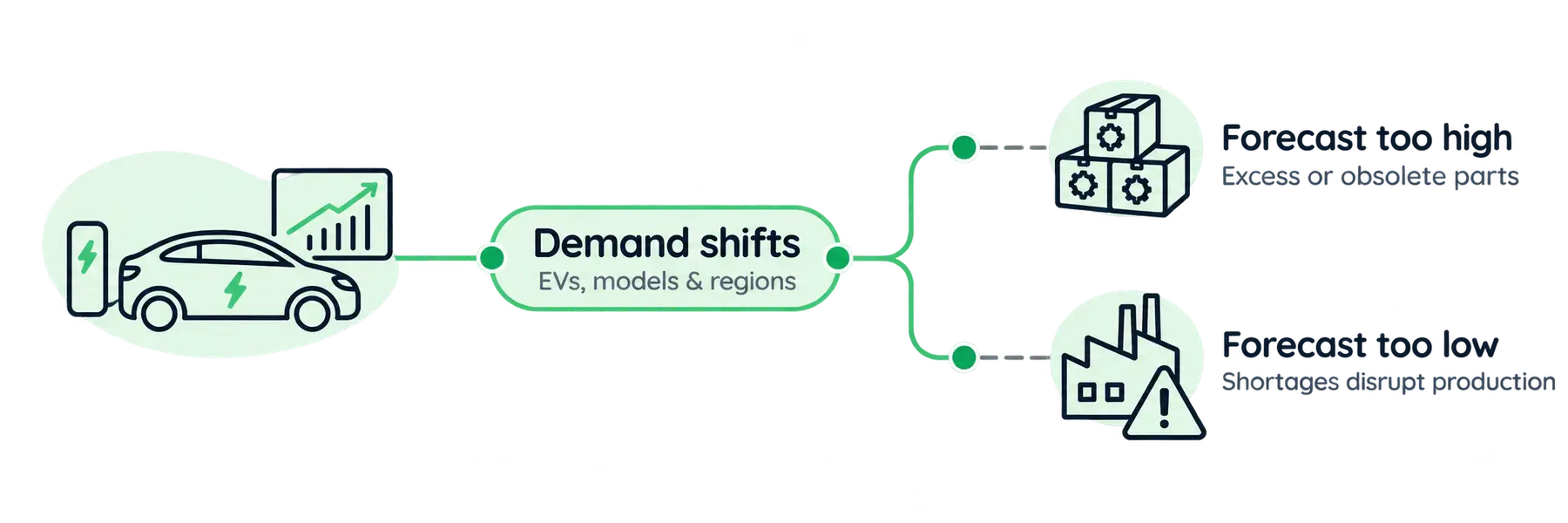
Demand Volatility and the EV and Model-Mix Transition
What you're facing
How Sophus helps

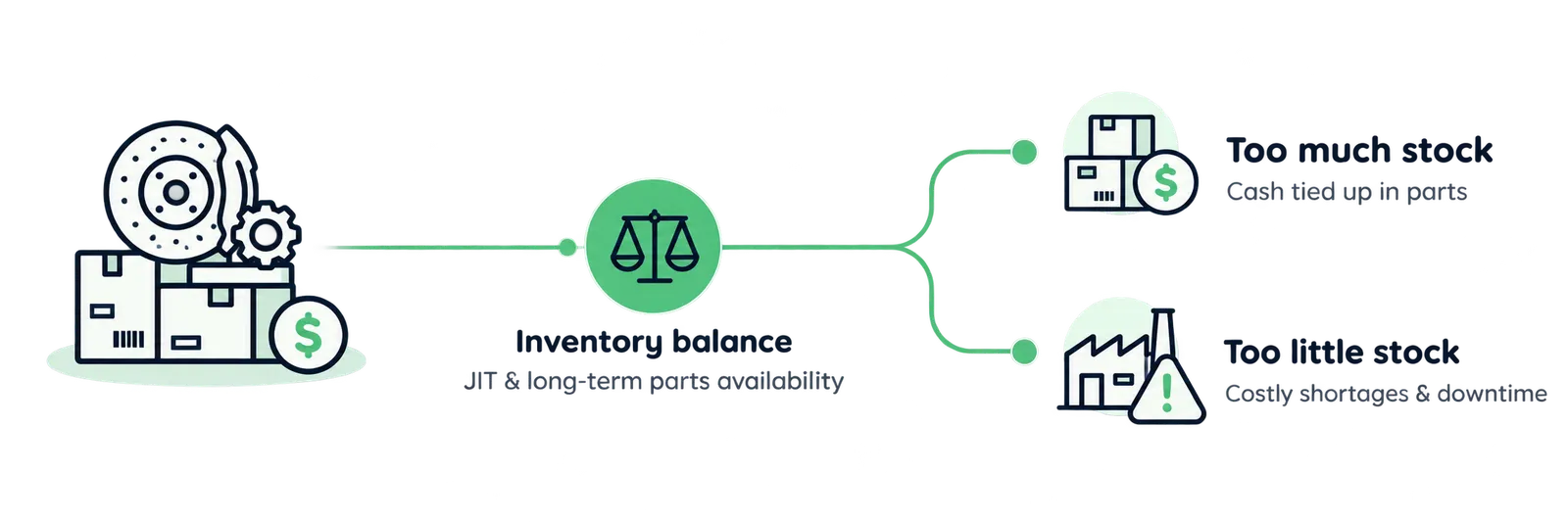
JIT Inventory Fragility and Aftermarket Service Levels
What you're facing
How Sophus helps

Finished-Vehicle and Inbound Logistics Costs
What you're facing
How Sophus helps
Vehicle Routes Optimization helps you plan more efficient inbound and outbound routes based on your actual network and costs. Freight Consolidation helps combine shipments where possible, reducing unnecessary trips and transport spend.
Optimize the Decisions That Shape Your Automotive Supply Chain
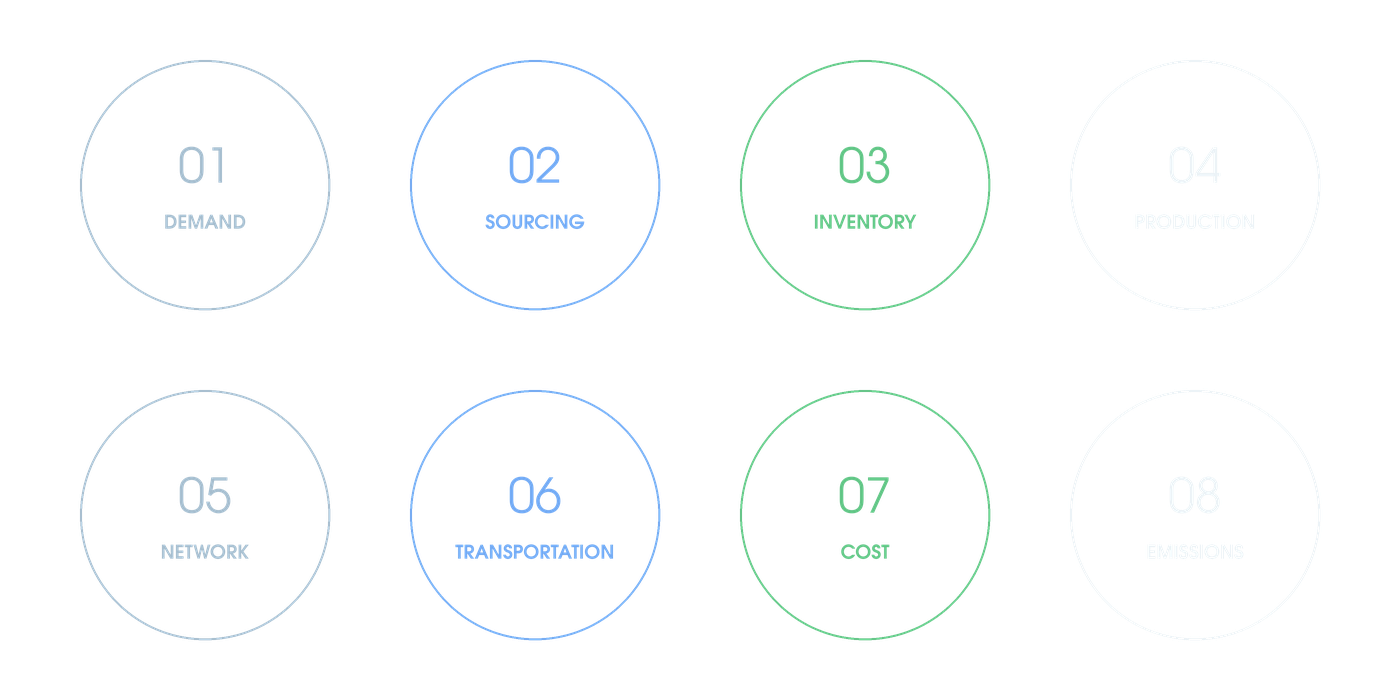
In an automotive supply chain, no decision stands alone. Demand shapes sourcing, sourcing shapes inventory and production, and network and transport drive both cost and emissions.
Change one and the rest move with it, which is why Sophus plans them together in one connected model. With Sophus you can:
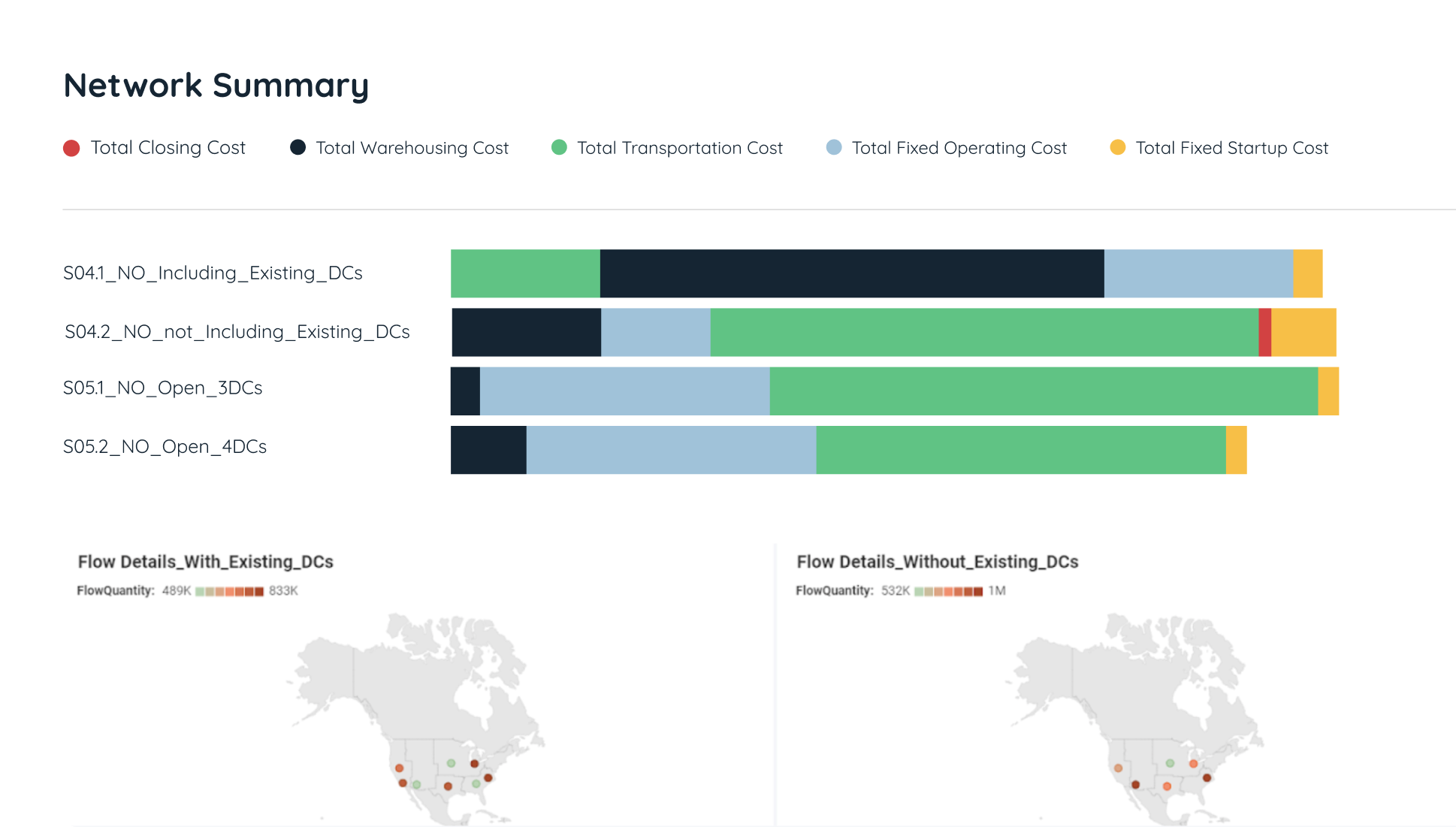
Make Better Network Decisions
Improve Planning and S&OP
Put commercial and operational plans on one set of numbers. Run Sales and Operations Planning and Weekly/Daily Supply Network Planning to balance demand and supply, and Annual Budget Planning and CAPEX Planning to line up spend and investment.
Reduce Logistics and Transportation Costs
Take cost and carbon out of every move. Use Vehicle Routes Optimization and Freight Consolidation to cut transport spend, Cost to Serve to see true cost by customer and lane, and GHG Emission Modeling to lower emissions without hurting service.
Model Your Automotive Supply Chain Before You Make the Decision
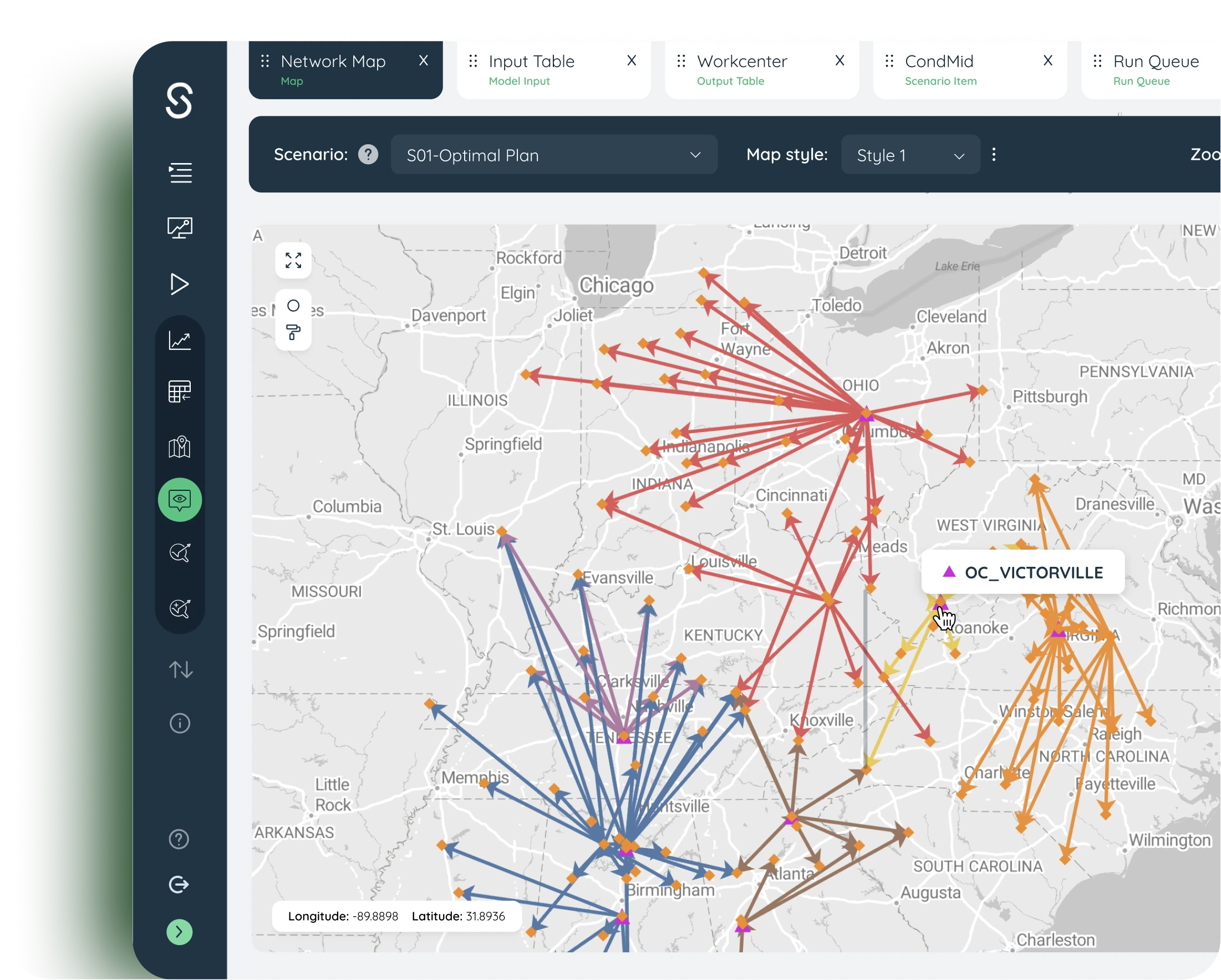
You cannot test a change on a live production network without real cost and risk. The Supply Chain Network Digital Twin is a full model of your automotive supply chain, so you make the change on the model, run it, and see the effect on cost, service, risk, and emissions. See what any of these would do first:

A key semiconductor supplier goes offline

Tariffs rise on a sourcing lane

EV demand shifts by region

Two distribution centers need to merge

A component program must be nearshore

Inbound freight costs rise
Compare the options side by side, see the trade-offs, and decide with real numbers instead of guessing.
Turn Better Supply Chain Decisions Into Better Business Results
Growth gets harder when you can’t see the full impact of a decision. Disconnected data leaves teams guessing on cost, inventory, capacity, and risk. Sophus brings these decisions into one platform, so you control cost, keep production running, and grow with confidence.
What it costs you today
What you gain with Sophus

Component shortages that stop the line without warning.

Tariff changes that raise landed cost with little warning.

Multi-tier sourcing priced on unit cost, not true cost.

Forecasts thrown off by the EV and model-mix shift.

JIT risk and aftermarket parts tying up cash.

Finished-vehicle and inbound freight costs that keep rising.

Greater resilience and a faster, planned response to disruption.

A network built for the lowest total delivered cost, and a footprint you can justify.

Better end-to-end sourcing cost with risk in check.

Steadier supply, inventory, and production decisions as demand changes.

The right service levels with less working capital held.

Lower logistics and transportation cost across the network.
Sophus
Sophus is Built for the Way Automotive Supply Chains Actually Run
An automotive supply chain doesn’t run like most. It’s deeper, faster, and less forgiving: thousands of parts, several supplier tiers, just-in-time delivery, and trade rules that shift through the year.
Sophus is built for that reality, so the decisions that keep your line running and your cost in check all run on one model.
Just-in-time delivery
All in one model
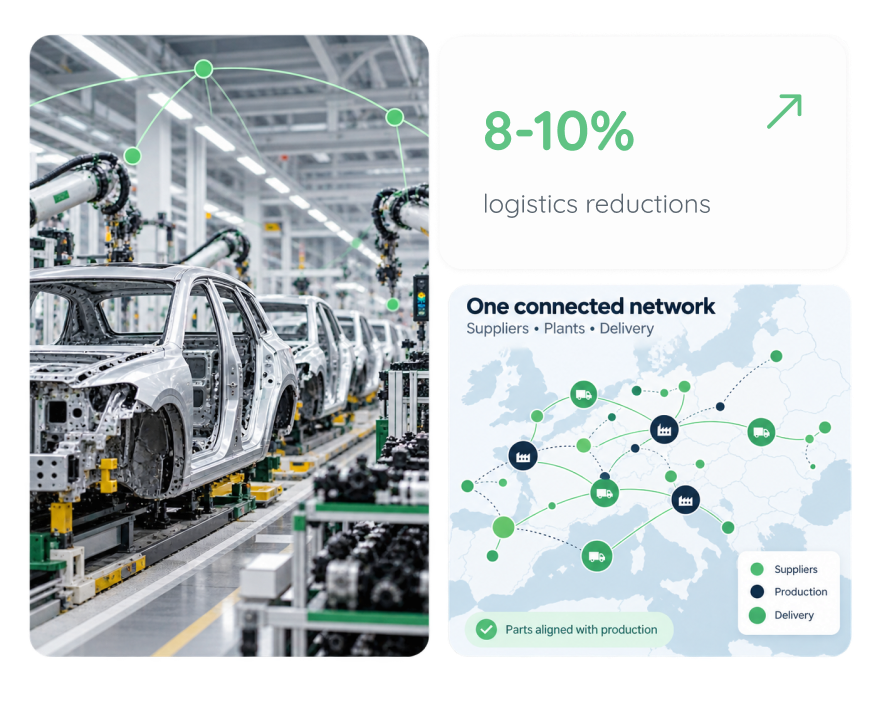
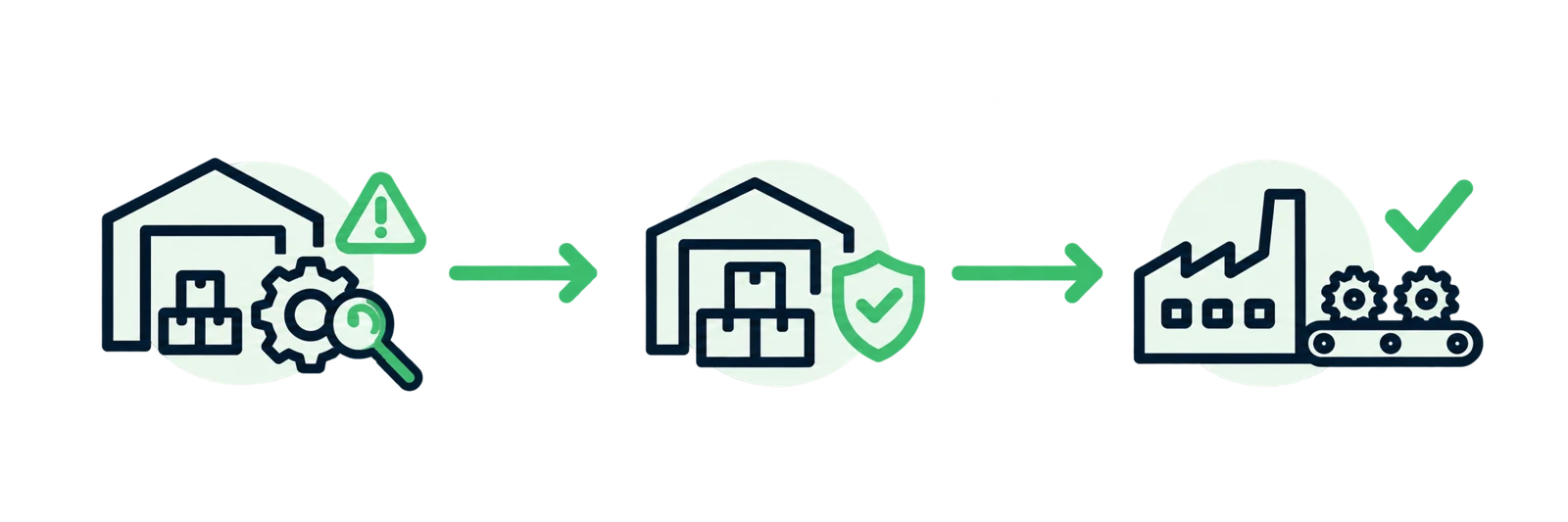
It keeps the line running
On a just-in-time line, downtime is the biggest cost of all. Sophus finds supplier and component risks early and plans the buffer stock and backup suppliers that keep production moving.
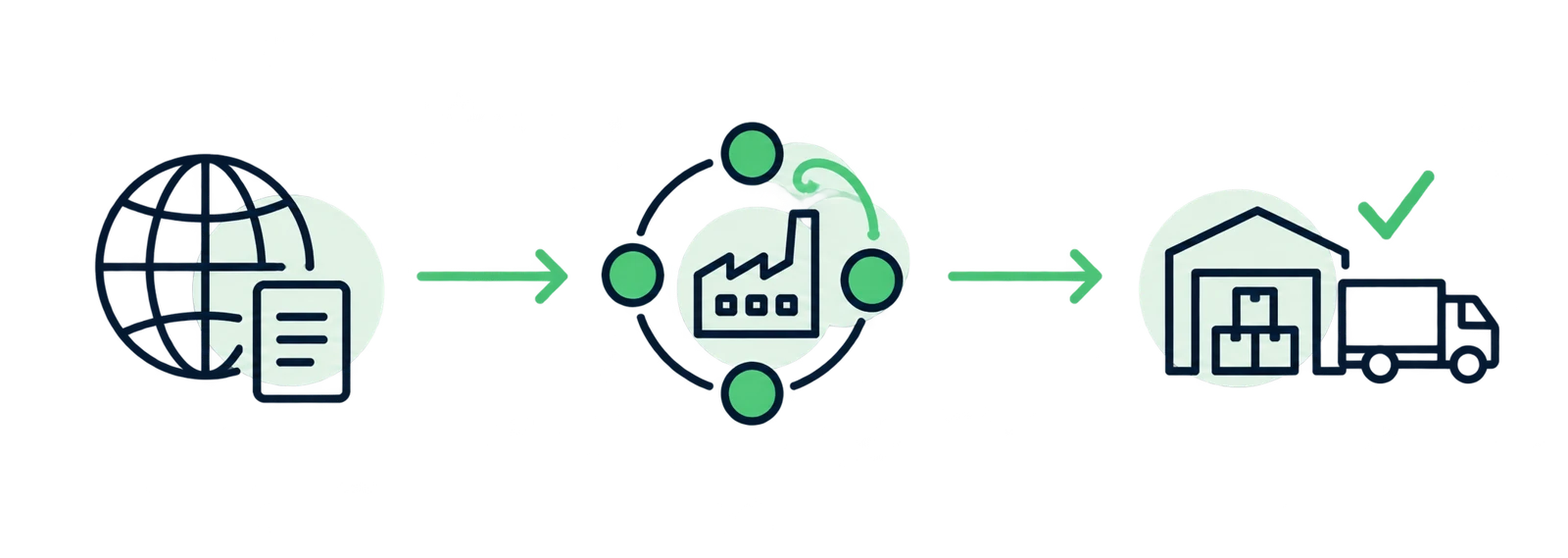
It answers tariff and footprint questions fast
When duties or trade rules change, Sophus re-runs your landed cost and network in hours, so you can move sourcing or production before the higher cost reaches your program.
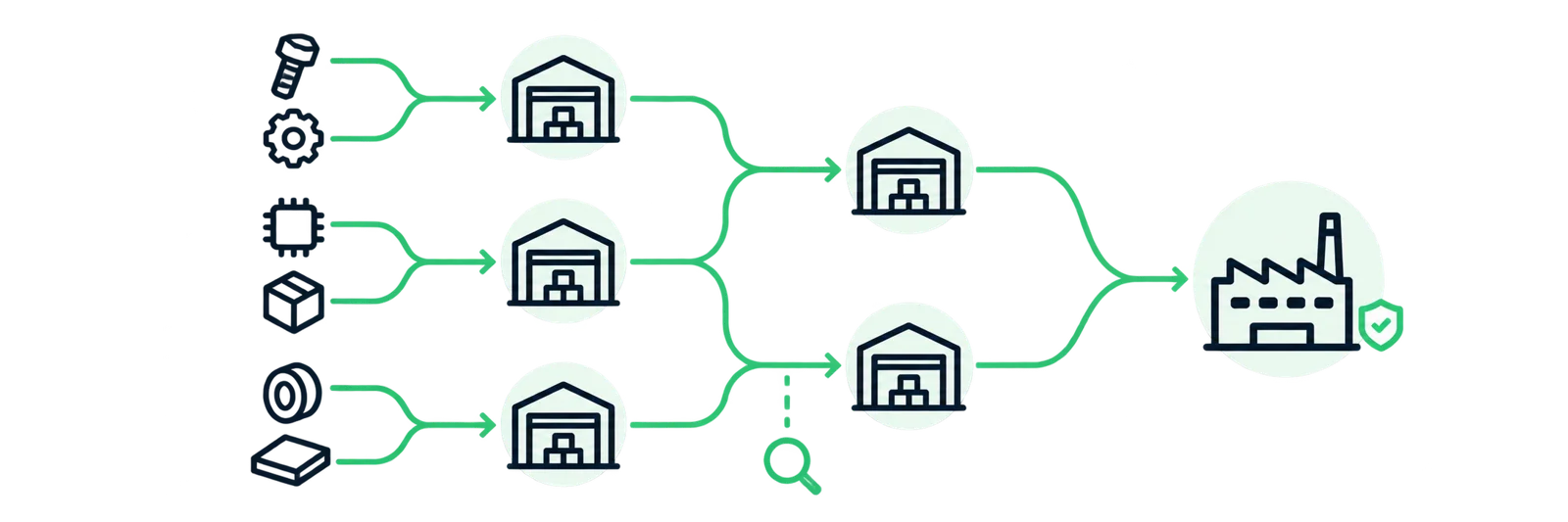
It handles the full multi-tier network
Thousands of parts across Tier 1, 2, and 3 suppliers are too much for a spreadsheet. Sophus models the whole supplier network, so you can see where cost and risk really sit.
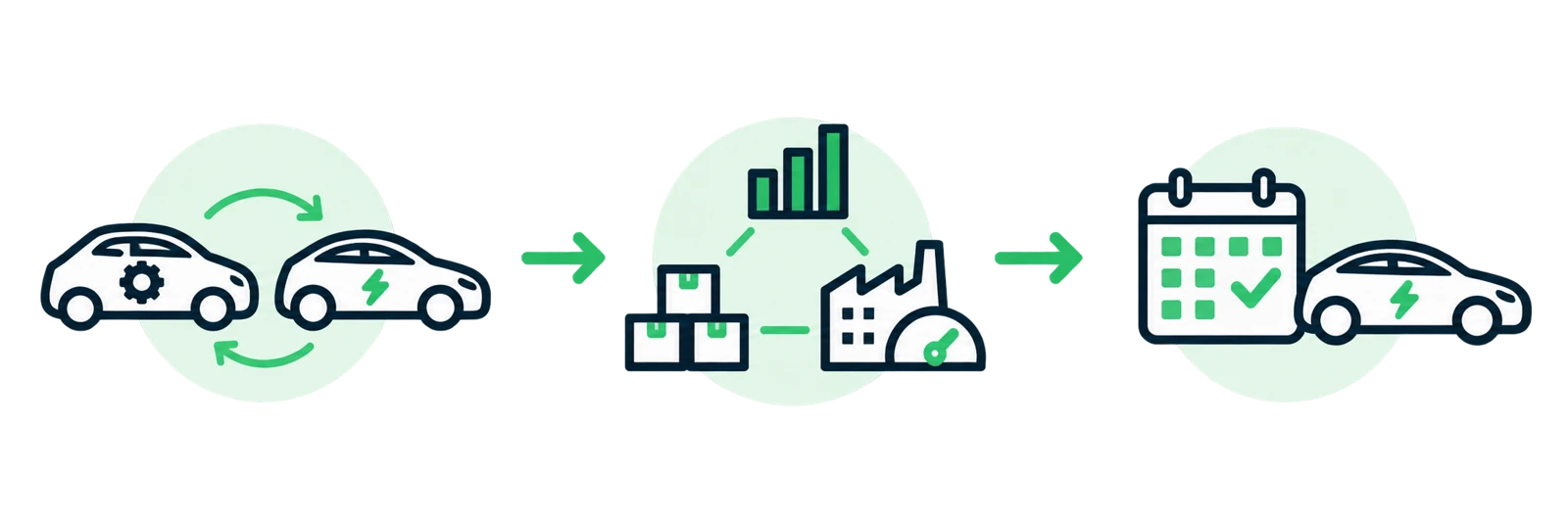
It plans through the EV and model-mix change.
New powertrains and models break old forecasts and leave you with the wrong inventory. Sophus tests demand, inventory, and capacity together, so you plan for the change instead of reacting
Results on the Same Problems Automotive Teams Face
Sophus solves the same problems that pressure automotive supply chains: multi-echelon inventory and total landed cost across the network. These results come from comparable manufacturing and distribution networks.

Food & Beverage Supply Chain Optimization FAQs
Ready to Optimize Your Automotive Supply Chain?
Model your network, test scenarios, and identify better supply-chain decisions with Sophus.