
Most retailers spend months debating which distribution centers to open, which replenishment software to buy, and how to cut last-mile costs. These are real problems worth solving. But how fast and how well those decisions actually get made depends almost entirely on the way the supply chain team is structured.
When the team responsible for network design sits separately from the team managing replenishment, decisions that should take weeks take months. When merchandising owns inventory calls without visibility into logistics costs, the network slowly drifts out of alignment with the business it is supposed to serve.
We have seen this pattern across retail supply chains of every size. The org chart is almost always where the problem starts.
This article breaks down how to restructure your retail supply chain team structure to break down these institutional silos, integrate strategic planning with tactical execution, and build a unified operating model that scales.
Why Org Design Matters More Than Most Retailers Realise
The connection between your retail supply chain team and actual performance outcomes is inseparable. When critical supply chain network design decisions in retail such as distribution center locations, inventory allocation rules, and channel splits are made by people who do not own the profit and loss (P&L) outcomes, serious corporate misalignment follows. Isolated departments naturally prioritize local metrics over global efficiency, leading to slow business decisions that harm customer service levels.
Consider how accountability breaks down in a traditional, broken retail supply chain org structure:
-
The Merchandising Silo: Merchandising teams frequently make major corporate inventory buys or promotional calls. However, because they do not own the actual logistics costs, they remain disconnected from the freight penalty of those decisions.
-
The IT Silo: Distribution center network decisions are often left entirely to IT data analysts who build beautiful models but lack true supply chain operations experience.
When team structures separate planning from execution, data gets trapped in handoffs, and organizations lose the agility required to survive in a volatile retail landscape.
How Org Structure Affects Network Design Decisions
The way you set up your team directly controls how fast you can improve your supply chain. If your teams are separated into silos, making big decisions takes forever.
Here are three common ways team structure blocks or helps your growth:
When network design sits only in IT:
The IT team has all the data, but they do not understand day-to-day warehouse problems. They can run computer models, but actually making a final decision takes 6 months or longer because they lack real supply chain experience.
When replenishment and network design teams do not talk:
The design team might pick a new warehouse location based on average yearly sales. However, they miss the reality of major holiday promotions. This mistake leads to poor DC placement decisions in retail, causing stockouts when you need inventory the most.
A Quick Before and After Example
To see how much this matters, look at this simple comparison of a major network change:
Old Siloed Structure
Modern Integrated Structure
The Situation: A retailer wants to see if closing one warehouse and combining it with another saves money.
The Situation: The same retailer wants to see if closing one warehouse and combining it with another saves money.
The Process: Teams pass emails back and forth, wait for IT reports, and argue about data for months.
The Process: Planners and designers sit together and use smart modeling software to test ideas instantly.
Time to Decide: 8 months
Time to Decide: 3 weeks
When you fix your team structure, you open the door for continuous retail supply chain network optimization. You can quickly react to market changes and accurately spot the exact factors that trigger a retail network redesign before your competitors do.
The 3 Main Retail Supply Chain Org Models (and When Each Works)
Choosing the right retail supply chain organization design depends on how your business sells and where your customers are. There is no one-size-fits-all setup, but most businesses fall into one of three main structures.
Based on the strategic blueprint in image_e33844.png, here is how each retail supply chain org design works in practice, along with their benefits and risks:
Centralised supply chain org
In a centralised supply chain org, one core headquarters team completely owns every single decision for network design, inventory management, store replenishment, and logistics across all sales channels.
-
When it works: This model is highly effective for pure-play ecommerce brands, single-format retailers, and businesses that require incredibly tight control over their margins.
-
The risks: Because all decisions come from one central hub, this structure is much slower to respond to sudden changes in regional demand. It also struggles to handle complex omnichannel operations smoothly as the business grows.
Decentralised SC team
A decentralised SC team shifts power away from headquarters. Instead, regional supply chain teams are given local authority to manage their own replenishment, warehousing, and product fulfillment based on what their specific area needs.
-
When it works: This setup is ideal for multi-country retailers and businesses that experience massive differences in product demand from one region to another.
-
The risks: When regions operate independently, your overall network design can quickly become inconsistent. Over time, supply chain costs tend to drift upward, and leadership loses a single, clear view of the total landed cost across the entire business network.
Hybrid / Centre-Led retail supply chain
The hybrid or centre-led retail supply chain is the most popular choice for major brands. In this model, a central corporate team owns the high-level network strategy and big design decisions. Meanwhile, dedicated regional or channel-specific teams take care of the daily execution and fulfillment.
-
When it works: This is the go-to model for omnichannel retailers and modern businesses managing both traditional brick-and-mortar stores and direct-to-consumer (DTC) channels.
-
How decisions flow: In practice, the central hub provides the tools, data standards, and strategic direction. This structure gives local teams the freedom to react quickly to daily changes, while ensuring that large-scale projects—like scenario planning for retail network decisions—stay completely aligned with the company’s long-term financial goals.
Key Roles in a Modern Retail Supply Chain Team
Building a winning retail supply chain team is all about giving the right people clear ownership over specific decisions. Many retailers completely miss the Network Design role or accidentally bury it inside the IT department. As we saw earlier, putting this strategic role in IT is a structural mistake—it must live directly within your supply chain organization to be effective.
Here is a practical breakdown of the 6 key roles that matter most and exactly what they own:
-
Head of Supply Chain / VP of SC: This leader owns the high-level network strategy and overall organizational design. They ensure the entire operation aligns with business growth goals.
-
Network Design Lead / Analyst: This specialist models distribution center (DC) configurations and runs complex scenario analyses. They figure out where inventory should live before it ever arrives.
-
Inventory Planning Manager: This person owns the overarching safety stock policy by channel and shapes the framework for retail inventory planning.
-
Replenishment Analyst / Team: This group manages daily and weekly retail replenishment execution. They handle the hands-on work of moving products based on established retail replenishment optimization rules.
-
Logistics / Transport Manager: This manager owns the total cost-to-serve by shipping lane. They focus on finding the most cost-efficient way to move freight from point A to point B.
-
SC Data / Analytics Lead: The backbone of the modern retail supply chain team, this person feeds all the other roles with clean, reliable data so they can make fast decisions.
5 Warning Signs Your Retail SC Org Structure Is Holding You Back
Sometimes it is hard to tell if your supply chain issues are caused by bad luck or bad organizational design. These are five common warning signs as a self-diagnosis tool to see if your current structure is actively holding your business back:
-
Network redesign projects take more than 6 months: If evaluating a simple warehouse or lane change takes half a year, it is a clear sign of siloed data ownership. Your teams are spending all their time hunting down hidden information instead of making decisions.
-
Replenishment choices and DC choices use different KPIs: When daily replenishment teams and long-term network designers do not share the same high-level goals, they pull the business in opposite directions. This misalignment results in wasted freight costs and mismatched inventory.
-
Promotional planning is done without supply chain input: If your marketing or merchandising teams plan a massive sales event and only inform the supply chain team two weeks before the event starts, your organization is broken. Without early collaboration, you will face severe product shortages and unhappy customers.
-
Ecommerce and store replenishment compete for the same stock: When your digital storefront and your traditional store replenishment channel openly fight over the exact same stock because there is no official arbitration process, your margins suffer. A healthy organization needs an objective system to decide who gets the inventory first.
-
Calculating basic fulfillment costs requires a 2-week project: Your team should be able to instantly tell you the financial impact of a customer order. If answering “what does it cost to serve a customer in Region X through Channel Y” triggers two weeks of painful manual spreadsheet work, you lack a clear view of your true cost to serve by channel.
What Changes When Retail Teams Get the Structure Right
When you align your retail supply chain team structure with modern data-driven tools, the entire business moves from reactive firefighting to proactive optimization.
Breaking down traditional corporate silos allows planners, logistics managers, and network designers to collaborate seamlessly, accelerating decision speed from months to weeks. Instead of arguing over fragmented spreadsheet data, an integrated team structure unlocks unified visibility into end-to-end costs, margins, and customer service trade-offs.
Here is how three leading organizations achieved massive financial and operational breakthroughs by implementing the right structure alongside Sophus:
Lee Kum Kee: Unlocking $20 Million in Sustainable Savings
Lee Kum Kee, a global consumer goods company managing over 40 distribution centres across a complex international network, worked with Sophus to redesign their supply chain with cost-to-serve as the central decision metric. By bringing network design, freight lane analysis, and inventory placement into a single model, the team identified structural cost drivers that had been embedded in the network for years. The result was over $20 million in sustainable savings — not from cutting headcount or reducing service, but from making better network decisions with the right structure and tools in place.
Hisense: Reducing African Logistics Costs by 5%
Hisense ran a similar process across their African distribution network and reduced logistics costs by 5% at a scale where that number represents a meaningful impact on margins. Again, the savings came from network decisions, not operational squeezing.
Suning.com: Transforming E-Commerce Inventory Placement
Suning.com (苏宁易购), a leading retail giant with a 12-warehouse network, relied on manual stocking decisions that caused severe inventory imbalances excess stock in some regions and chronic stockouts in others.
To solve this, Suning used Sophus to move from a one-size-fits-all policy to a data-driven strategy:
-
Differentiated Placement: Products were split by sales speed. Fast-moving items were distributed across 16 locations to ensure high availability, while slow-moving, high-value items were concentrated in 4 strategic hubs to lower holding costs.
-
System Integration: The platform connected TMS, WMS, ERP, and OMS data, eliminating manual spreadsheet work and allowing planners to run fast “what-if” scenarios.
The Business Impact: The transition cut total inventory levels by 10–30% and reduced total supply chain costs by 5–10% (an 8.8% net savings), saving the business tens of millions of RMB annually while protecting customer service levels.
How to Redesign Your Retail SC Org: A Practical Starting Point
Restructuring your team doesn’t have to be an overwhelming, theoretical exercise. You can use this practical 4-step framework to begin aligning your organization today:
-
Step 1: Map current decision ownership. Sit down with your leadership and write out who actually makes DC placement, daily replenishment, and safety stock policy by channel choices today. You will likely find overlapping responsibilities or complete gaps in ownership.
-
Step 2: Identify decision handoff delays. Look closely at your last three network or inventory decisions. Pinpoint exactly where data got stuck, which teams delayed the process, and where handoffs between departments slowed things down.
-
Step 3: Choose a model based on channel complexity. Evaluate your sales channels. If you are a straightforward ecommerce brand, a centralised model may work perfectly. If you are a massive omnichannel brand with physical stores and active DTC channels, start transitioning toward a hybrid, centre-led model.
-
Step 4: Align technology to your new organization. Never let your legacy tools dictate your team layout. Implement dedicated retail replenishment planning tools and modern retail supply chain network design software that actively support your newly integrated, cross-functional team structure rather than keeping them stuck in old silos.
Wrapping Up
The retailers who move fastest on network decisions are not necessarily the ones with the most sophisticated technology. They are the ones where the right people own the right decisions and have the tools to model the consequences before committing to them.
If your supply chain team is working through a network review, an omnichannel transition, or simply finding that decisions are slower and more fragmented than they should be, we can help you understand what the right structure and the right platform looks like for your specific network.
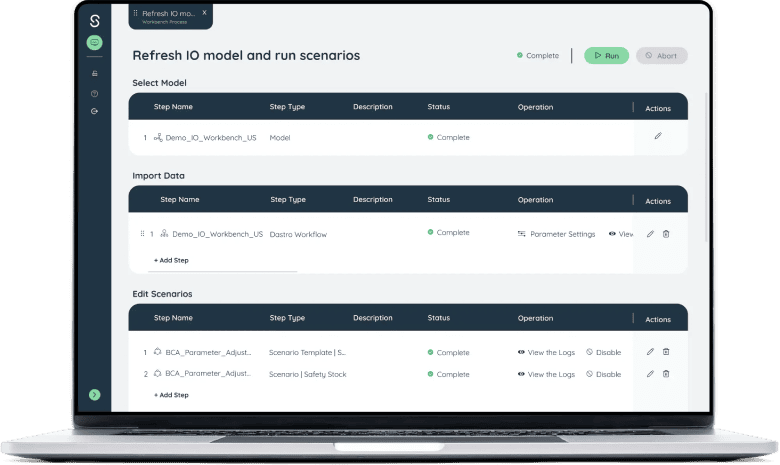
Explore how Sophus works for retail supply chains or request a demo to see it applied to your network directly.