
Volatility is now part of everyday business. When it comes to Logistics, markets shift overnight, demand changes without warning, and global disruptions come one after another. What once felt stable now feels unpredictable. In this environment, the true advantage lies in how quickly a company can adapt.
Rigid logistics network design struggle to keep up. When systems can’t respond to sudden changes, the result is backorders, lost sales, and damaged trust.
Understanding and planning for these risks is essential for keeping operations stable
To stay competitive, your logistics network design must be treated as a living system that evolves with every new challenge. A network that senses change, learns from it, and adjusts with purpose. The future belongs to businesses that see adaptability not as a reaction but as a strategy.
In this article, we’ll explore how adaptive logistics networks help businesses stay resilient, efficient, and ready for whatever comes next.
The Pressure Points: Why Traditional Logistic Network Designs Are Breaking
Traditional supply chain networks, built for stability, are now struggling to survive in an unpredictable environment. The systems that once delivered consistency are being tested by new forces that don’t play by old rules.
Geopolitical Instability and Supply Chain Fragmentation
Trade tensions, shifting alliances, and regional conflicts are rewriting global supply routes. Rising tariffs and trade restrictions have made cross-border movement more expensive and unpredictable, forcing companies to rethink sourcing and distribution strategies.
Businesses that depend on single-source suppliers or limited distribution hubs face greater risks of delays and cost overruns. Fragmented supply chains make coordination harder, exposing weak points that can disrupt production and delivery across entire networks.
Climate Disruptions and Unpredictable Demand Surges
Extreme weather events and sudden shifts in consumer demand are creating chaos in planning and inventory management. Floods, wildfires, and temperature swings disrupt transportation, while demand surges push systems beyond capacity. Without adaptive planning, businesses either overstock or fall short, both of which hurt profitability.
Labor Shortages and Infrastructure Bottlenecks
A shortage of skilled workers and outdated infrastructure add another layer of strain. Ports face congestion, drivers are in short supply, and warehouse operations often lag behind technological change. These challenges slow down deliveries and increase operational costs, making efficiency harder to sustain.
Traditional logistics models were built for predictability, not volatility. To thrive in this new era, networks must evolve to handle disruption as the norm rather than the exception.
Tips to Make Logistics Network Design Adaptive and Prepare for Uncertainty
Adaptability starts with awareness. The more a business understands its network, the faster it can act when things go wrong. Here are a few ways to make your logistics system more adaptive and future-ready.
1. Build Predictive Awareness
Instead of reacting after disruptions occur, use data models that forecast risks and performance trends. When your system can predict capacity constraints or demand shifts, it gives you time to adjust resources before issues grow.
2. Design Networks with Flexibility in Mind
Adaptive logistics depends on modular network design. This means creating flexible distribution setups, scalable warehouse footprints, and multi-source supply options. A network that can expand, reroute, or rebalance quickly will always outperform one that’s rigid.
3. Automate Insight, Not Just Data
Data alone isn’t helpful unless it translates into action. Intelligent platforms turn raw data into clear insights — like detecting inefficiencies, suggesting new routes, or optimizing loads automatically. This builds resilience without adding complexity.
4. Use the Latest Logistics Network Design Tools
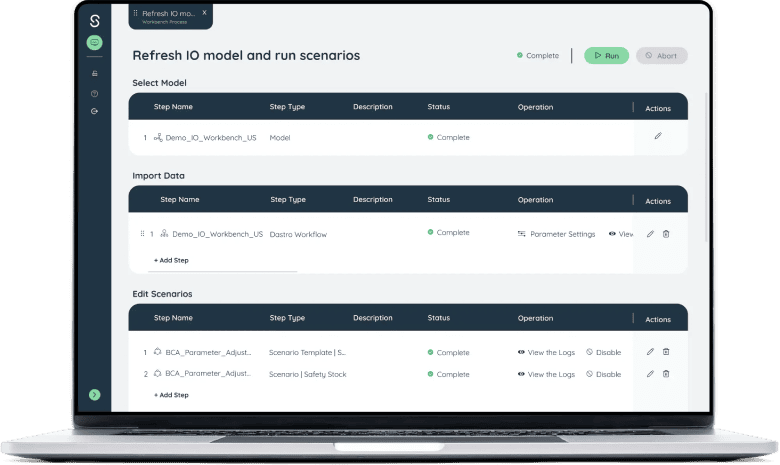
Modern challenges need modern tools. Advanced logistics network design tools like Sophus X that allows companies to model complex systems, simulate decisions, and optimize for both cost and sustainability.
These tools make it easier to adapt, plan, and perform under uncertainty.
5. Create Cross-Functional Collaboration
Adaptability isn’t only about tools. It’s also about communication. Encourage tighter collaboration between planning, procurement, and logistics teams. Shared visibility across departments helps everyone respond to changes faster and make decisions that benefit the entire network.
6. Measure Agility as a KPI
Traditional metrics focus on cost and delivery time. Adaptive logistics requires new ones — like time-to-respond, recovery speed, and decision accuracy. Tracking agility as a performance measure helps businesses see how effectively they respond to change.
Conclusion
In a world where change is constant, adaptive logistics network design is the quiet strength behind stability. It helps businesses stay grounded when everything else shifts, turning complexity into clarity and uncertainty into opportunity.
Sophus Technology helps organizations build logistics networks that think, flex, and evolve with every challenge. Book a call today to see how adaptive design and intelligent optimization can help your logistics stay one step ahead of uncertainty.