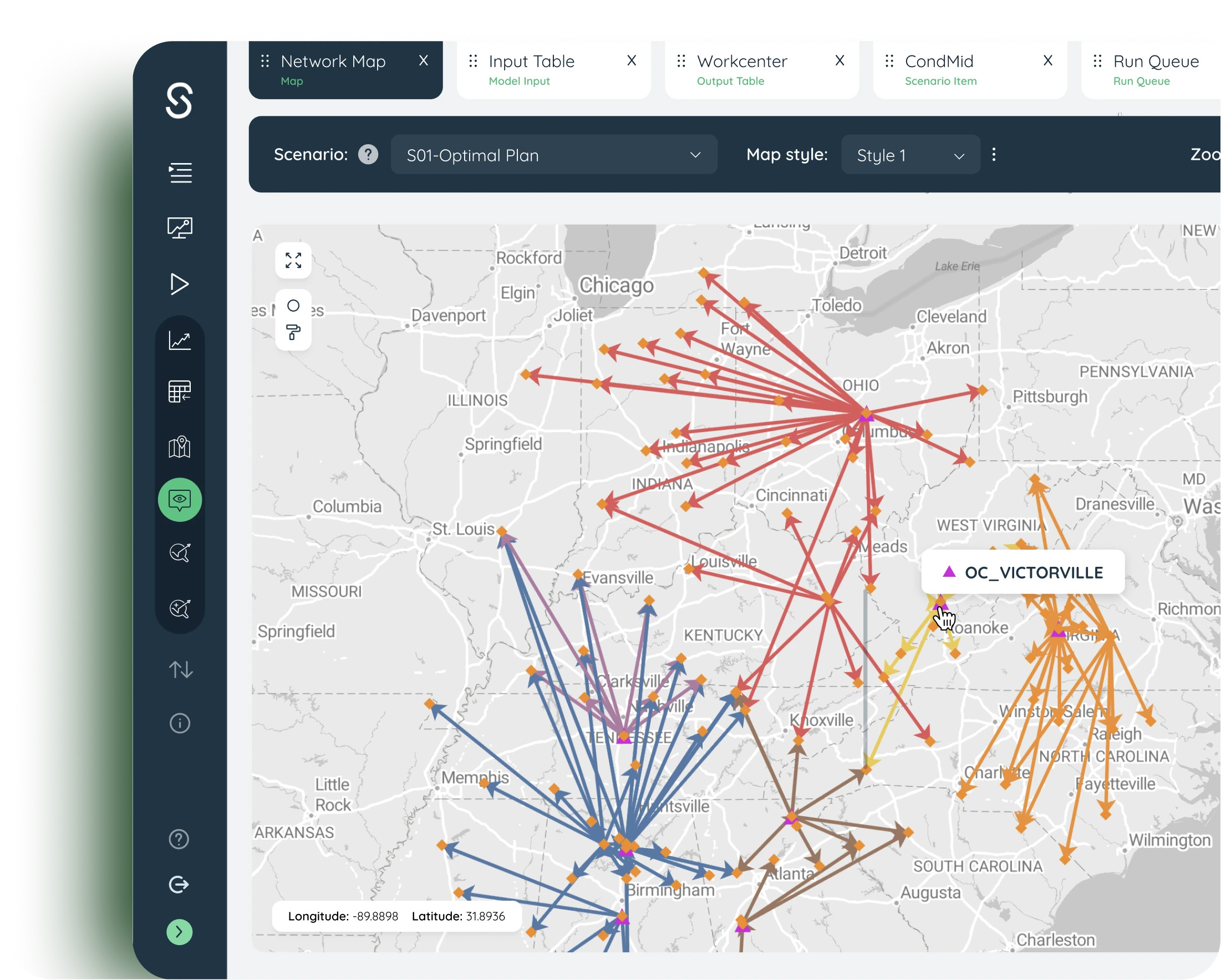

Know Exactly Where to Open, Close, or Consolidate a Facility
Trusted by Growing Companies at Every Stage of Network Design Maturity









Most Centers of Gravity Still End Up in the Middle of Nowhere
A facility got added after an acquisition, a warehouse stayed open because closing it felt risky, and a distribution center is still sitting in a city that made sense five years ago but not today.
Signs You Need a Supply Chain Network Redesign

Entering a new market or region

Integrating a network after M&A

Under pressure to cut network costs without missing service targets
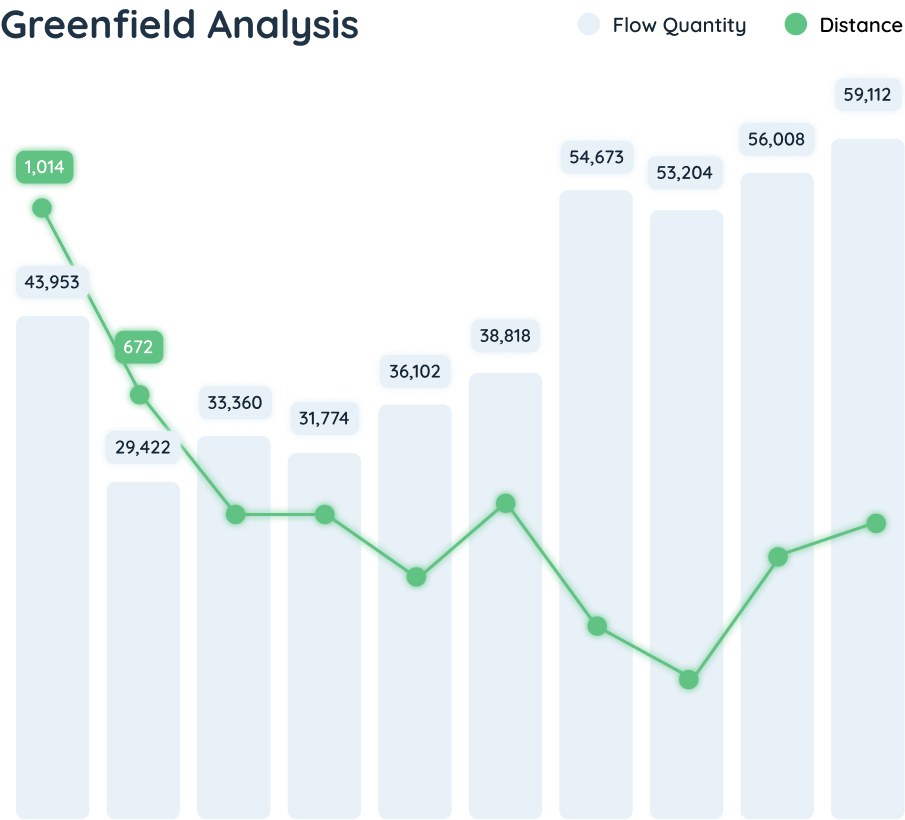
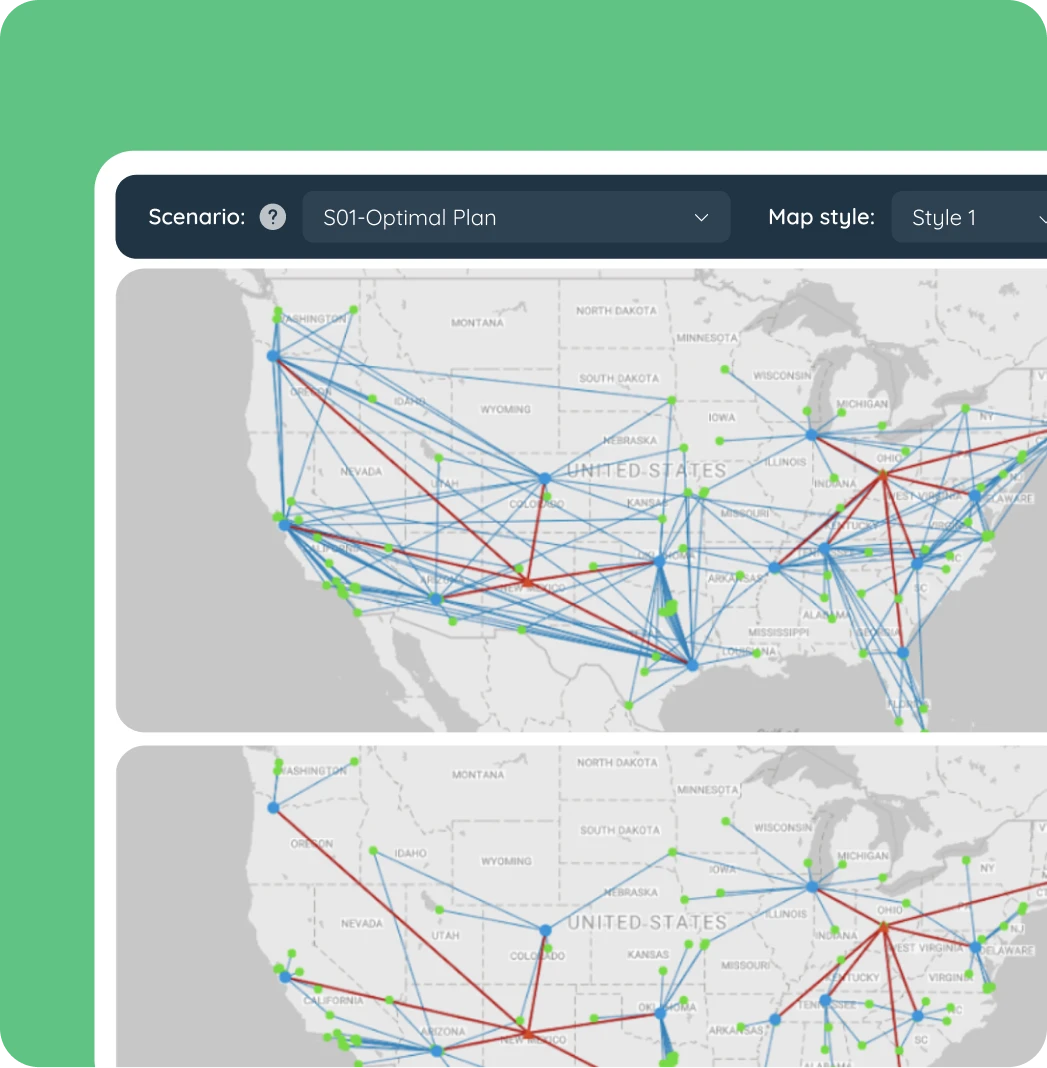
Sophus evaluates that footprint holistically, factoring in shipping volume, demand patterns, customer service requirements, and where future demand will actually land. Instead of guessing at what to open, close, or consolidate, you get a model that tells you.
Greenfield Analysis vs Brownfield Analysis
Sophus supports both from the same platform, so you are never locked into one lens on your network.
Feature
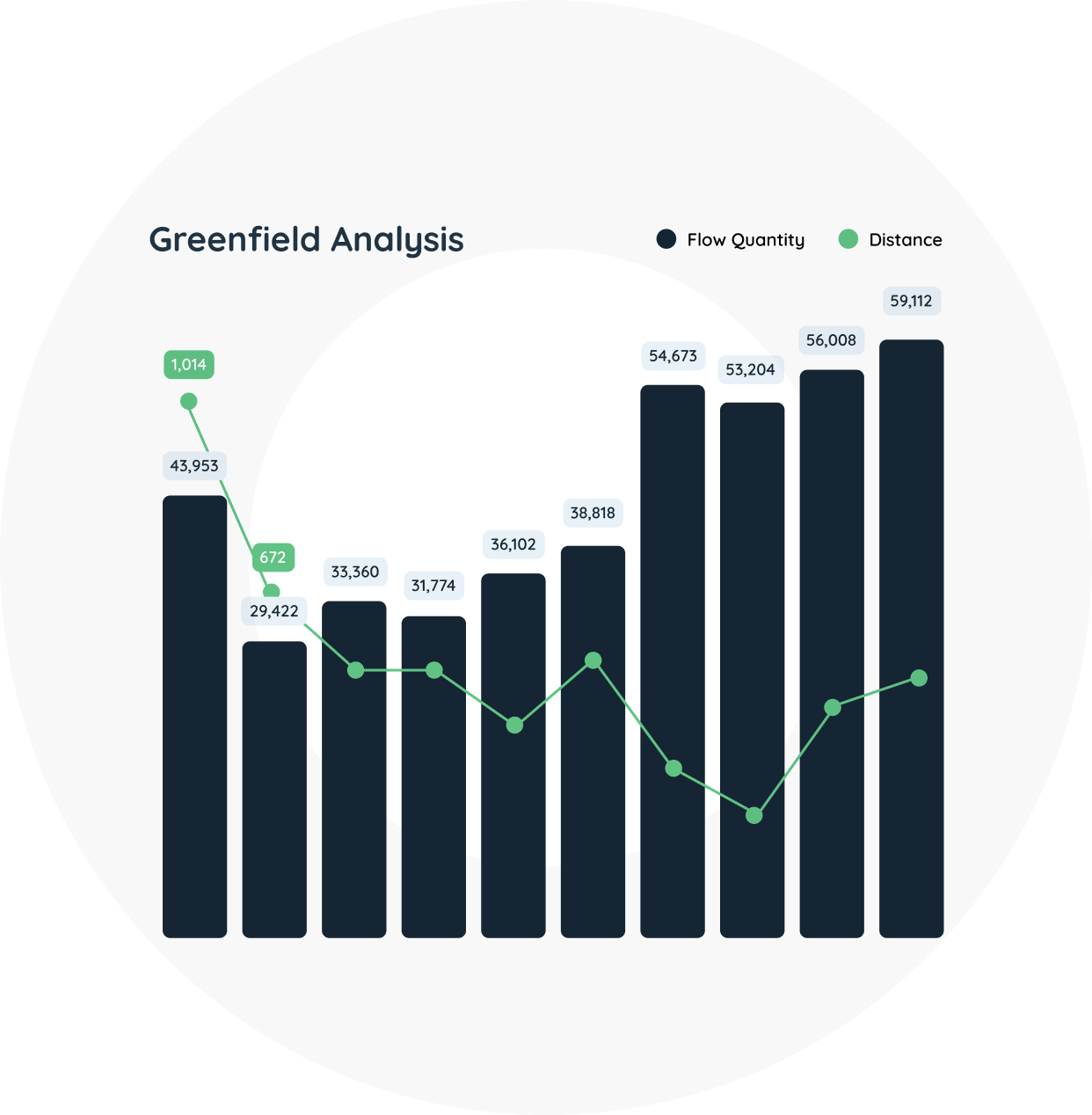
Greenfield Analysis
Brownfield Analysis
Focus:
Starting Point:
Ideal For:
Analysis Options:
Key Factors:
Data Required:
A Facility Decision Rarely Has Just One Owner
Different roles come to a site decision with different questions. Find yours below.
Which One Sounds Like You?
Defending a Single Site
Consolidating After M&A
Running This at Scale
Facility Decisions Built on Real Roads and Actual Data
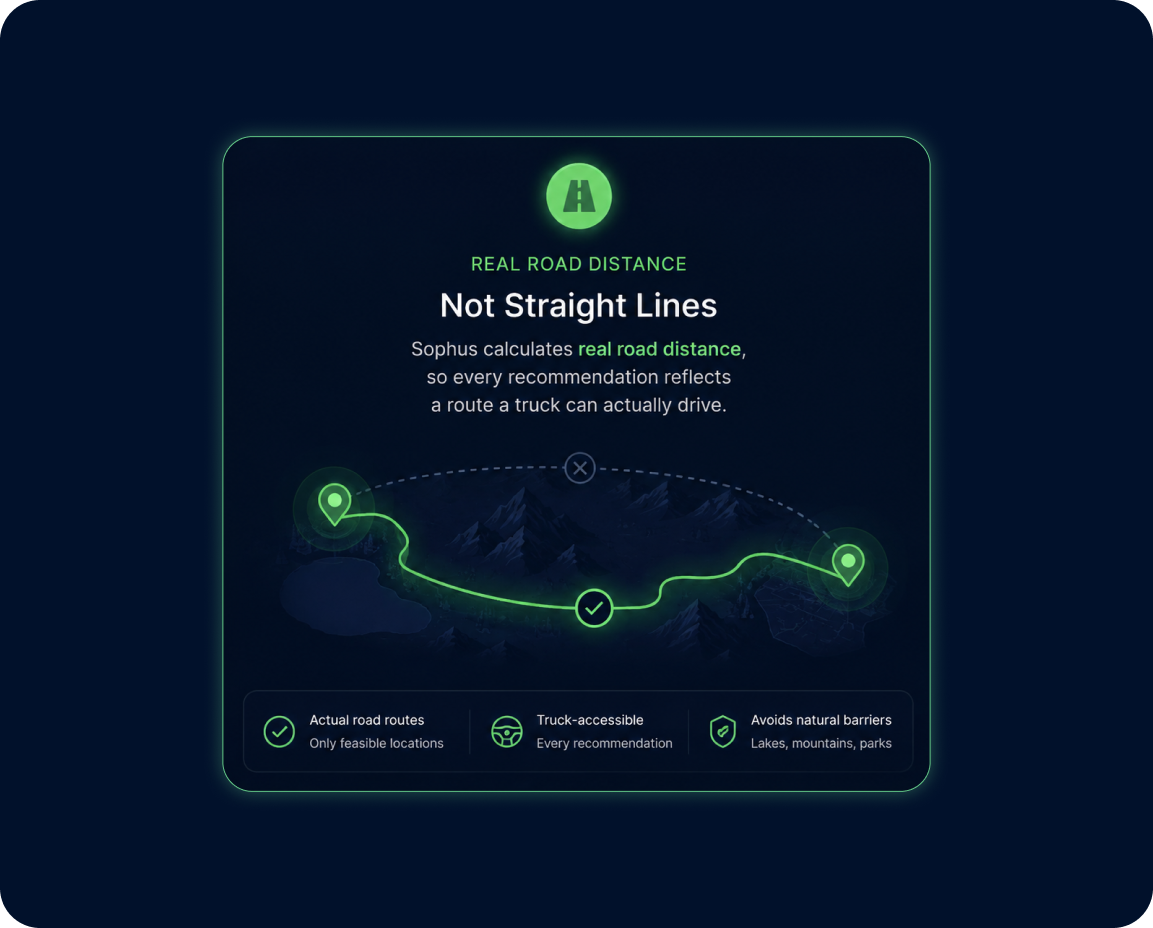
Real Road Distance, Not Straight Lines
Sophus calculates real road distance, so every recommendation reflects a route a truck can actually drive.
Two Ways to Run the Analysis
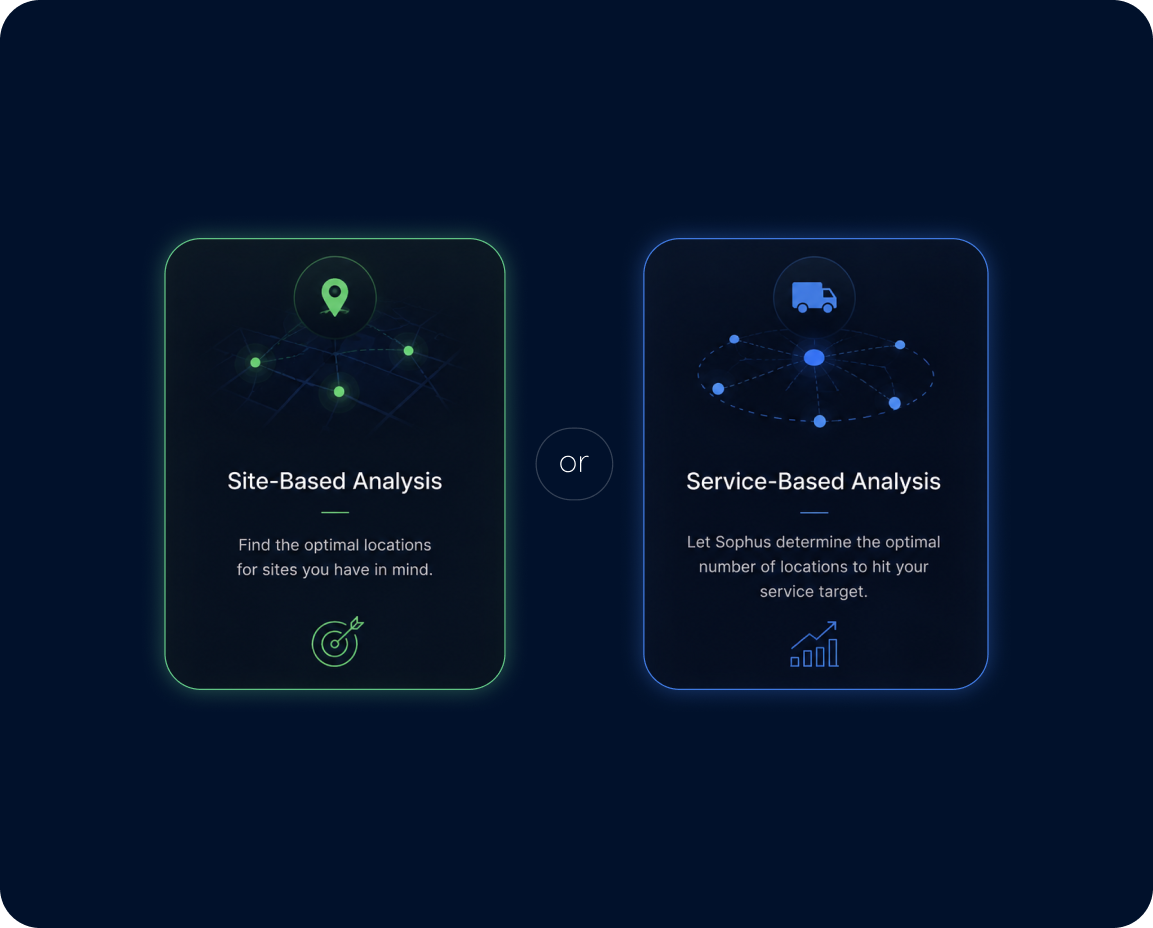
Choose Site-Based Analysis to find the optimal locations for a number of sites you already have in mind, or choose Service-Based Analysis to let Sophus determine the optimal number of locations needed to hit a specific service target. The same model can answer either question.
Build Scenarios Around What Actually Worries You
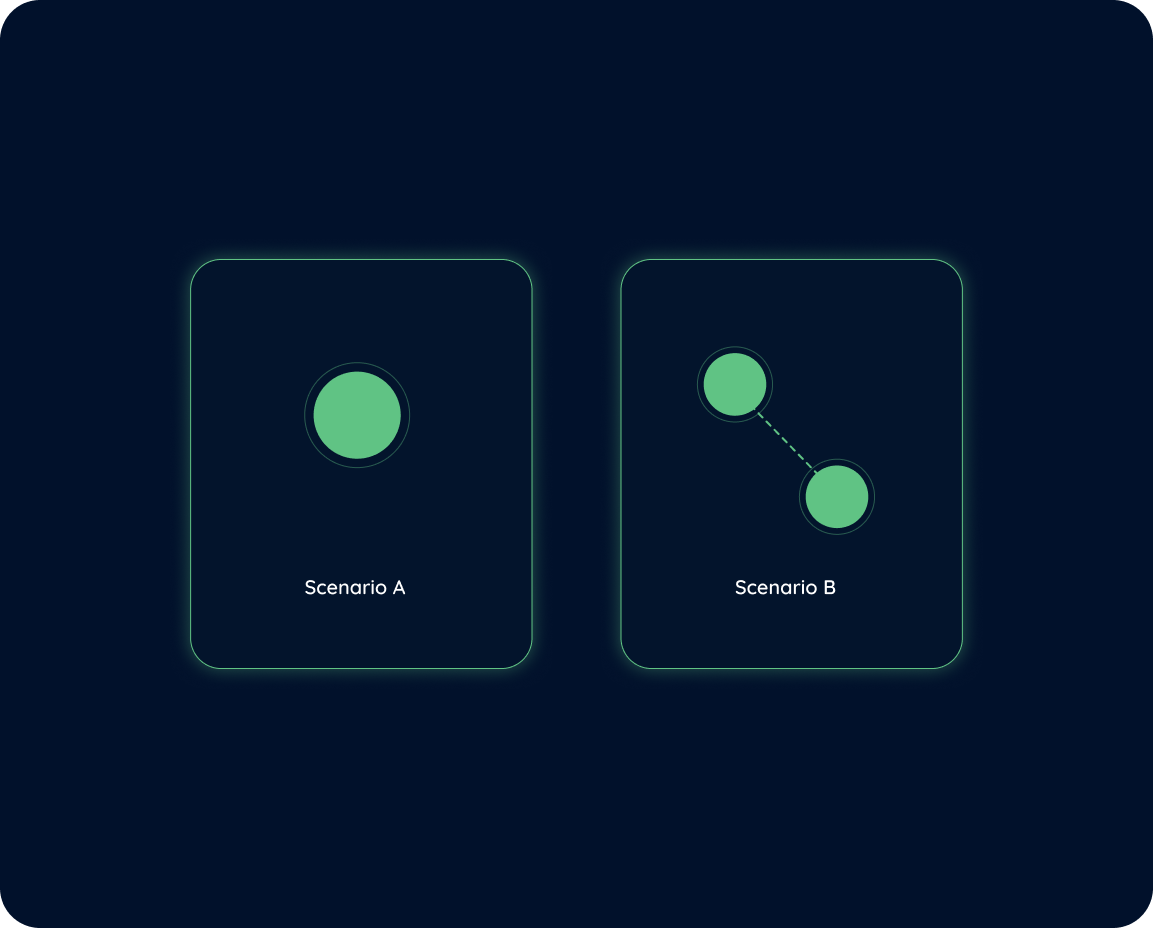
Sophus runs the comparison and shows you the trade-off.
Feed It With the Data You Already Have
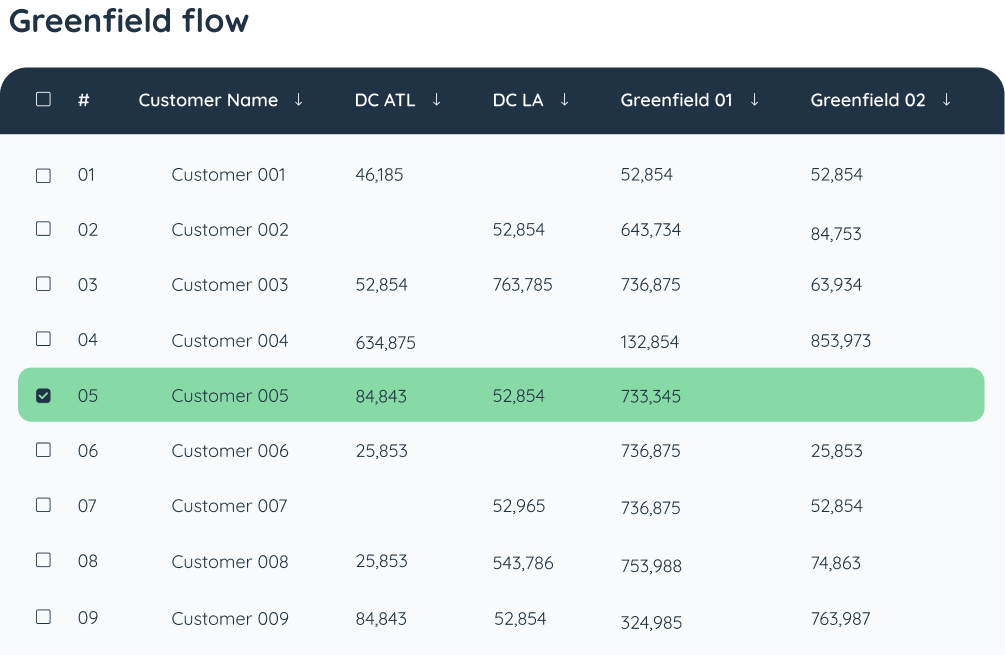
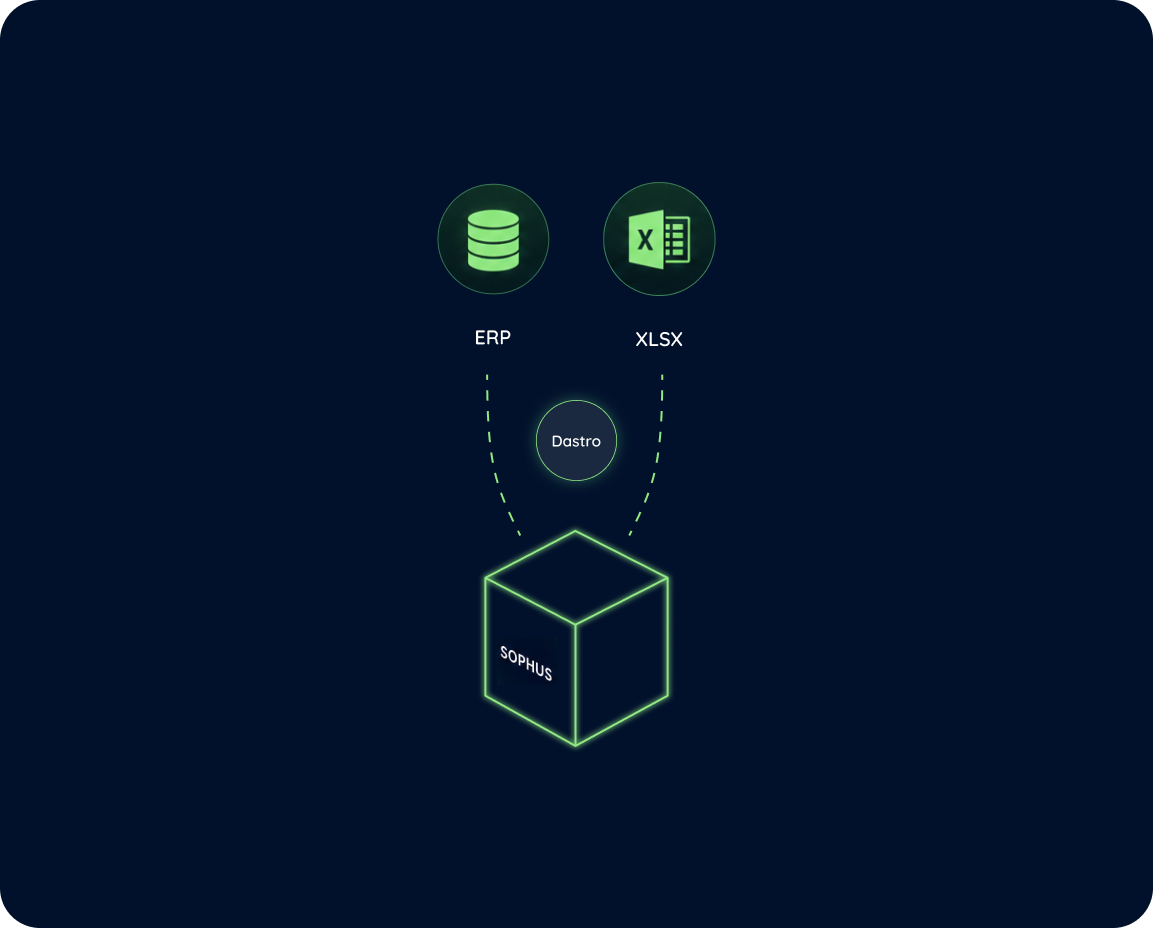
Import customer locations, demand volumes, and existing facility data through Dastro’s automatic connection to your ERP, or bring it in directly with an Excel import, so the analysis starts from your real operating picture instead of a blank model.
What Happens When You Actually Model the Hard Call
Not every network question has a clean answer. Here is what happened when a real manufacturer asked Sophus to model one of the hardest calls in the book.
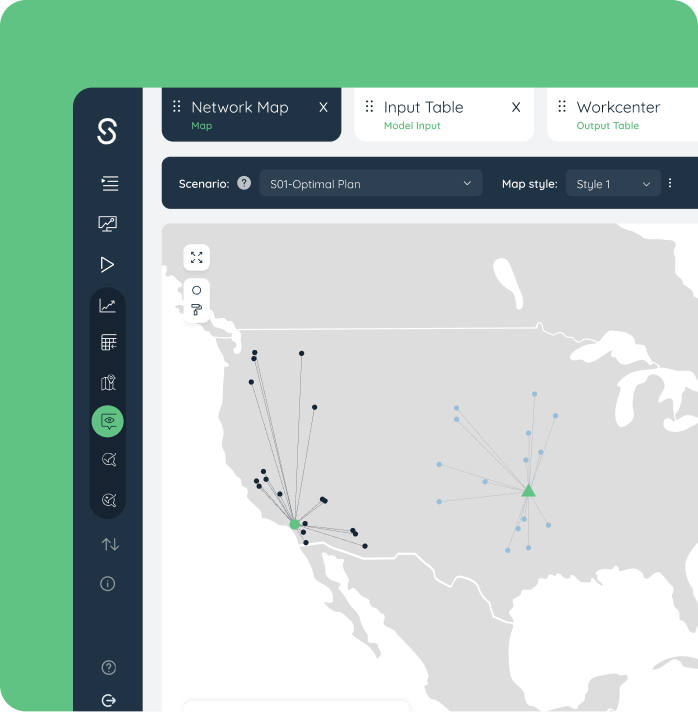
A U.S.-based manufacturer running two factories, one in Cleveland and one in Belleville, Illinois, considered closing the Cleveland plant and consolidating production into Belleville alone.
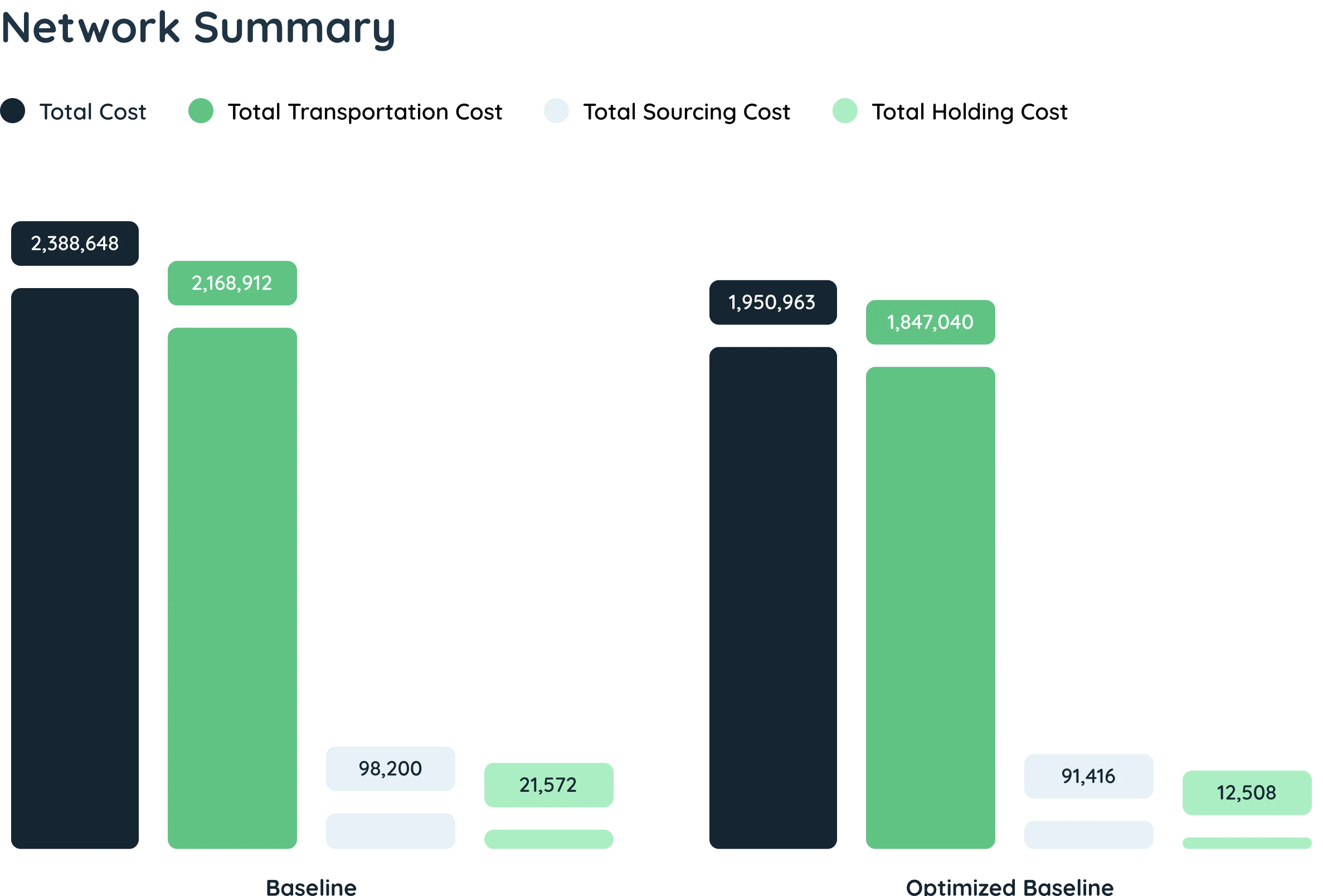
Sophus X modeled the full network, two factories, four distribution centers, and 98 customer locations, and compared total cost under both scenarios. Closing the Cleveland plant did reduce fixed costs, but the added transportation distance pushed logistics costs up enough to lower overall profitability
How a Greenfield or Brownfield Analysis Runs in Sophus
01
Collect Your Data
Gather customer locations, demand volumes, and any existing facility locations. Sophus can generate site coordinates directly from a postcode or address, so you do not have to source coordinates by hand.
03
Set Your Analysis Parameters
Choose Greenfield or Brownfield, decide between straight line or actual road distance, and set whether you are solving for a fixed number of sites or a service level target.
05
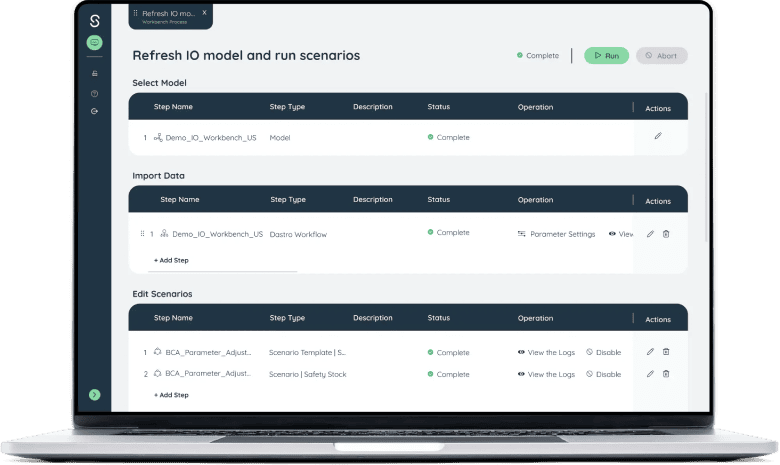
Sophus processes the data and returns results, without the weeks of manual modeling a traditional center of gravity study usually takes.
02
Bring It Into Sophus
Import your data through Dastro’s automatic connection to your existing systems, or bring it in directly with an Excel import, so everything lands in the platform accurately.
04
Set up the specific what-if comparisons that matter to your business, such as one site against two, or a coverage radius against a service commitment.
06
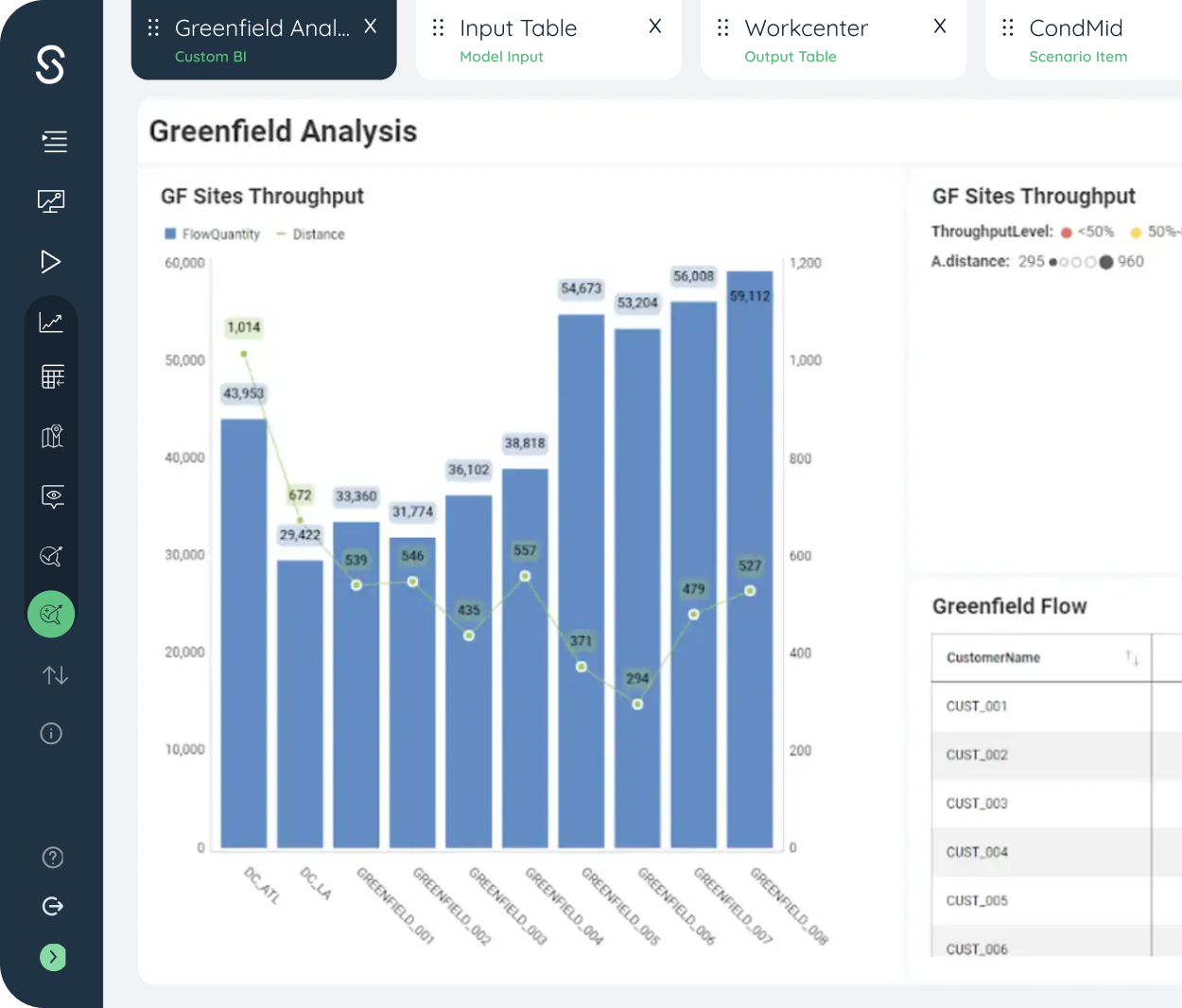
Review the maps and dashboards, identify the strongest configuration, and bring the selected sites straight into Sophus for deeper network design work.
What Getting This Right Is Worth
10-20%
Service Level Improvement
A facility footprint that actually matches where demand is today improves on-time delivery and coverage in the regions that need it most.
10%
Logistic Cost Reduction
Consolidating overlapping facilities and shortening the average distance to customers brings freight and handling costs down directly.
5-10%
Sourcing Cost Reduction
Better site placement relative to suppliers reduces inbound freight and sourcing cost alongside the outbound savings.
Getting the Site Right Sets Up Everything After It
A facility location is not a decision that stays in its own lane. The moment you lock one in, it becomes the starting point for cost, inventory, and routing decisions for years. Here is what that one choice feeds into.
Supply Chain Network Design
Your new or consolidated site does not exist on its own. It becomes one node in the full network model, and every other facility gets reevaluated against it.
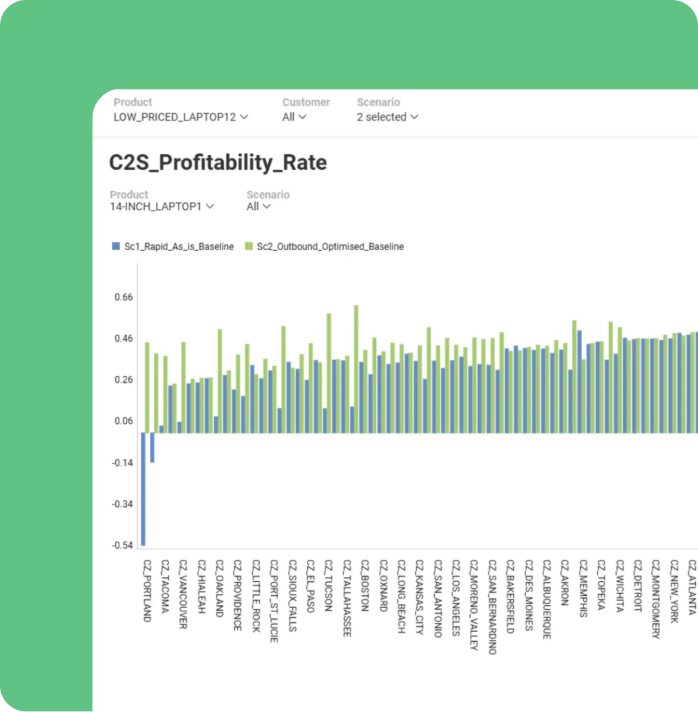
Cost-to-Serve Analysis
The site you choose sets your baseline cost to serve on every lane running through it. Model that impact by customer and product before you commit.
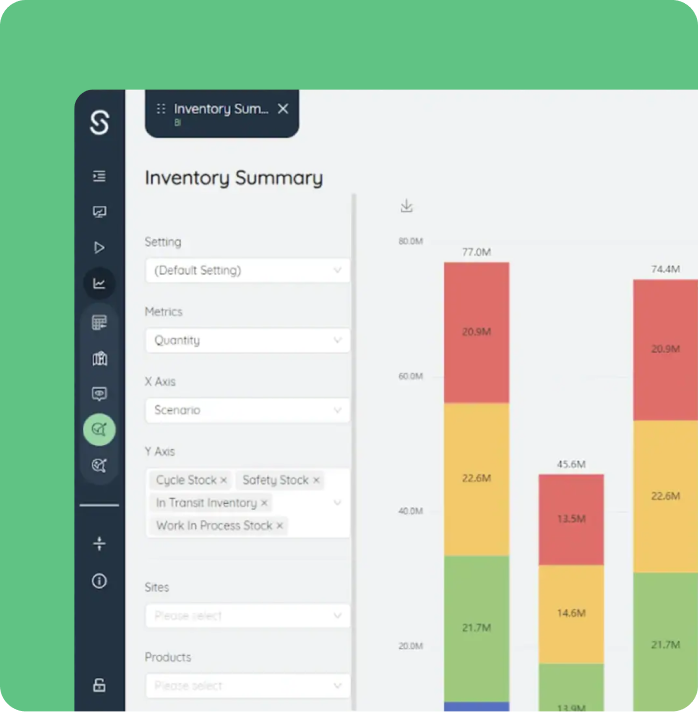
Multi-Echelon Inventory Optimization
Once a site is locked in, it needs a safety stock and replenishment policy of its own. Set that policy across every tier it feeds.
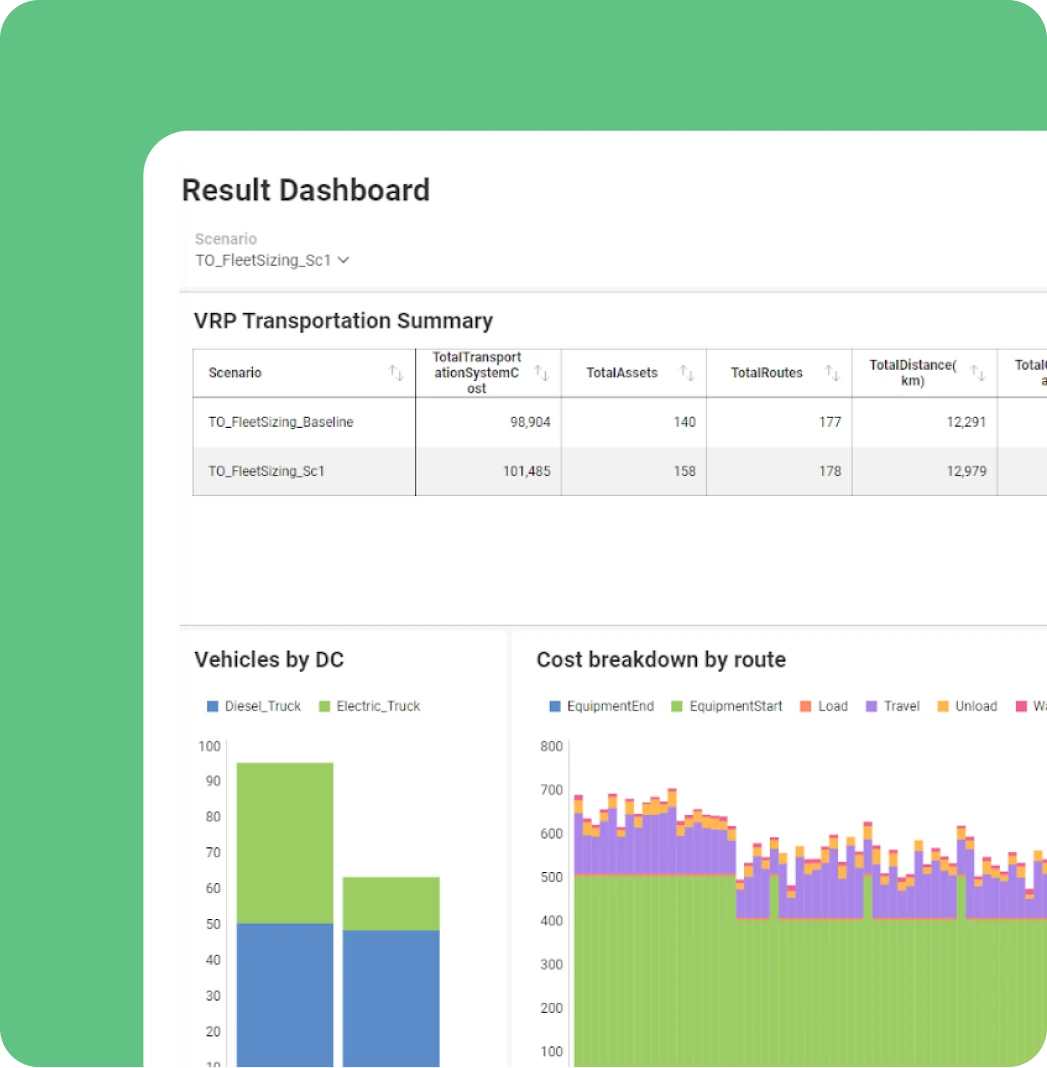
Transportation Optimization
Every route out of the new site still needs a carrier, a lane, and a schedule. Plan the freight network the location actually depends on.
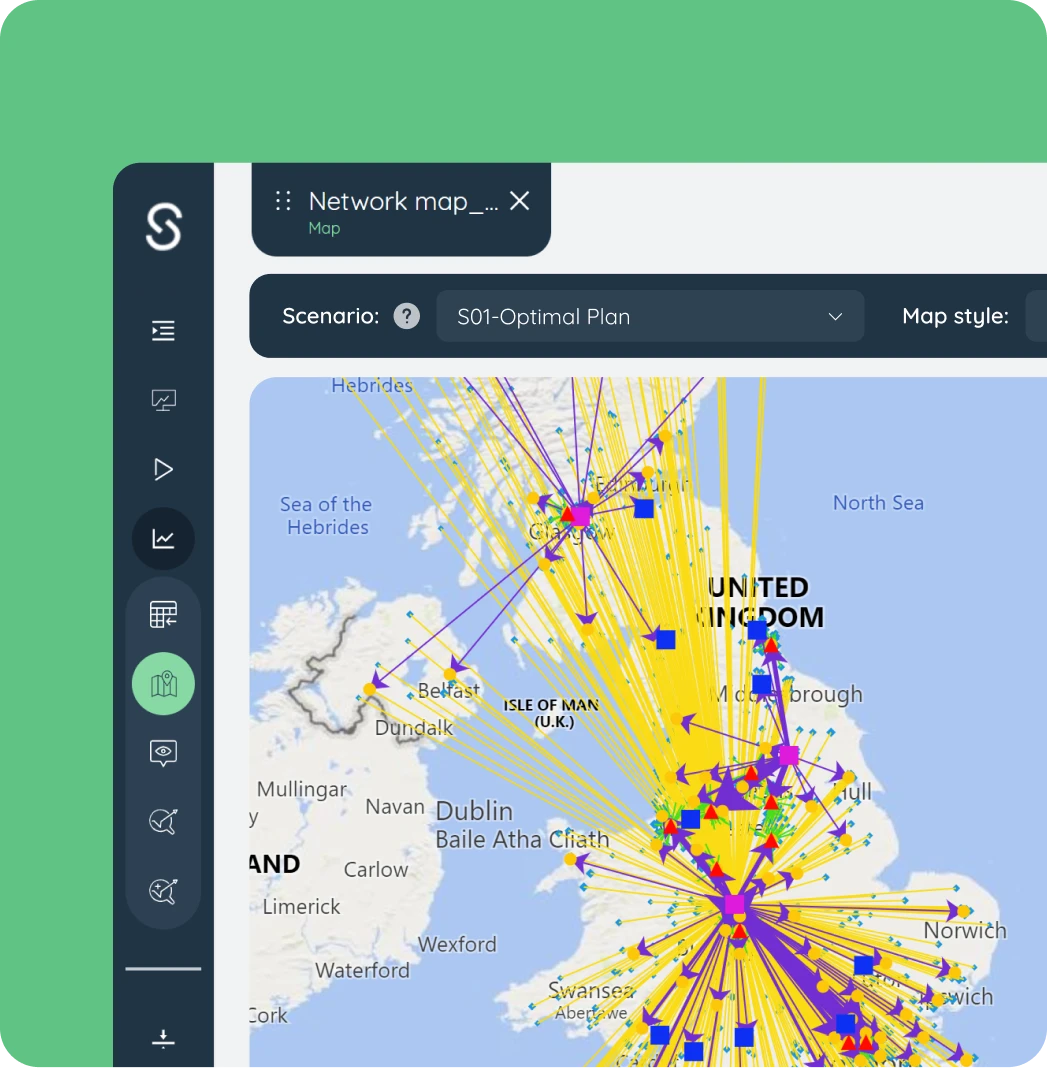
Tariff Impact Planning
Where you place a facility changes what you pay on goods moving in and out of it. Test that exposure for each candidate site before you decide.
Rapid Baselining
You cannot measure what a new site improves without an accurate picture of what exists today. Baseline your current network first.
What Verified Users Say on Gartner

4.8 ratings on Gartner Peer Insight
Greenfield and Brownfield Analysis FAQs
Take the guesswork out of facility site selection
Book a demo and see how Sophus models real site decisions before the budget is locked in.