
Distribution Network Optimization Software
Your Distribution Network Wasn’t Built for Where Your Customers Are Now
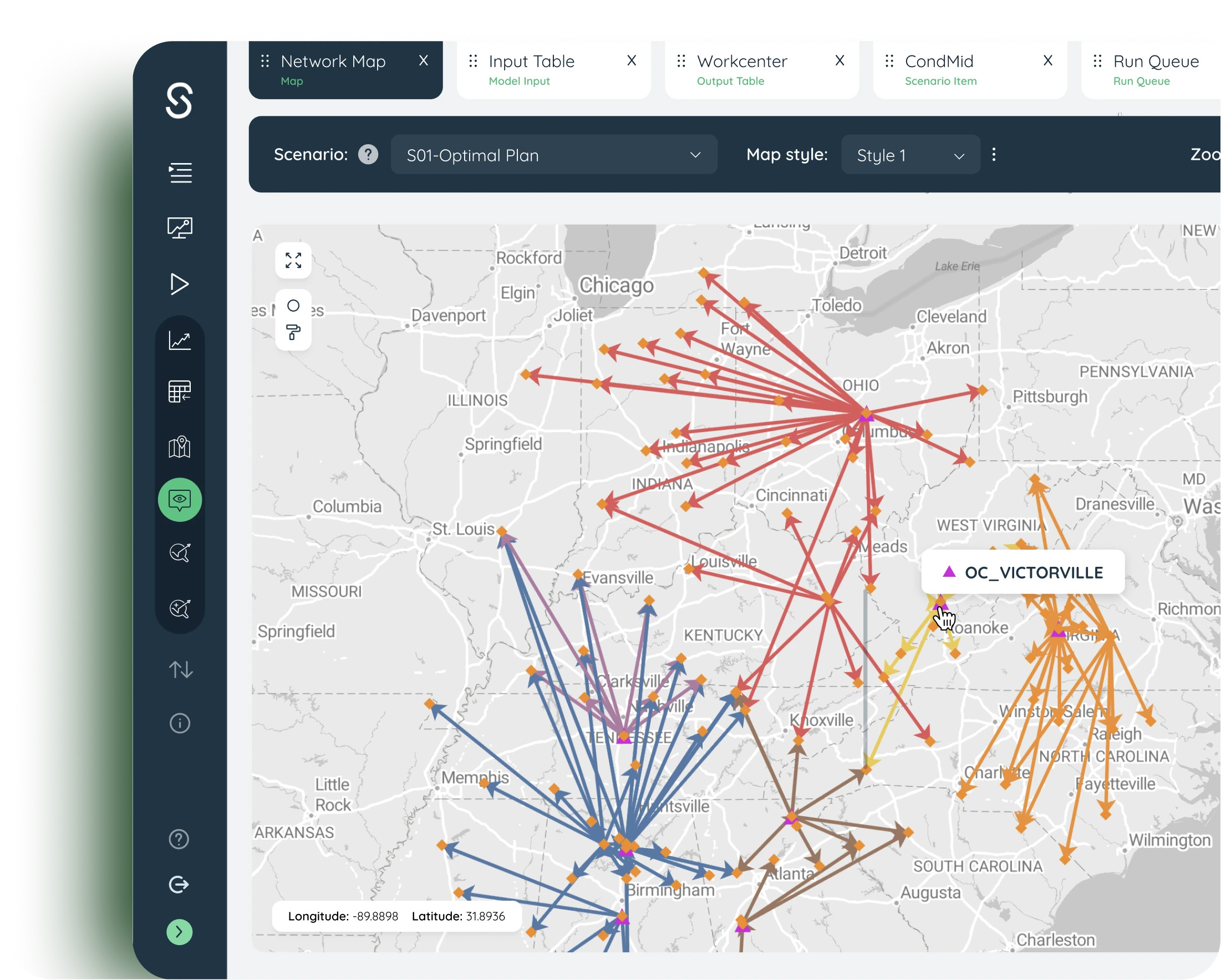
Order volumes shift, delivery windows tighten, and new regions open up, but most distribution networks still run on the hub-and-DC map drawn years ago. Sophus keeps hub placement, DC allocation, and last-mile routing tuned to where demand actually is. Call it distribution network optimization, minus the multi-year lag.
Trusted by Growing Companies at Every Stage of Network Design Maturity









Single Hub, Multiple Hubs, or Hybrid? The Model You Pick Decides the Rest
Distribution network optimization starts with one structural choice: how many hubs and DCs you run, and where. Most companies make that call once and never revisit it.

Single-DC/Hub Model
One facility, one map, minimal overhead.
Best for
Simple, low-SKU networks with a concentrated customer base.
Real Risk
One DC/hub means it will be exposed to tariffs, labor market change and other risks easily and it is the worst in terms of customer service

Multi-Hub / Regional Model
Coverage split by geography, redundancy built in.
Best for
Networks spanning multiple regions or countries with different regional service levels and regulatory requirements.
Real Risk
Cost is not optimal, DCs get under utilized

Hybrid DC Model
A blend of central and regional facilities, tuned by product or channel.
Best for
Networks balancing cost efficiency with lead time commitments across channels.
Real Risk
The most complex model to run by hand. This is exactly where a spreadsheet stops being enough.
See Exactly Where Sophus Helps You
If any of this sounds familiar, this is exactly where Sophus makes the difference.
DC/Hub-to-region assignments nobody’s revisited since they were first drawn
Delivery windows missed inconsistently, region by region
Running a multi-region or omni-channel distribution footprint
Last-mile costs creeping up in specific regions, not everywhere
Some DCs running over capacity while others sit underutilized
Considering a new hub, DC consolidation, or expansion into a new region
From Static Plan to Continuously Tuned Network
Four things happen differently once Sophus is running your distribution network.
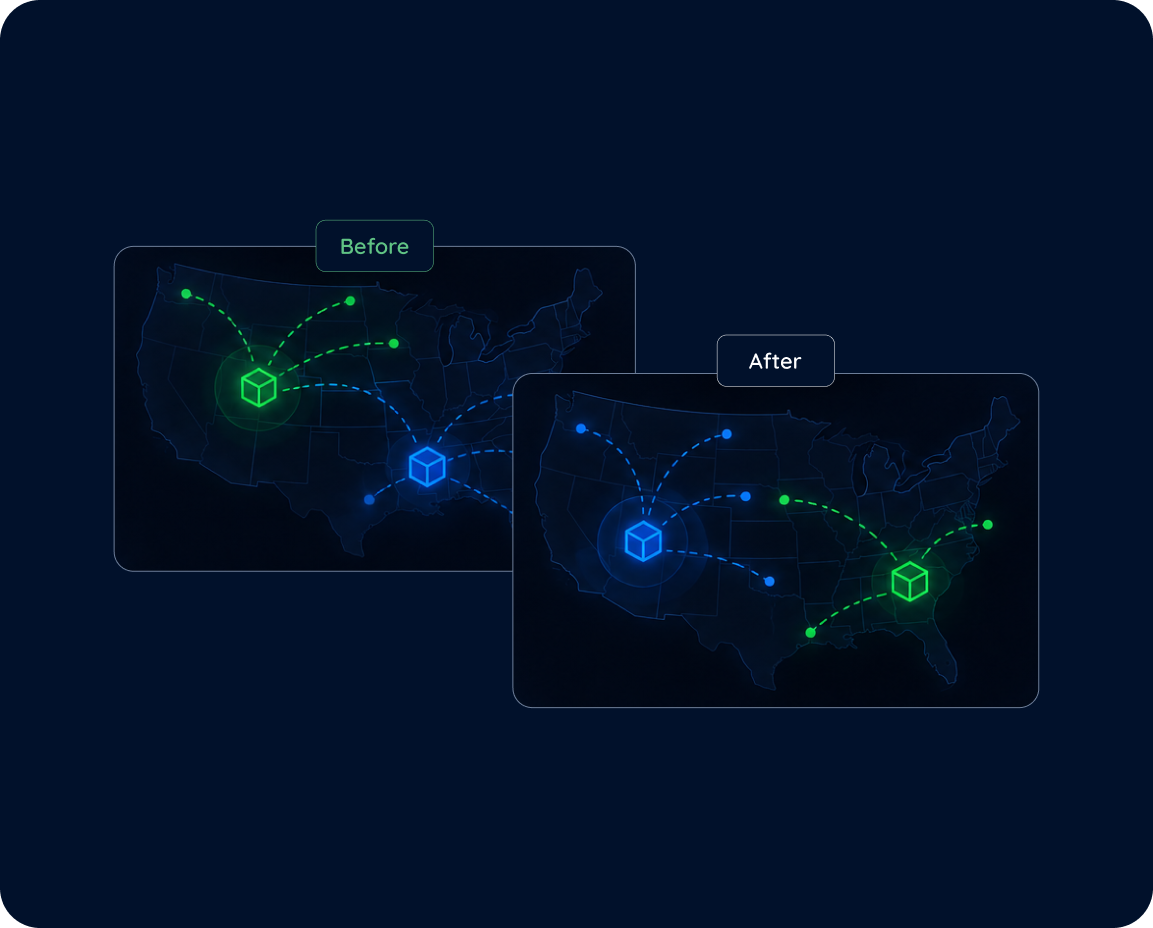
Assigns Coverage as Demand Shifts
Continuously reevaluates which hub or DC should serve which region as order volumes and channels change, instead of running on an assignment drawn once.
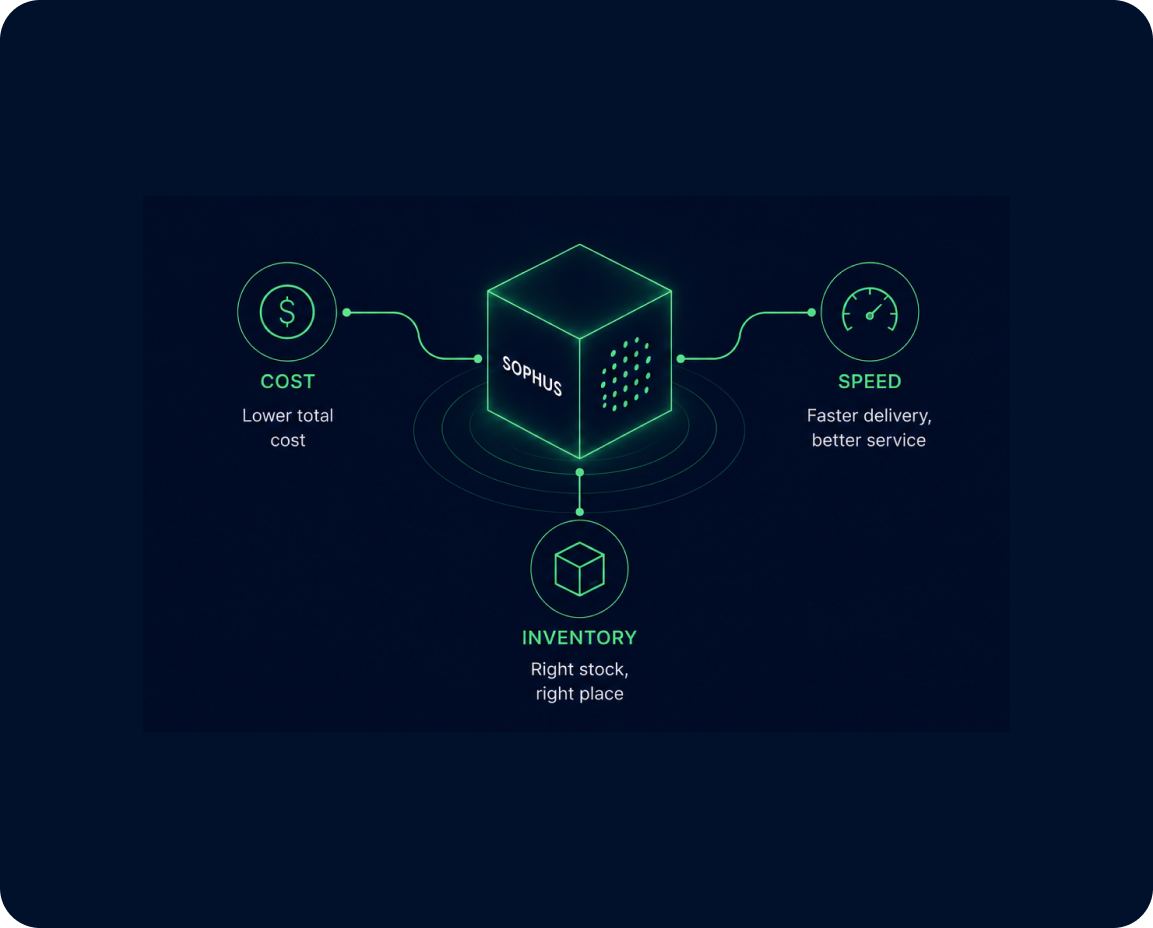
Balances Cost, Speed, and Inventory Together
Transportation cost, lead time, and inventory positioning get optimized in one model, instead of three teams solving their own piece and fighting over the tradeoffs.
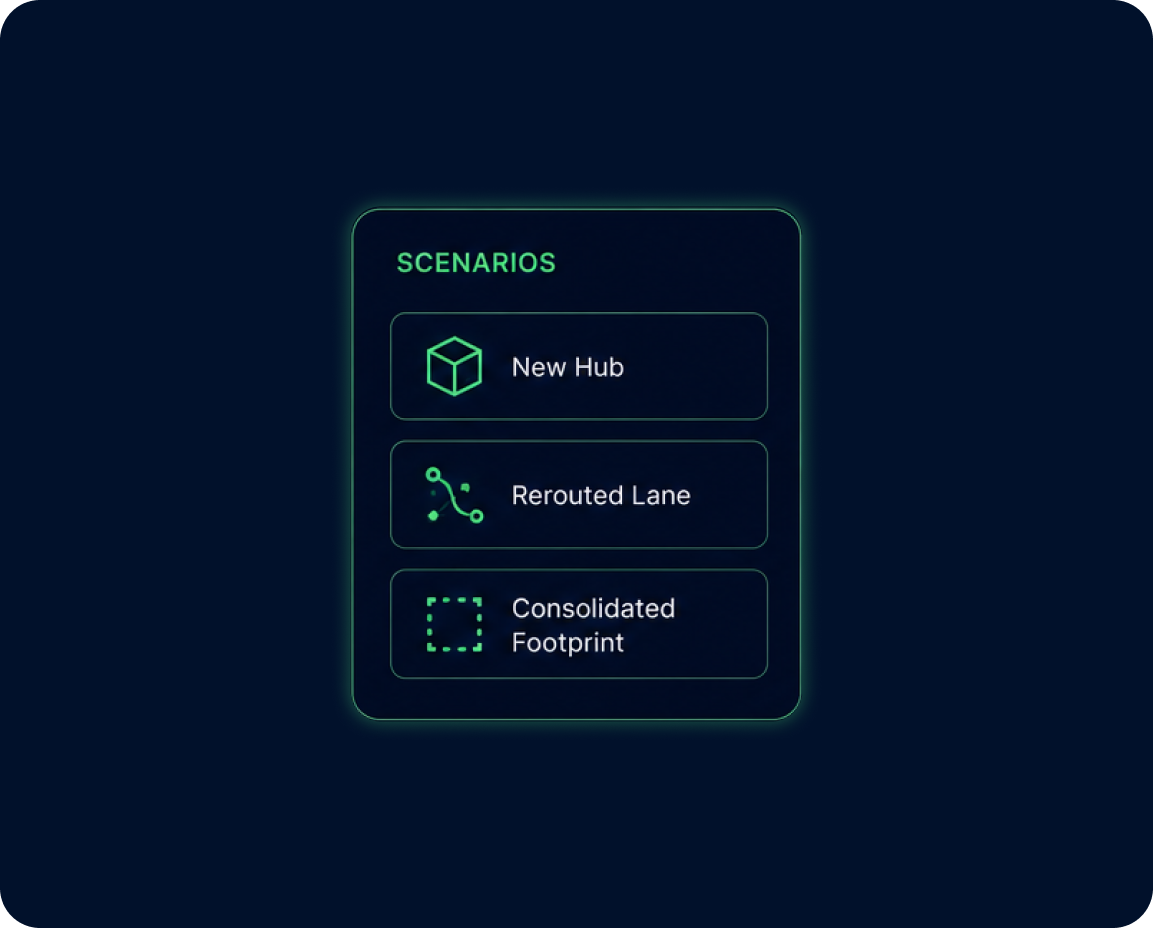
Tests the Hard Call Before You Commit
Shows Its Reasoning
Every recommendation traces back to the inputs and rules that produced it, so a dual-hub or consolidation call can be defended in a meeting, not just repeated.
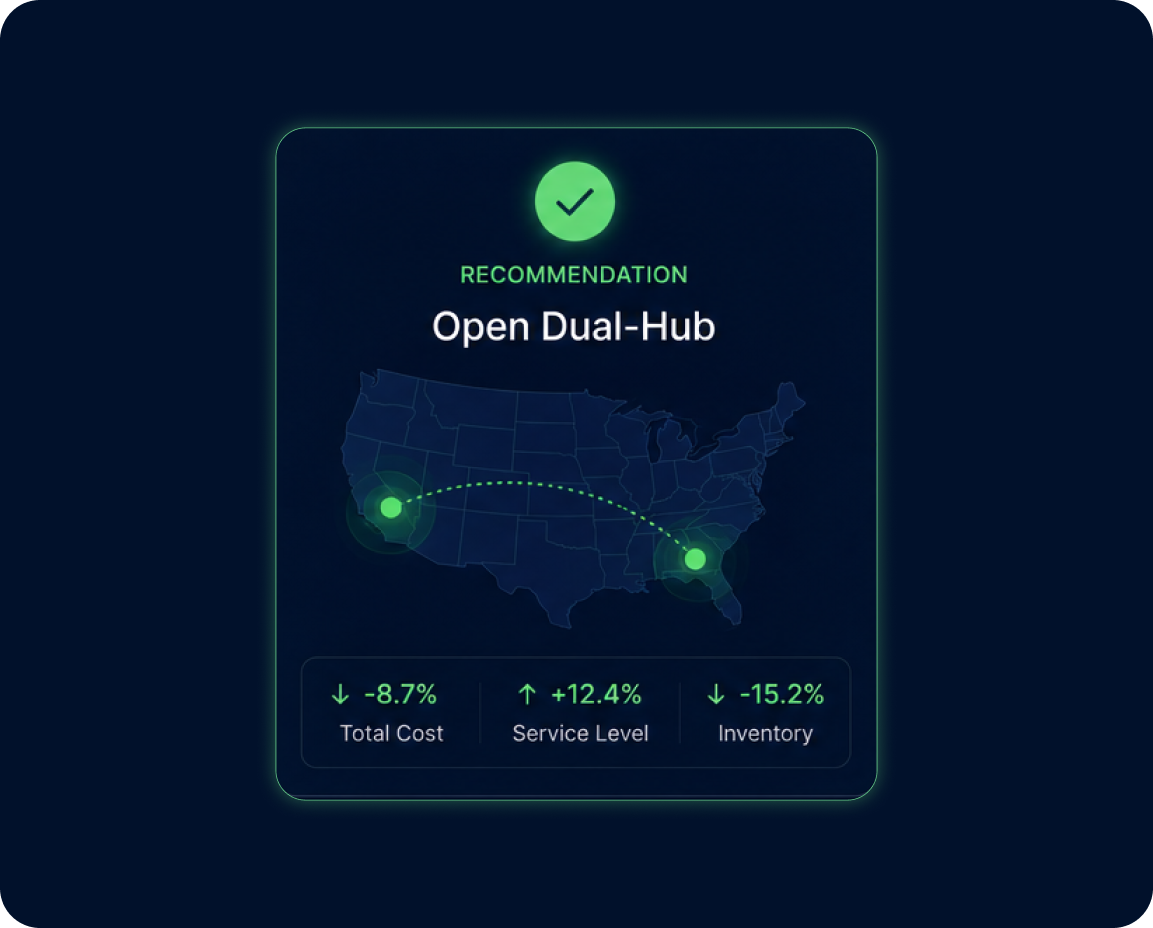
One manufacturer had to make exactly this call under real pressure.
Here’s what happened →
What Happens When You Actually Model the Hard Call
Not every distribution question has a clean answer. Here’s what happened when two real manufacturers asked Sophus to model theirs.
96%
Orders within target lead-time
90%
Customers with one-day delivery
20%
Excess facilities identified
$20M
Annual savings
5-6%
Lower logistics costs
Model Used: Hybrid DC/Hub network
90%
Orders can be delivered within target lead-time
High-tech Manufacturer
A single central DC/hub left the company exposed to tariffs, geopolitical risk, and customs clearance delays on every order.
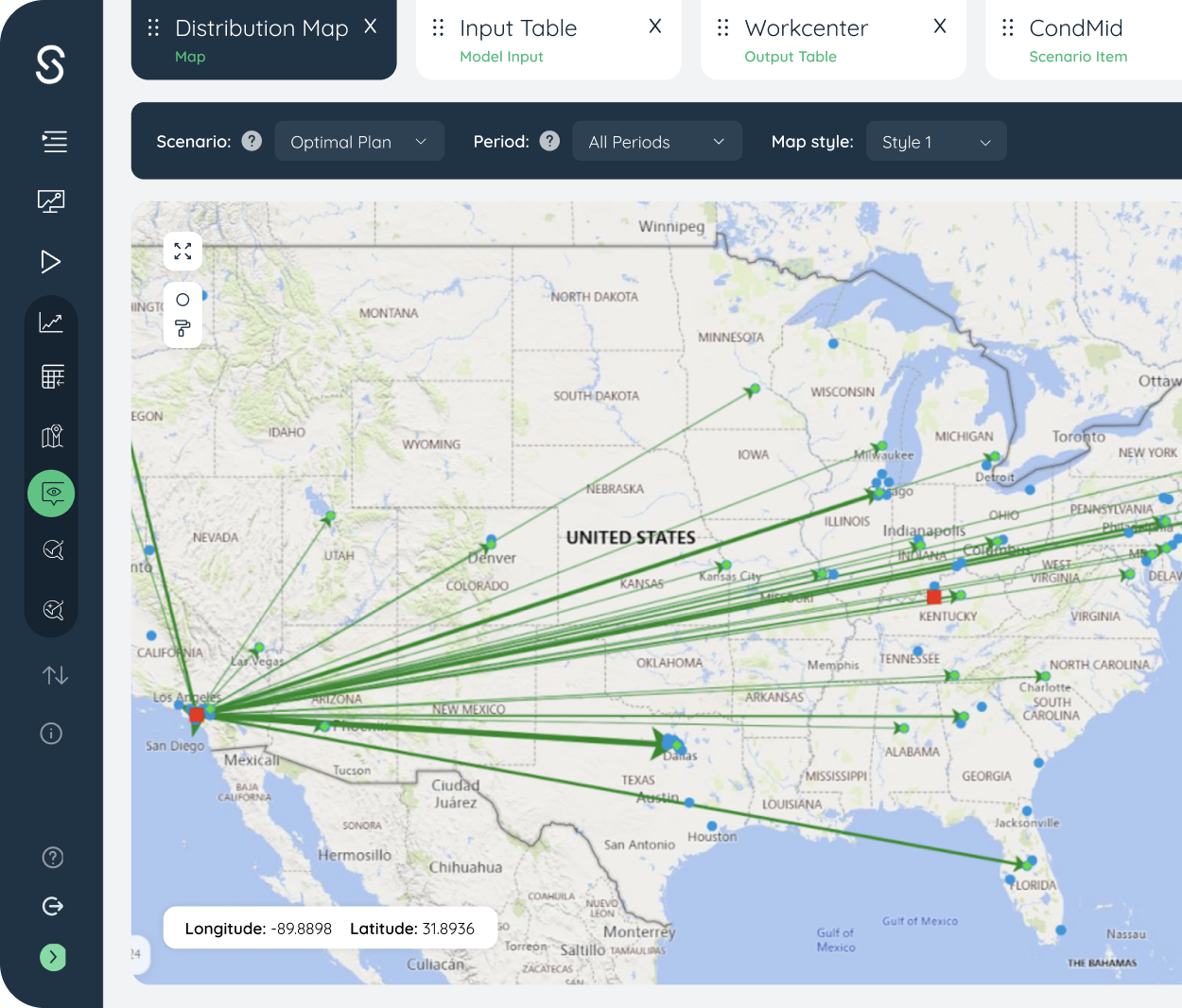
Sophus built a digital twin and redesigned the footprint: apart from its central DC/hub, regional DCs are set up across key regions so that 90% of customers can enjoy the next day service while cutting logistics costs by 5–6%.
Model Used: Consolidated Multi-DC/Hub
Post-Acquisition Network Consolidation
Two overlapping national distribution networks after a merger created redundancy, duplicate DC footprint, and unbalanced coverage.
Sophus integrated logistics data, ran hundreds of scenarios, and identified 20% excess facilities, consolidating DC/hubs and rerouting shipments while holding service steady.
$20M
in annual savings
Six Reasons Buyers Choose Sophus
The short version. Full detail lives on our network optimization page if you want to go deeper.
The Roles and Industries That Feel This Most
Same problem, different seat.
By role

VP of Distribution & Logistics
Let Sophus decide which DC serves which order, instead of doing it by hand every time demand shifts.

Director of Transportation
Stop paying for the wrong hub serving the wrong region.

Director of E-Commerce Fulfillment
Keep delivery promises even as order volume and channel mix keep shifting.
By industry
Retail
Decide which DC ships which order in real time, store by store.
Consumer Packaged Goods
Keep DC assignments in step with promotions and channel shifts.
Third-Party Logistics
Reassign coverage per client contract, not one fixed map.
Manufacturing (Discrete & Process)
Get finished goods from plant to DC to customer without handoff points fighting each other.
Oil & Gas / Aerospace & Defense
Plan long-cycle, compliance-heavy distribution decisions that compound for years, not quarters.
What Verified Users Say on Gartner

4.8 ratings on Gartner Peer Insight
What Else Feeds Into a Distribution Network
These usually need to work alongside it.
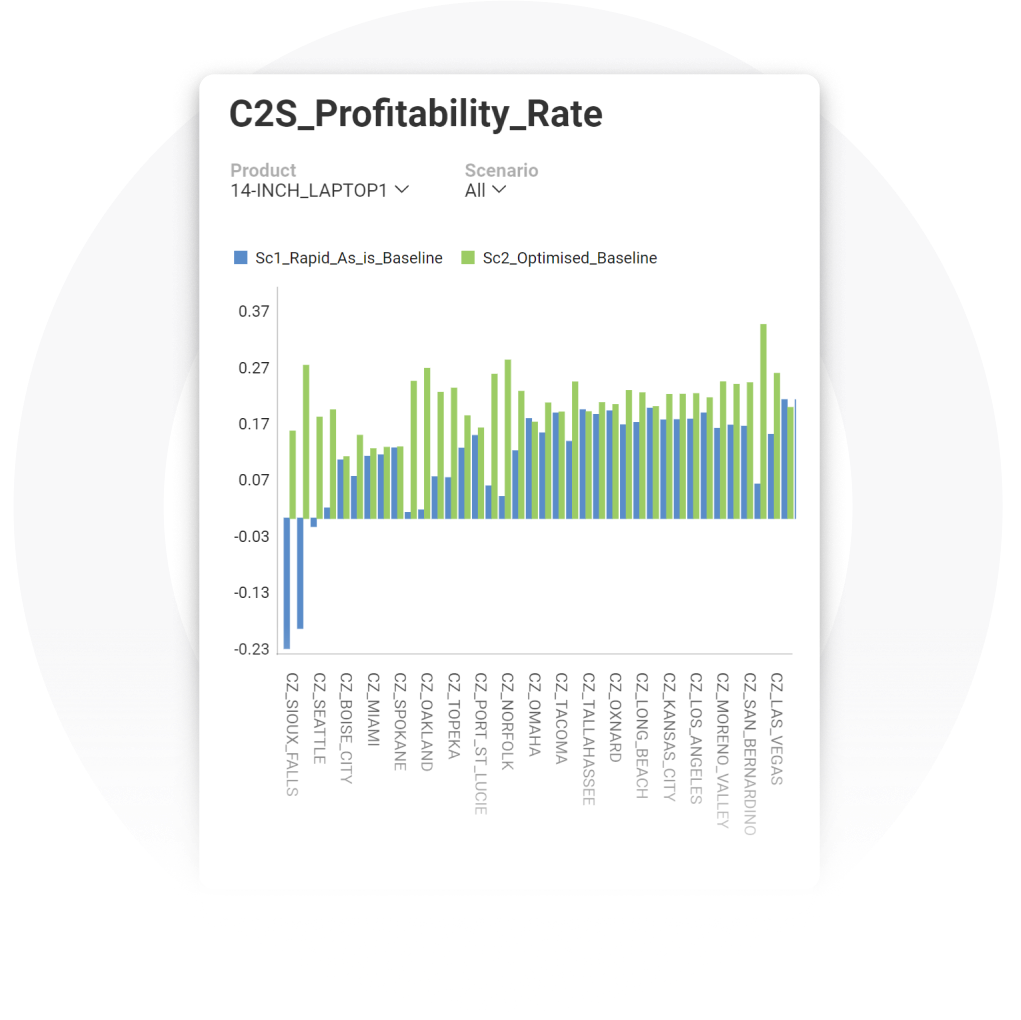
Supply Chain Network Optimization
Distribution is the downstream half. See how sourcing, inventory, and transportation get optimized end to end.
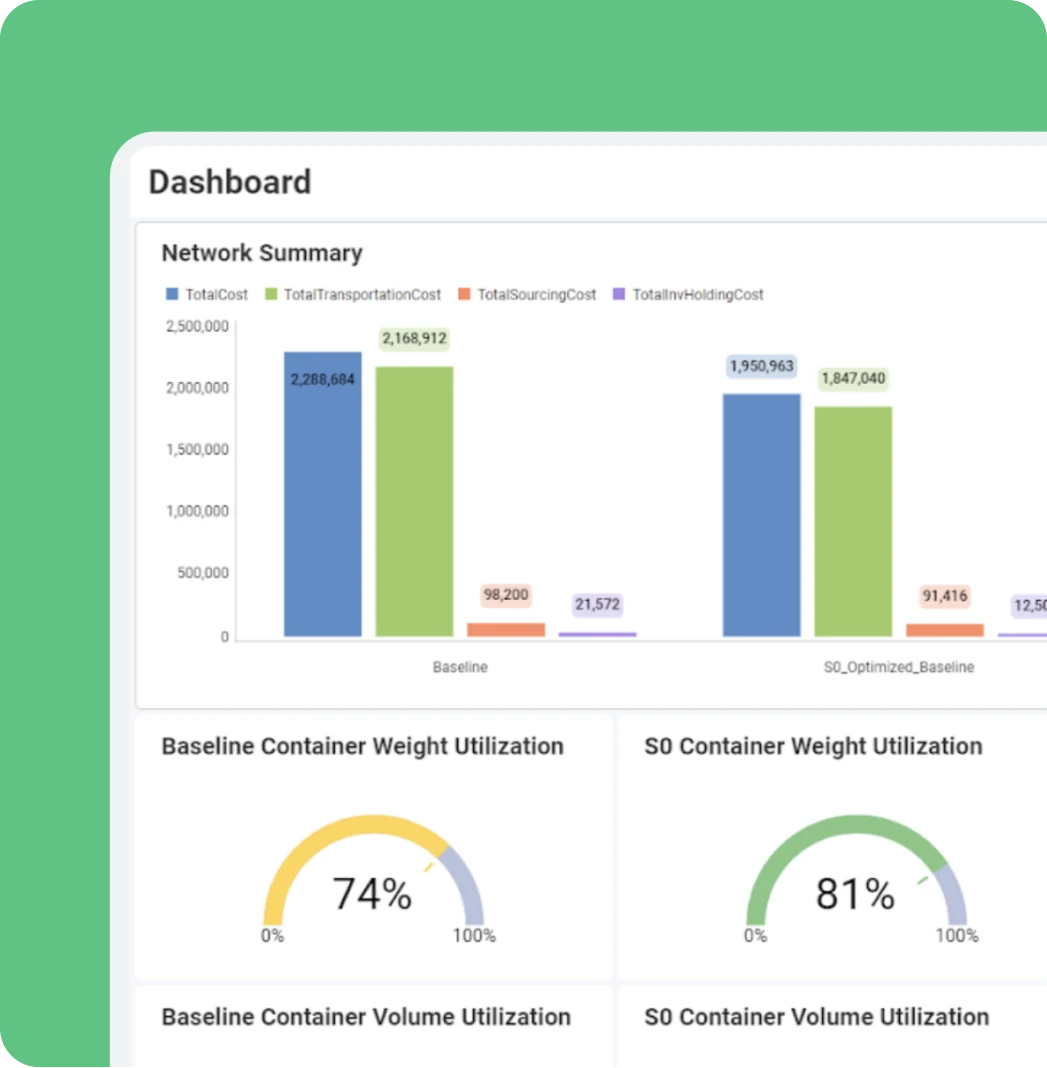
Supply Chain Network Design
When the hub footprint itself needs to change, not just the flow through it.
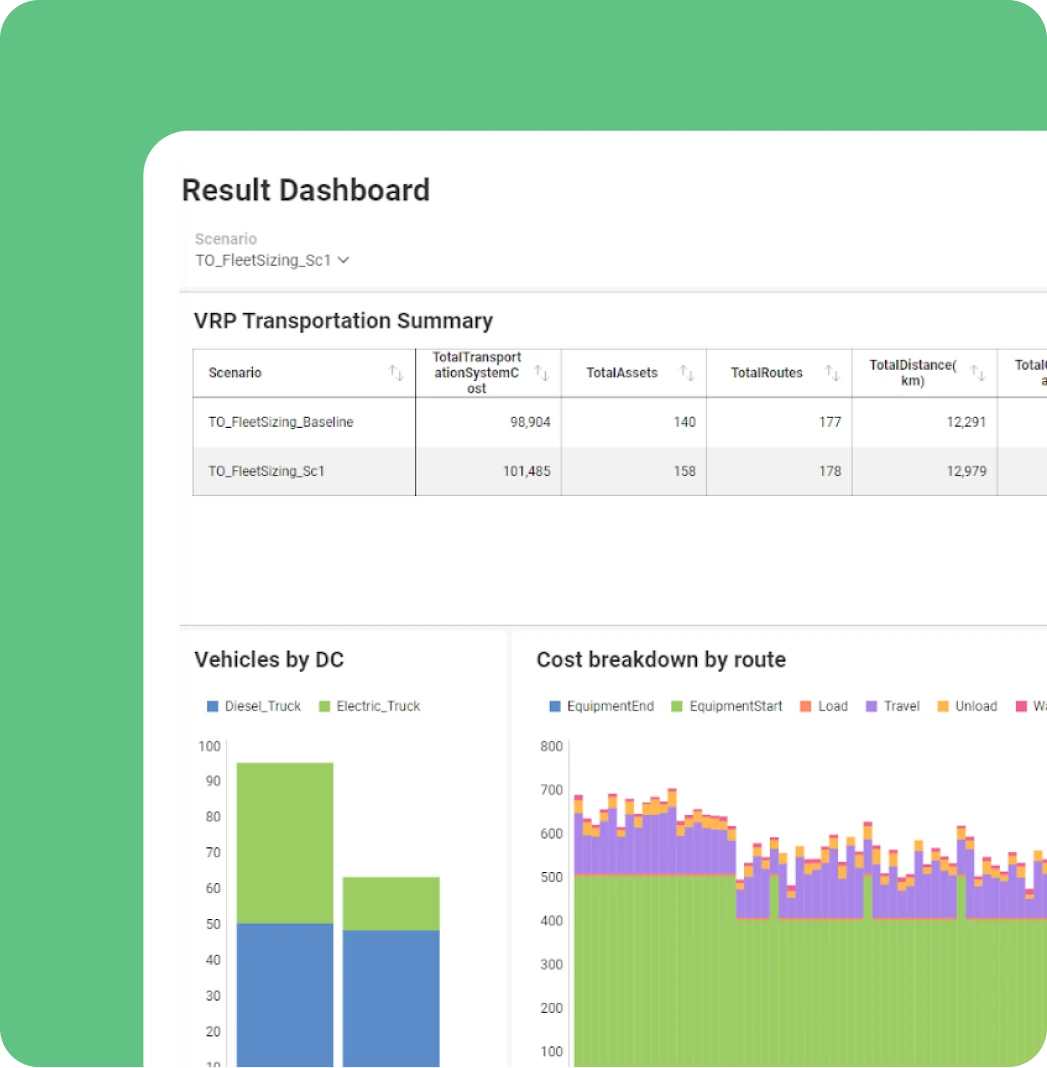
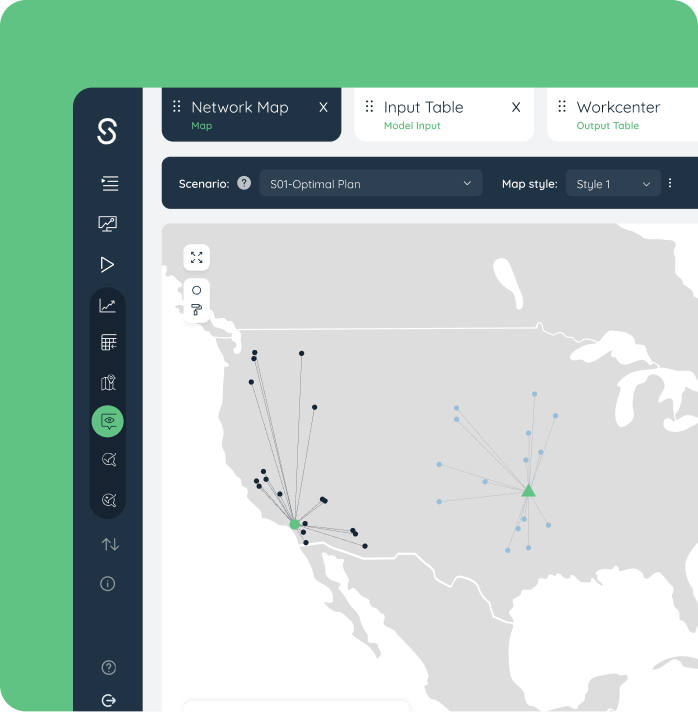
Transportation & Last Mile Optimization
Go deeper on the lanes and routing decisions connecting hubs to the customer’s door.
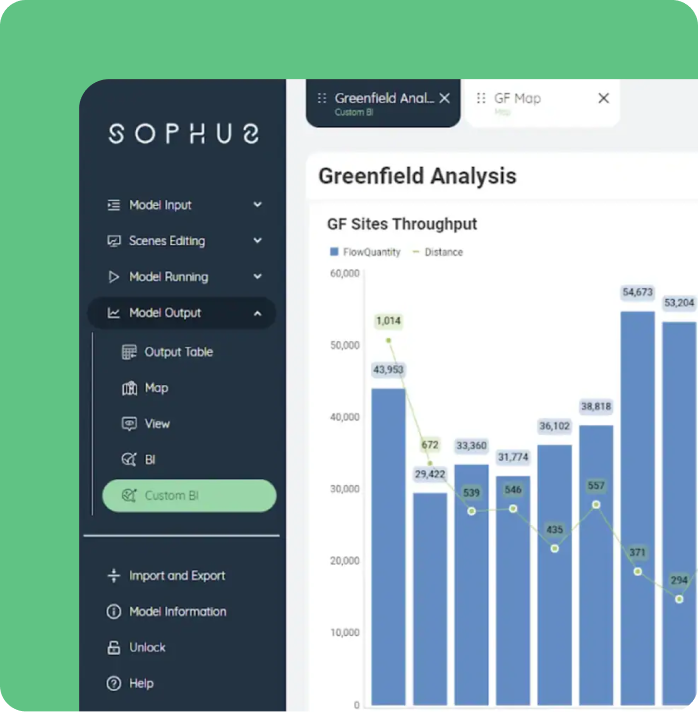
Greenfield and Brownfield Analysis
For when the answer is a new facility, instead of a new assignment.
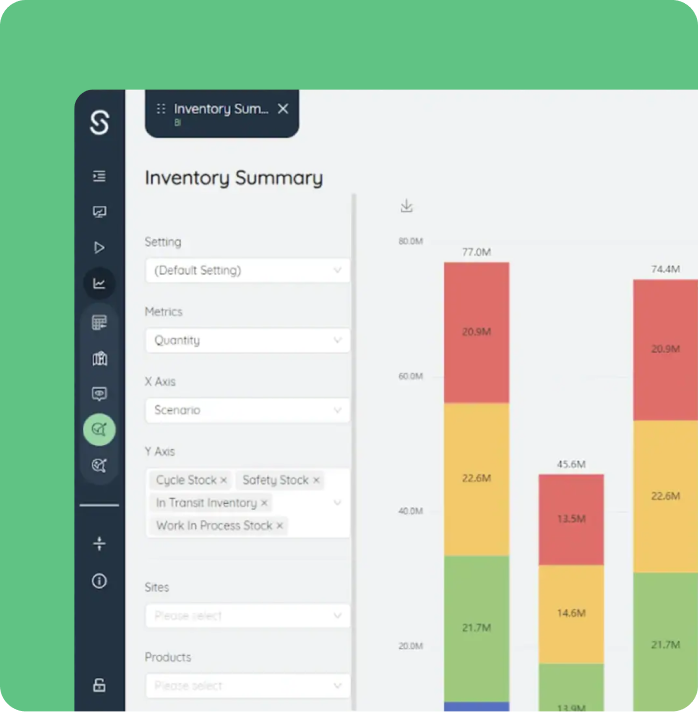
Multi - Echelon Inventory Optimization
Safety stock and replenishment policy across every DC tier.
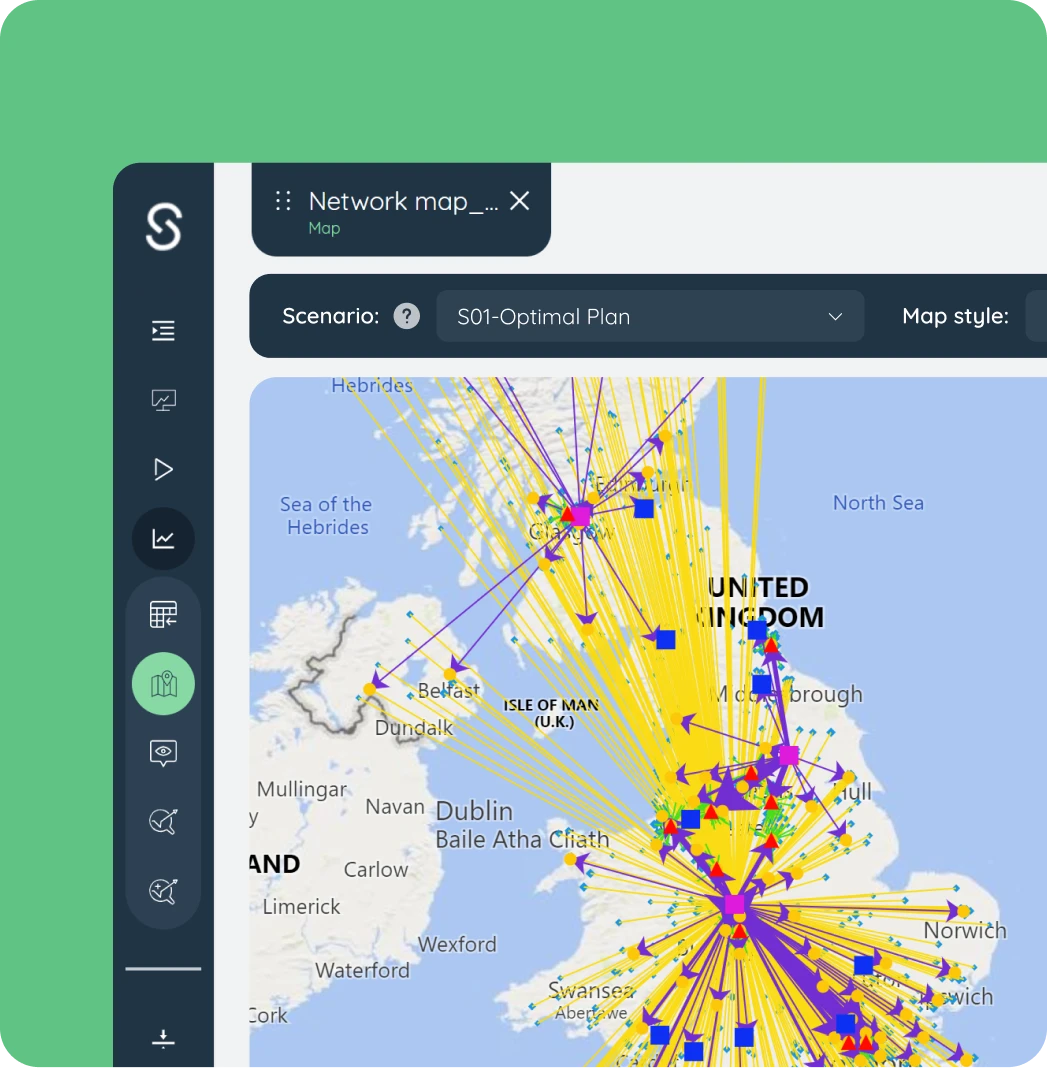
Tariff Impact Planning
Model the exact kind of shift that forced the dual-hub call above.
Distribution Network Optimization FAQs
Your Delivery Footprint Won’t Stay Still Either
Stop Treating Your Distribution Network Like a Finished Project
Book a demo and see how Sophus keeps hub placement, DC allocation, and last-mile routing tuned long after the initial design is done.