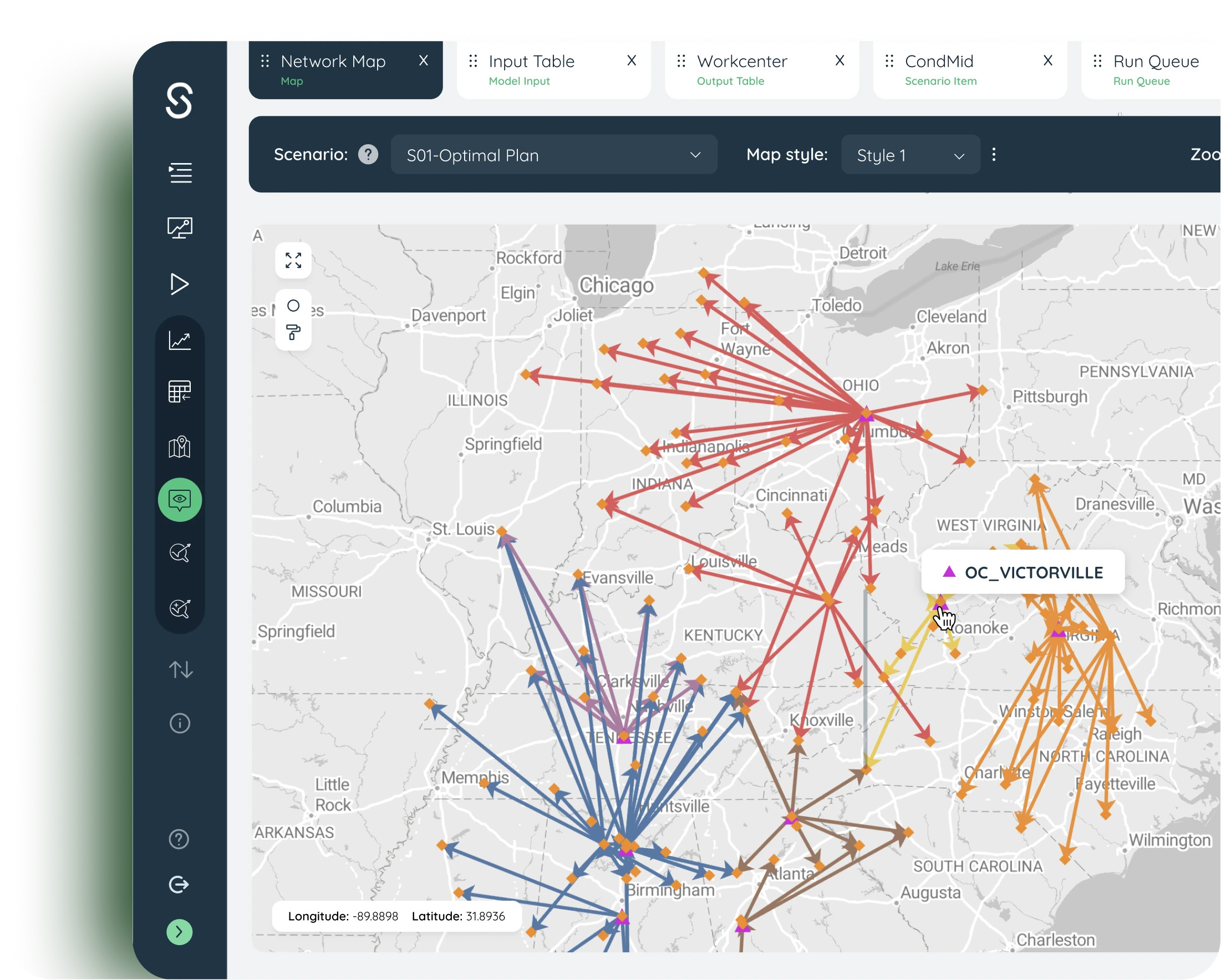

Supply Chain Network Optimization Software
Resilient Supply Chains Start With Continuous Network Optimization
Market dynamics shift, tariffs rise, production capacity drops, and sourcing prices climb. Sophus keeps sourcing, inventory, and transportation decisions current through all of it, so cost, service, and complexity stay balanced instead of drifting apart.
Trusted by Growing Companies at Every Stage of Network Design Maturity








A Network That’s Designed and Optimized Once Doesn’t Stay Optimized Forever
Network optimization is the discipline of keeping cost and service in balance while demand, costs, and lead times keep moving underneath the plan you built.
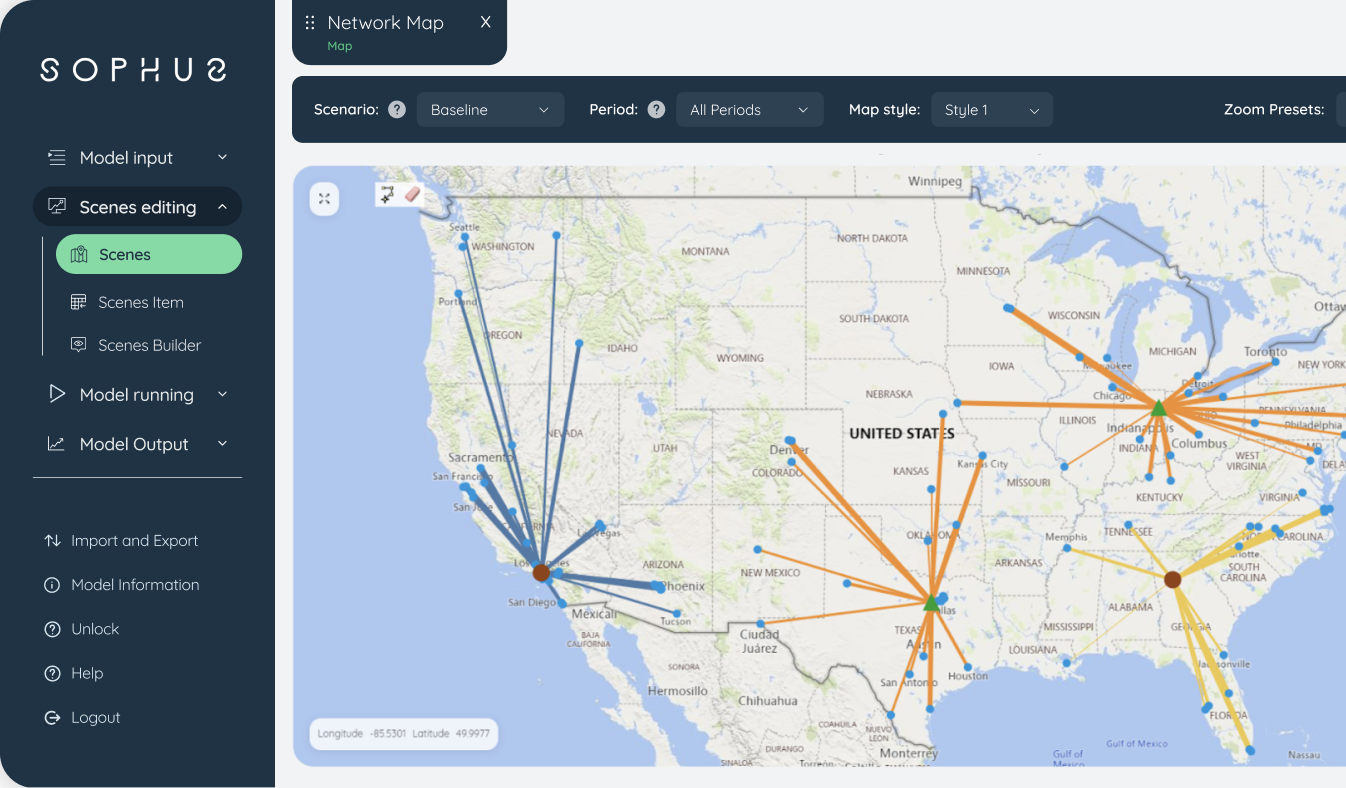
Why Network Optimization Matters
As demand, cost, and constraints shift, teams get pushed into reactive workarounds:

Expediting shipments to hit service/revenue targets regardless of cost

Sacrificing service and sales because of capacity limits

Constant stock transfers to rebalance inventory
These workarounds keep operations running, but they come at a cost. Over time, they erode margin, add variability, impact revenue and service, and make performance harder to control.
Even a well-built supply chain network design falls behind without continuous optimization running on top of it.
The Bigger You Grow, the Faster the Spreadsheet Breaks
A spreadsheet can just about keep up when you’re running one production facility/one distribution center, and a short supplier list. Add more SKUs, more regions, more supply bases, and the same file stops being something you can trust. It doesn’t scale with the complexity you’ve got.
YESTERDAY
Simple to manage.
Easier to plan.
Fewer facilities
Fewer suppliers
More predictable demand
GROWTH THRESHOLD
Beyond this point, complexity accelerates exponentially.
TODAY
Exponential complexity.
Every decision impacts more.
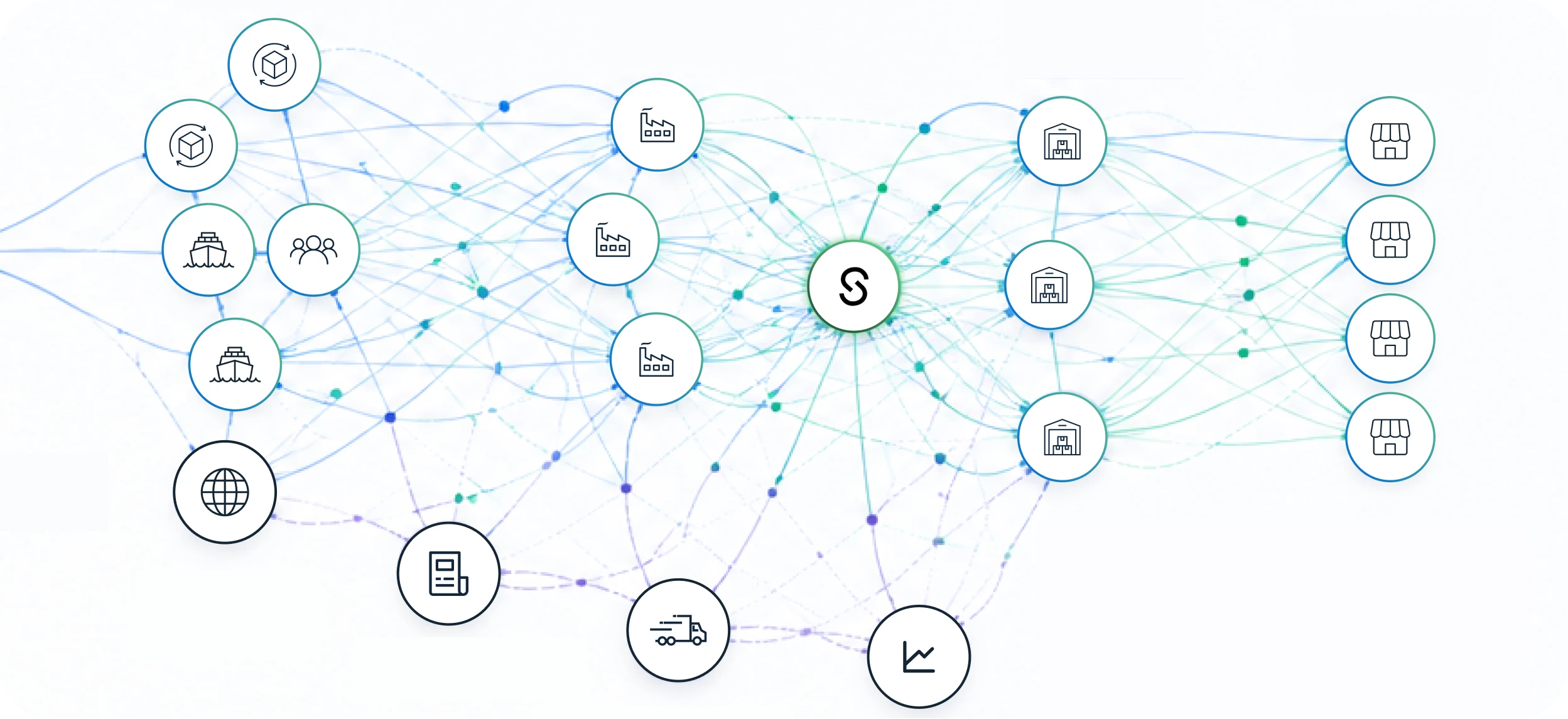
More facilities
More suppliers
More SKU’s and customers
More variability
More risk
More decisions/span>
See Exactly Where Your Network Stands
Approaches That Stop Working the Moment Something Changes
- A network model that was accurate the day it was built, not the day you’re using it
- Manual spreadsheet work to weigh cost, service, and inventory tradeoffs against each other
- One-off fixes applied only after a problem becomes visible enough to notice
The Signs a Network Has Fallen Behind
- Transportation or fulfillment costs creeping up with no clear cause
- Inventory sitting in the wrong locations while other sites run short
- Service levels that swing depending on region or channel
- A team stuck reacting instead of getting ahead of the next shift
When to Bring In Sophus
Finding clear, measurable ways to reduce transportation cost and inventory while improving service levels.
Running a multi-echelon network model with real-world interdependencies and complexities, and getting answers in hours, not months
Replacing a model only one person knows how to update with one your whole team can run and trust.
Make Supply Chain Network Decisions With Confidence
Use advanced optimization and simulation to stay resilient, cost-efficient, and future-ready.
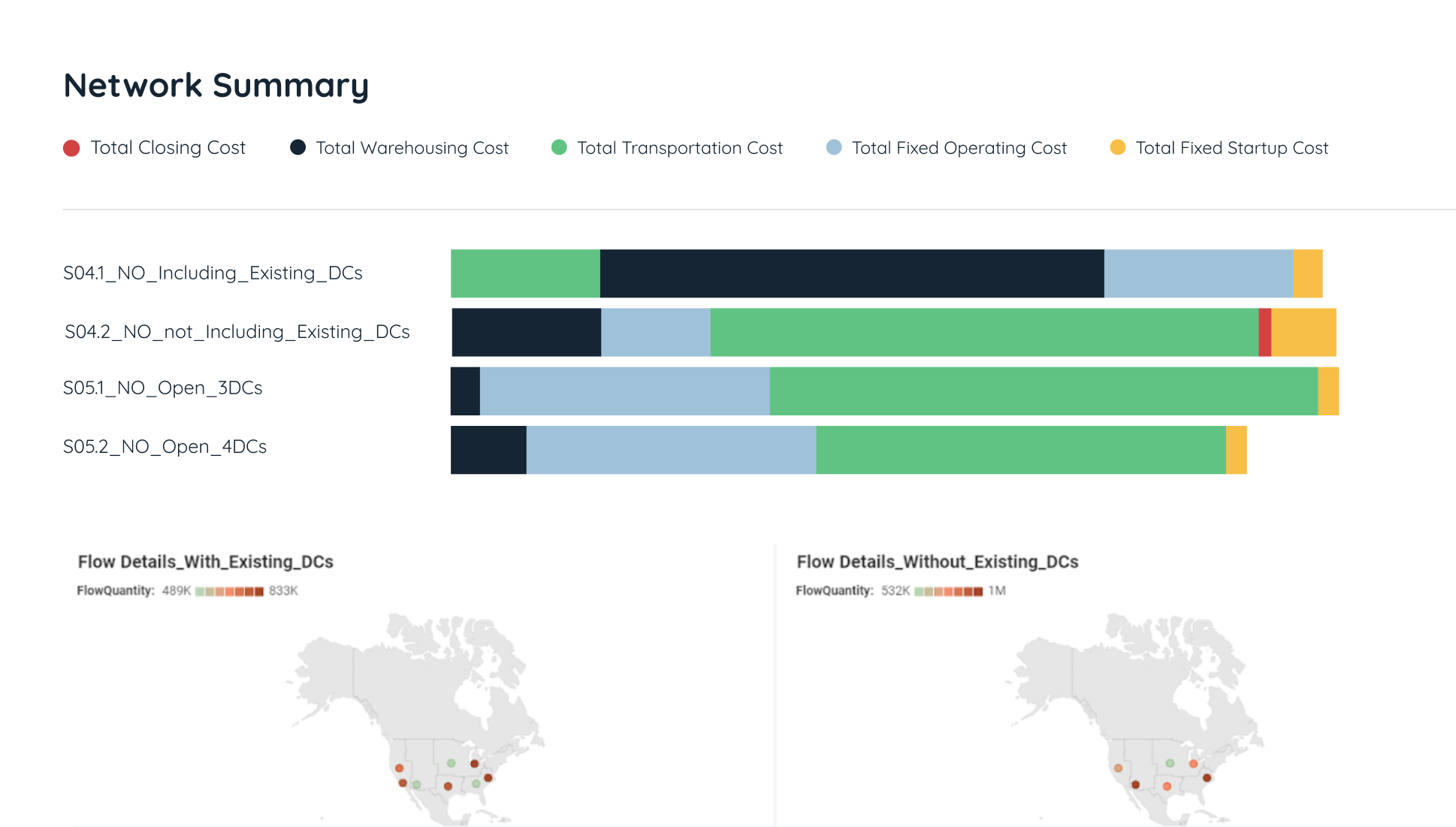
What Changes When the Model Never Stops Running
Verified reviews and a real network, with the numbers to prove it.
15%
Network efficiency gain
12%
Reduction of delivery cost
10%
Fewer stockouts & surplus
20%
Increase in sales
25%
Improvement in profit margin
What Happened When Networks Switched to Continuous Optimization
$20M+
in total savings
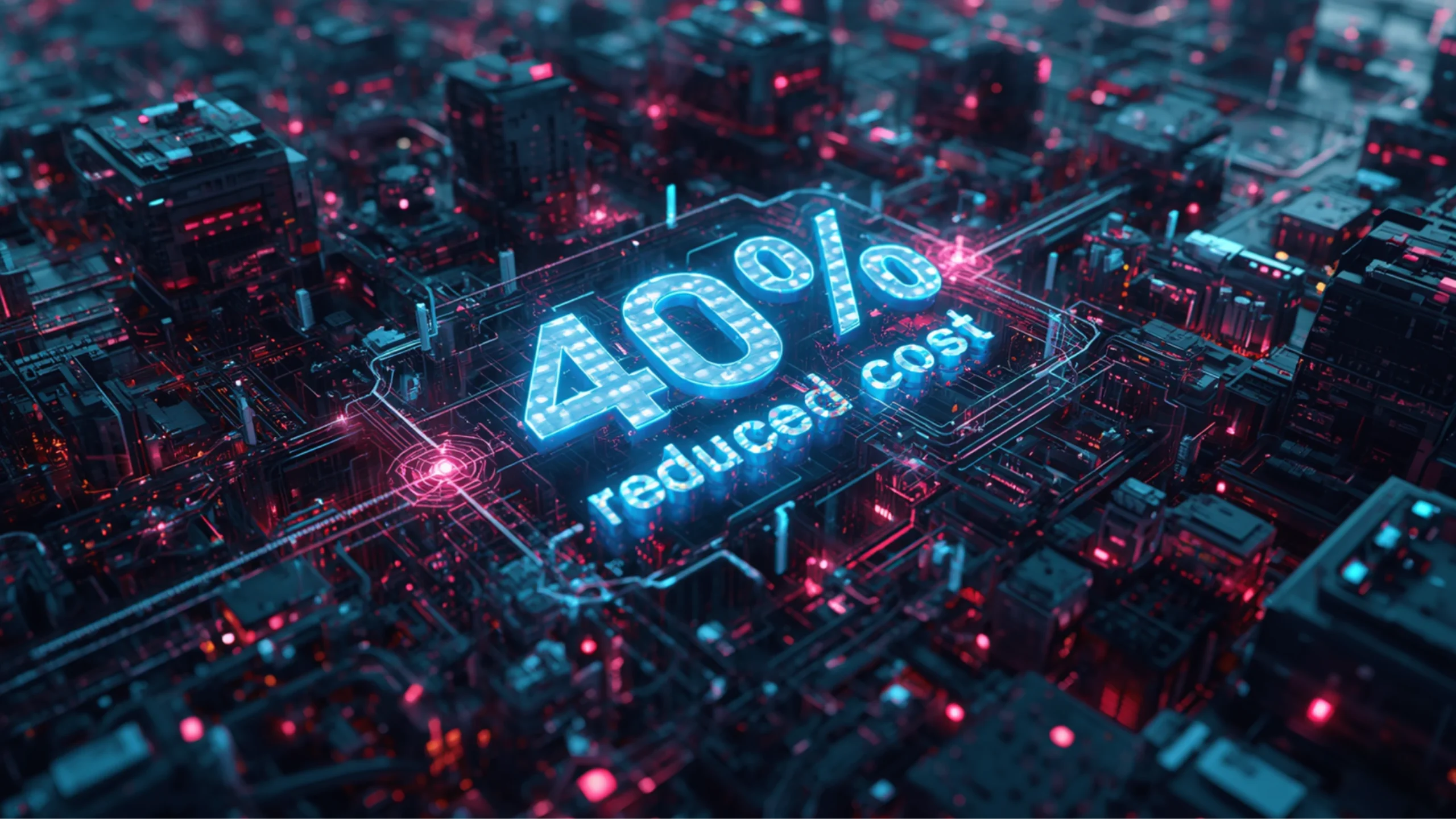
40%
lower operational costs
$10M
in savings unlocked
Lee Kum Lee

A global network spanning 40+ distribution centers, with inventory imbalances across the network hiding the real cost of doing business.
Sophus optimized production allocation, DC footprint and inventory allocation, replacing a static plan with a model that updates in real time.
LONGi
Fast growth across Europe strained logistics, driving up costs and leaving DCs swinging between overcapacity and undercapacity.
Sophus redesigned inbound network and DC placement to match the network LONGi actually has, not the one it was built at the beginning.
Food Distributor

An “everything, everywhere” stocking strategy created inventory imbalances, constant and expensive transfers between locations
Sophus built a live model of the network and its inventory, then optimized stock allocation and transfer/replenishment across these locations based on what’s needed.
The Engine Built to Never Stop Tuning Your Network
Most supply chain optimization software stops at a single static model. Sophus manages this differently.
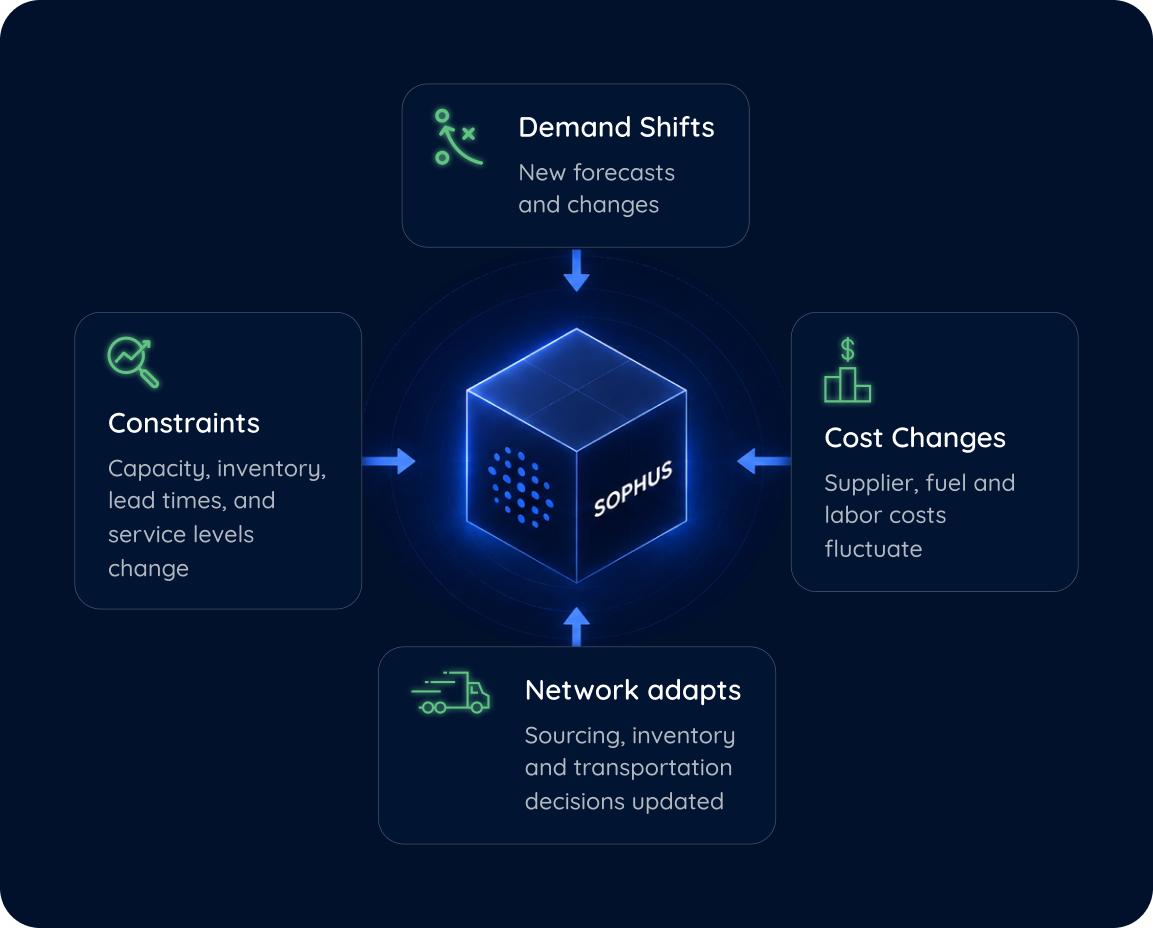
Re-Optimizes Every Time Conditions Change
Instead of running a single static model and revisiting it once a year, Sophus continuously reevaluates sourcing, inventory, and transportation decisions as demand, cost, and constraints shift underneath your network.
Every Recommendation Comes with Its Reasoning
Every output traces back to the specific inputs and business rules that produced it. When Sophus recommends a DC consolidation or a routing change, you can see exactly why, without someone having to translate a black box score.
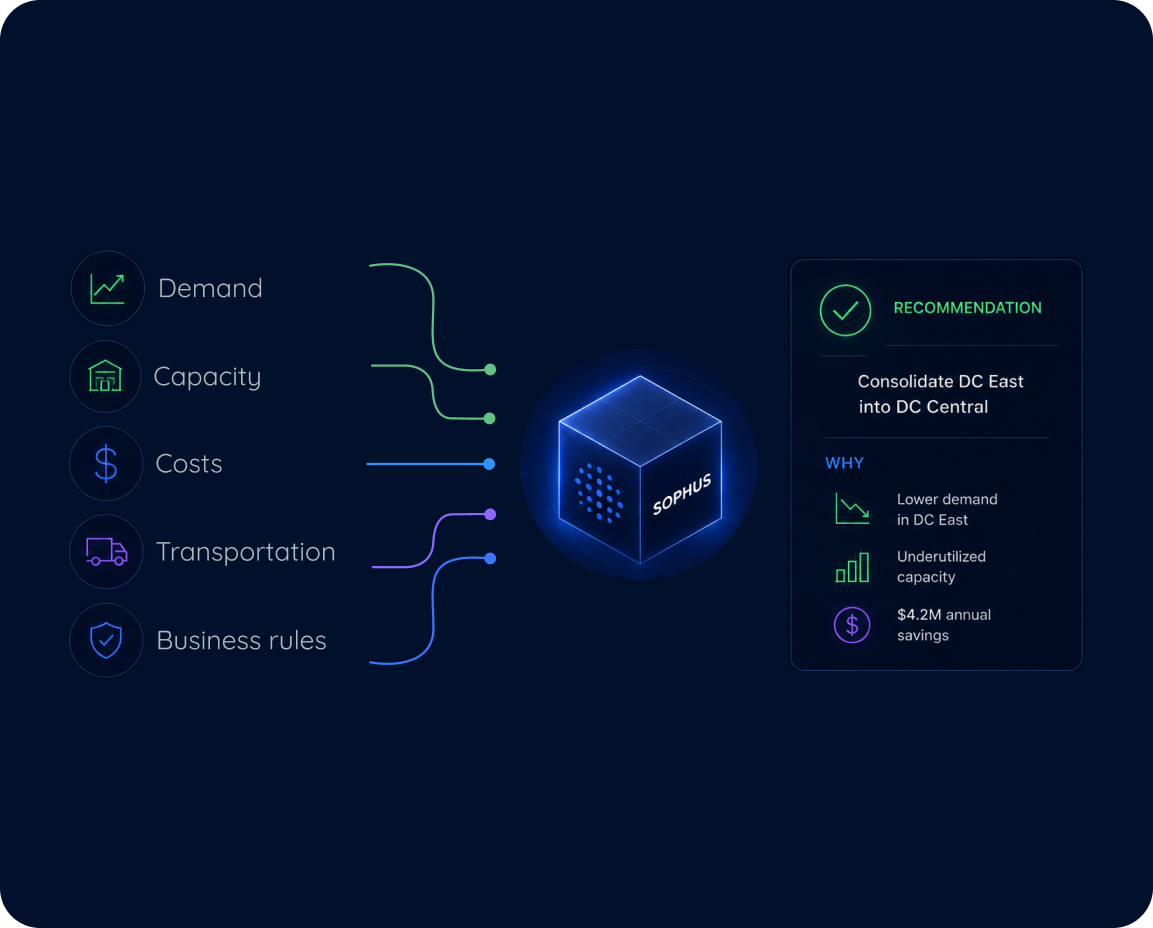
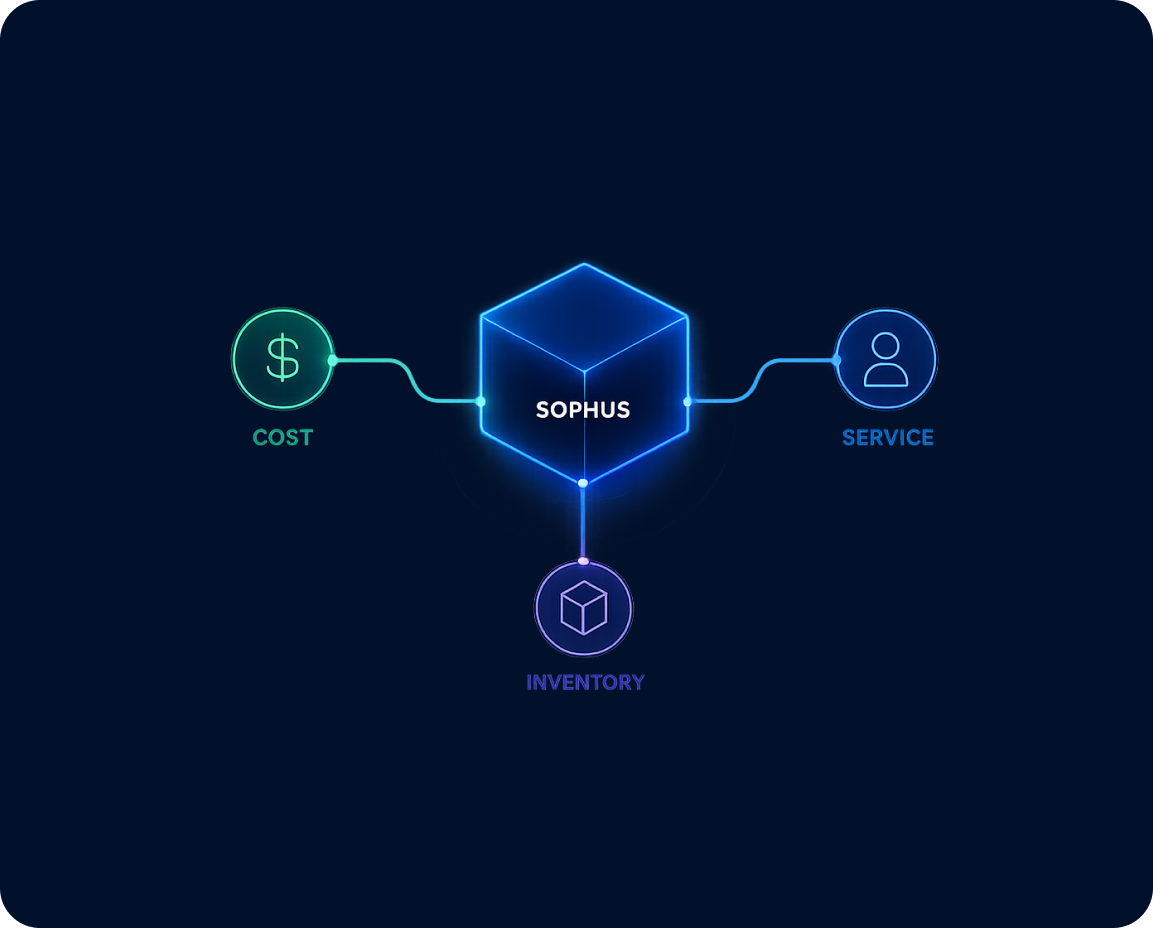
Balances Cost, Service, and Inventory Together
Test the Decision Before You Make It
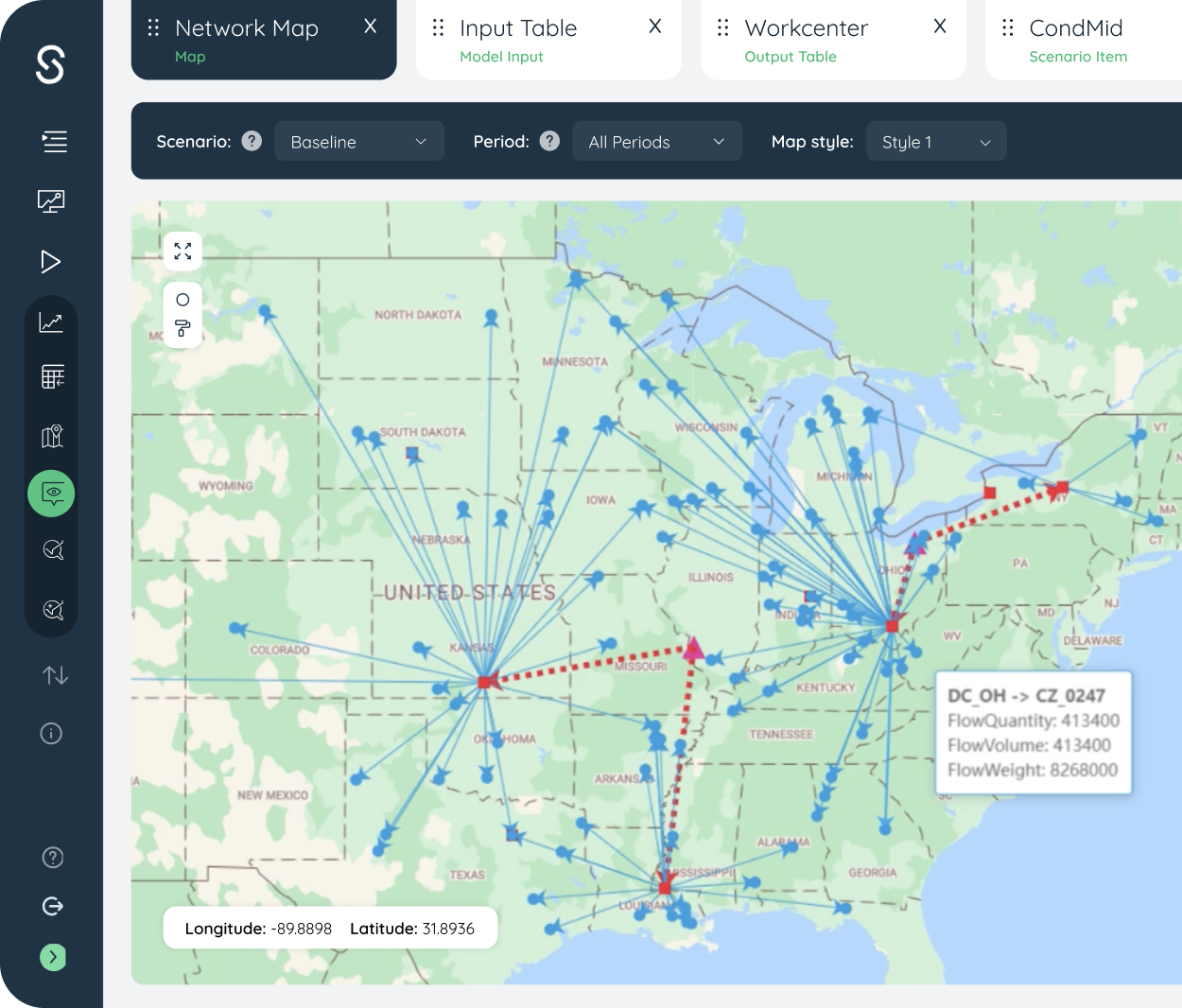
The Council of AI Agents builds and runs scenarios directly against your live network model, so a tradeoff gets tested before it gets committed to.

Evaluate Strategic Changes
Opening a new distribution center, entering a new market, consolidating facilities. See the cost and service impact before you commit.

Respond to Changing Conditions
A supplier goes down, a tariff hits a lane, demand shifts to a new channel. See the best response before you’re forced into a worse one.

Compare Tradeoffs Side by Side
Test multiple network configurations at once and see the real cost and service impact of each, instead of relying on gut feel.
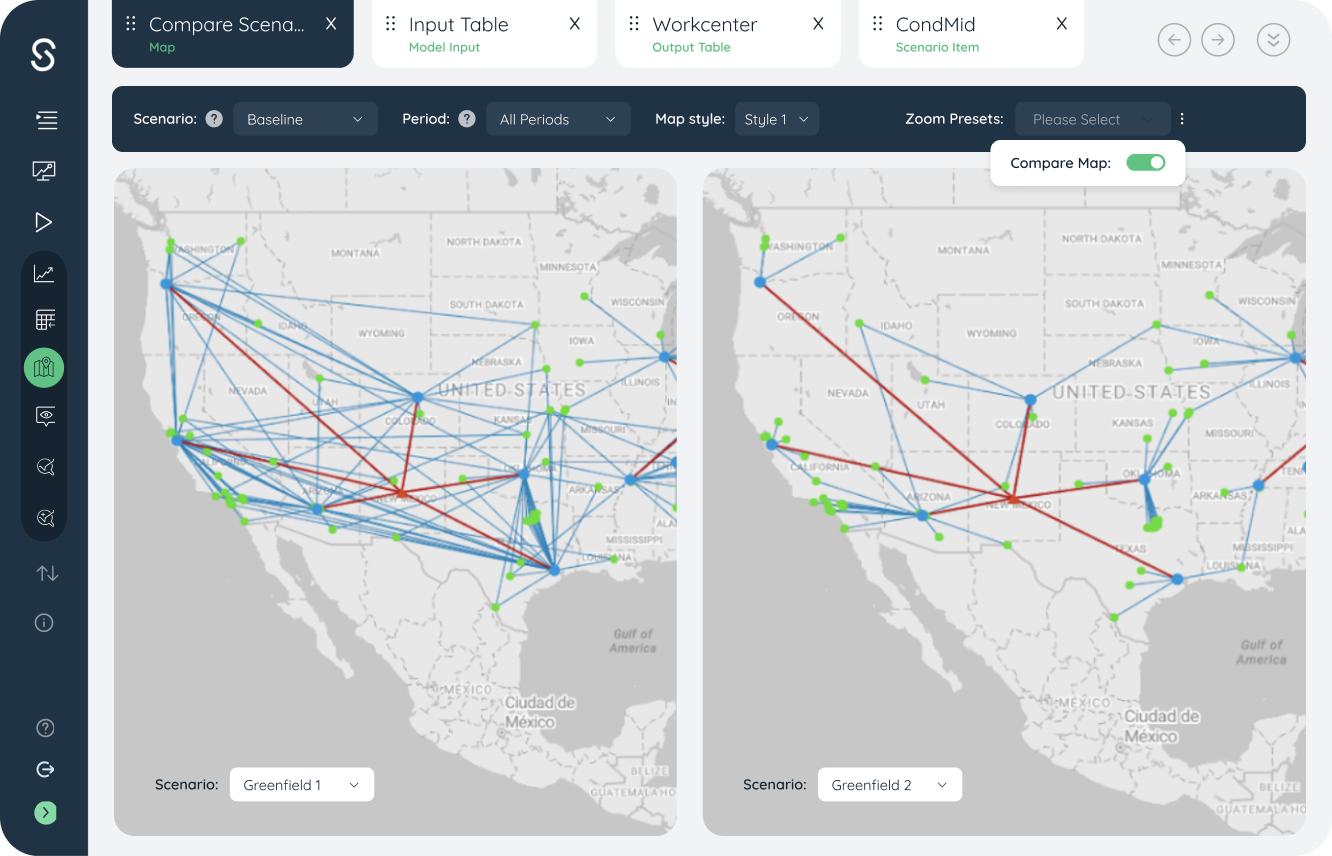
Every Scenario Runs Against the Same Live Model
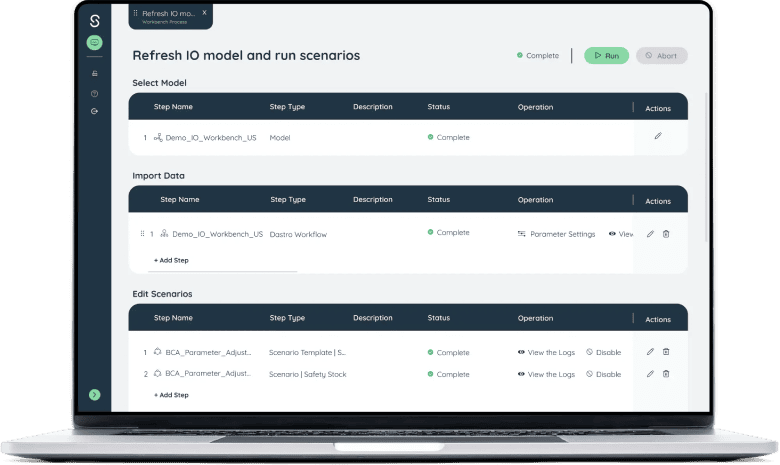
A team of embedded AI agents handles data preparation, model building, and scenario generation, so you can test a new DC, a tariff shock, or a demand shift without needing a dedicated modeling team to build each one by hand.
Because every scenario runs against the same underlying model, comparisons are apples to apples, not guesswork stitched together from three different spreadsheets.
Learn more about scenario planning and simulation →
Built for the Networks That Are Hardest to Get Right.
Every industry hits a different wall. Here’s the one Sophus is built to solve for yours.
Third-Party Logistics
Model and optimize each client’s network configuration against your actual DC footprint and capacity, at the lowest cost to serve
Discrete Manufacturing
Balance plant capacity, supplier lead times, and inventory across a network that shifts with every new SKU or program.
See manufacturing solutions →
Consumer Packaged Goods
Keep DC footprint and inventory policy in step with promotions, new SKUs, and channel shifts .
Retail
Design the DC and hub network around your customers, optimize store locations, and configure inbound flows as demand shifts by channel and region.
Oil and Gas Chemical
Model long-cycle, capital-intensive network decisions and short term production optimization decisions, where wrong CAPEX and OPEX could compound for years.
See energy solutions →
Get a Full Look at Your Network Optimization
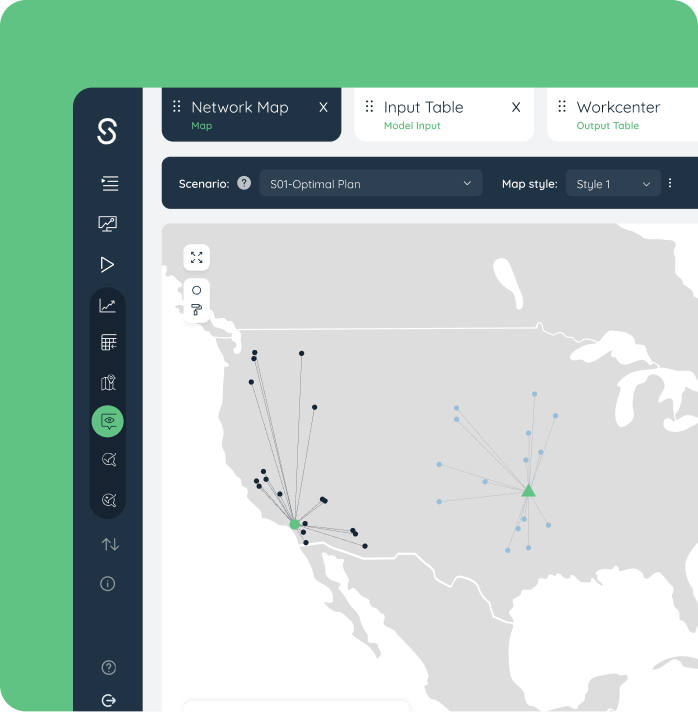
Supply Chain Network Design
Optimization tunes decisions within a network’s current shape. When the shape itself no longer fits, this is where you redesign it.
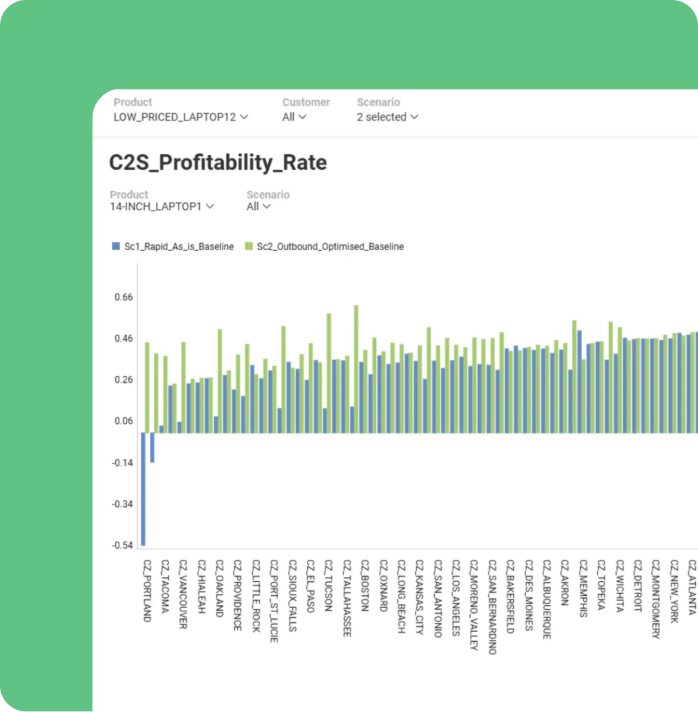
Cost-to-Serve Analysis
See which of the tradeoffs optimization is making are actually paying off, broken down by SKU, customer, and lane.
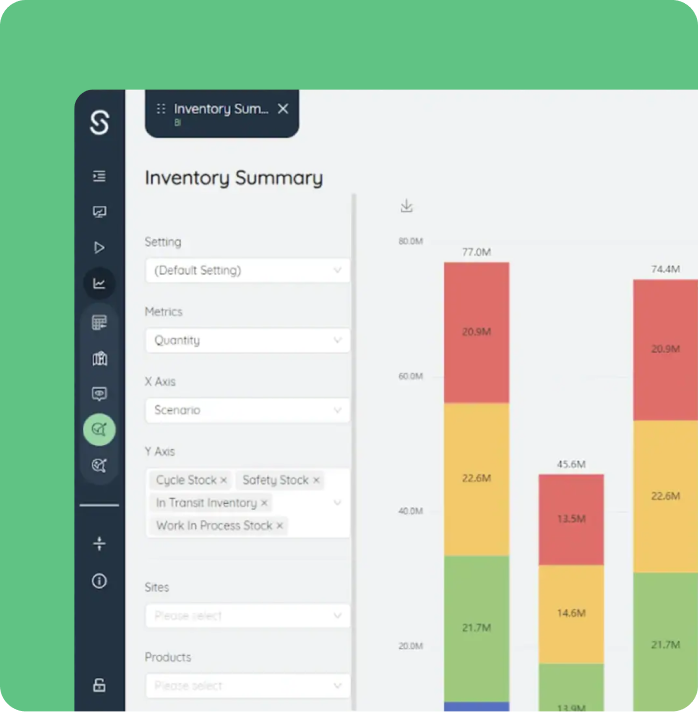
Multi-Echelon Inventory Optimization
Go deeper on the inventory side specifically, setting safety stock and replenishment policy across every tier of the network.
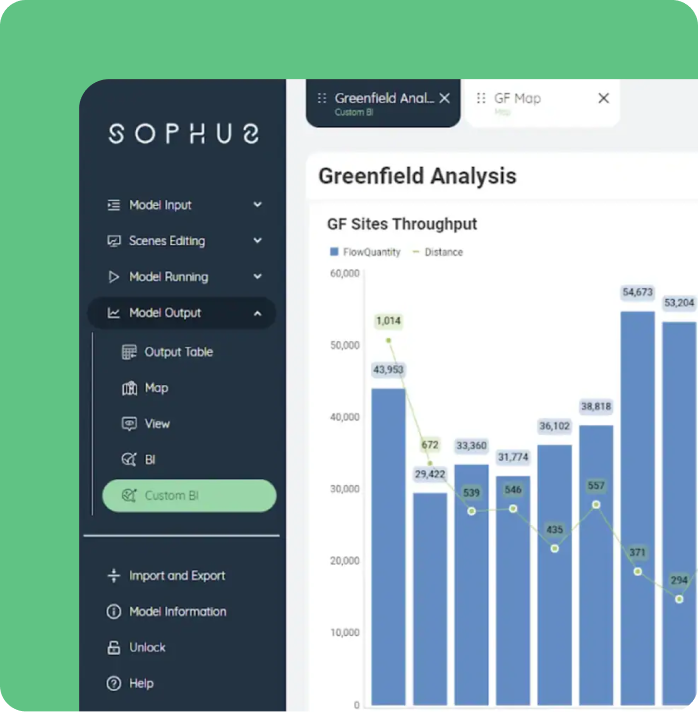
Greenfield and Brownfield Analysis
If optimization keeps hitting the same wall, it may be a sign the facility footprint itself needs to change, not just the flows through it.
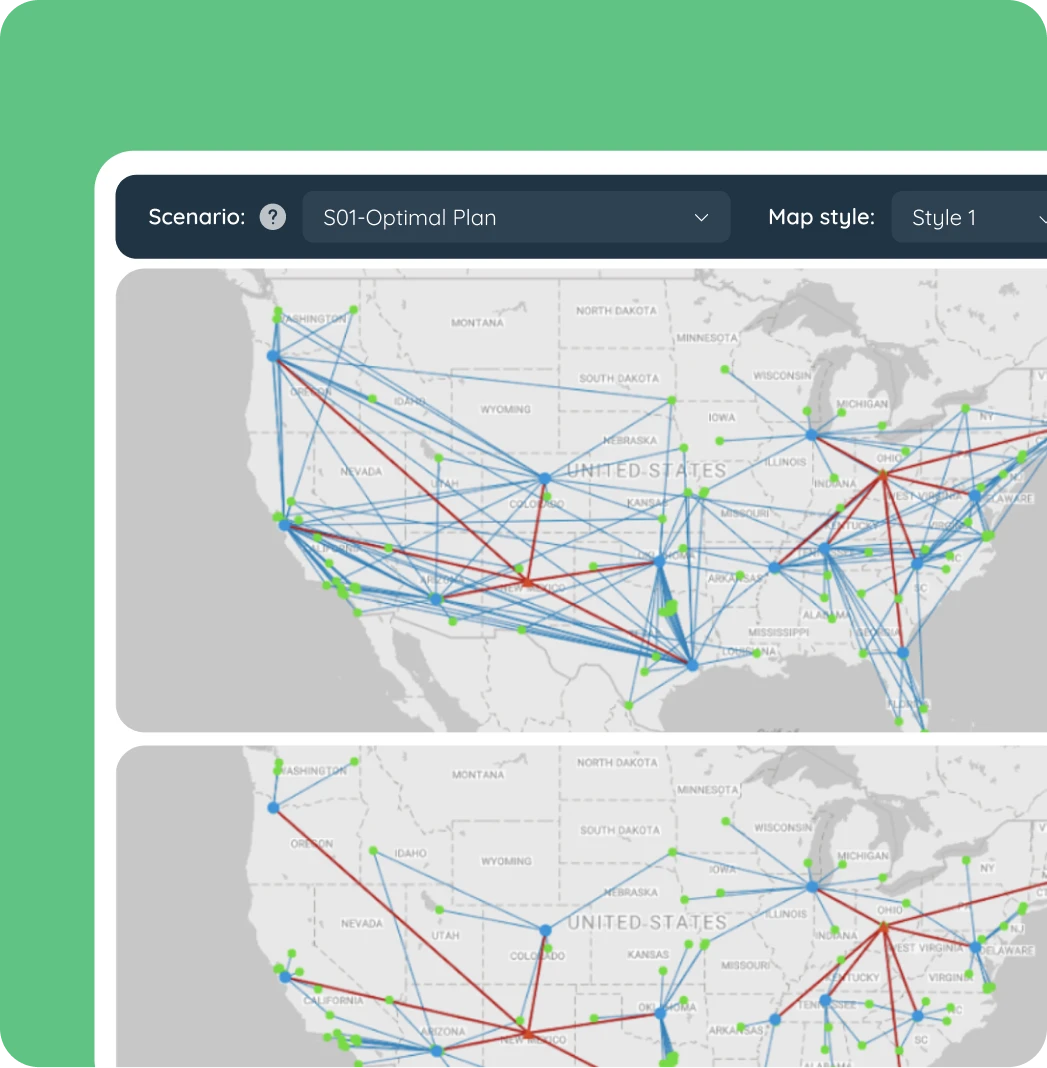
Supply Chain Disruption Planning
Trade policy changes are exactly the kind of shift continuous optimization needs to react to fastest. Model that impacts directly.
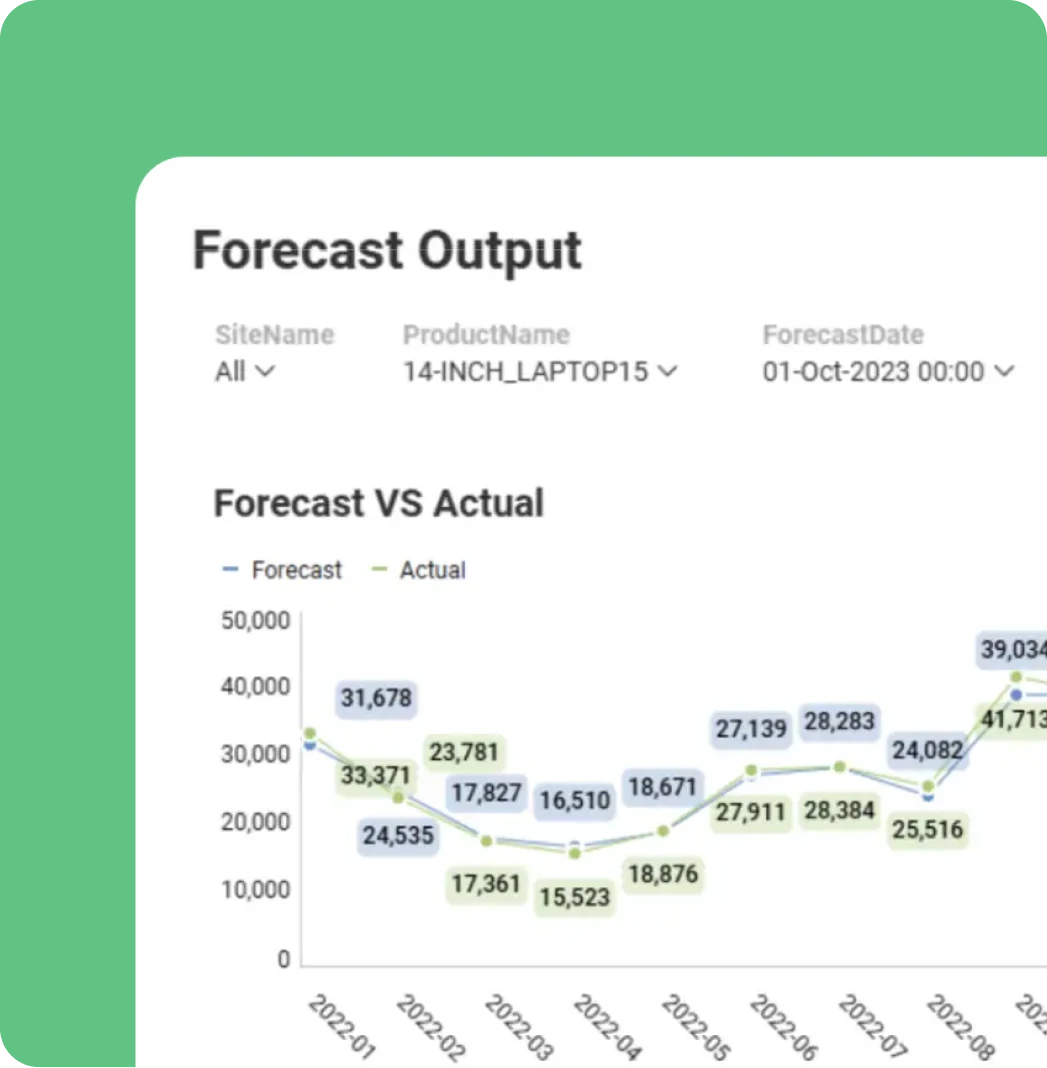
Demand Forecasting
Optimization is only as good as the demand signal feeding it. Sharpen that signal before it drives sourcing and inventory decisions.
Supply Chain Network Design FAQs
Optimization Never Really Finishes
Stop Treating Your Network Like a Finished Project
Book a demo and see how Sophus keeps sourcing, inventory, and transportation decisions tuned long after the initial design is done.