

Login

rapid baselining

Your always-on network digital twin.
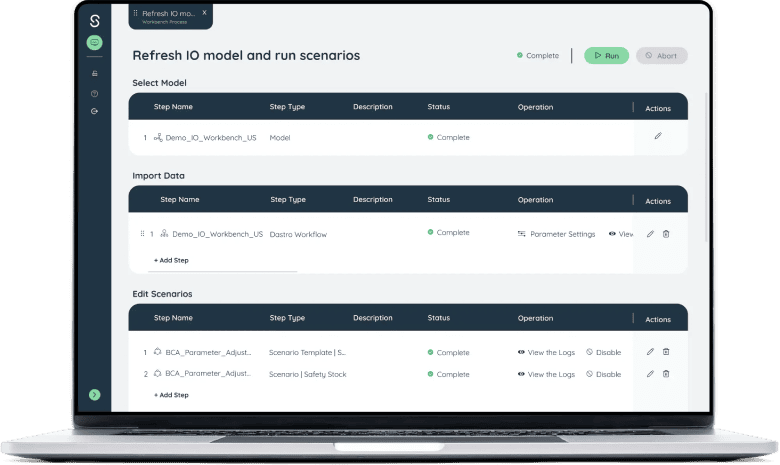
Most teams wait months for a model of their own supply chain. Sophus keeps one running for you — a live baseline that’s ready the moment your next question is.

Trusted by Growing Companies at Every Stage of Network Design Maturity

kitchen craft
good year
hisense
tompkins
grupo boticario
midea

Why it Matters

Every “what if” starts with “what we have today.”

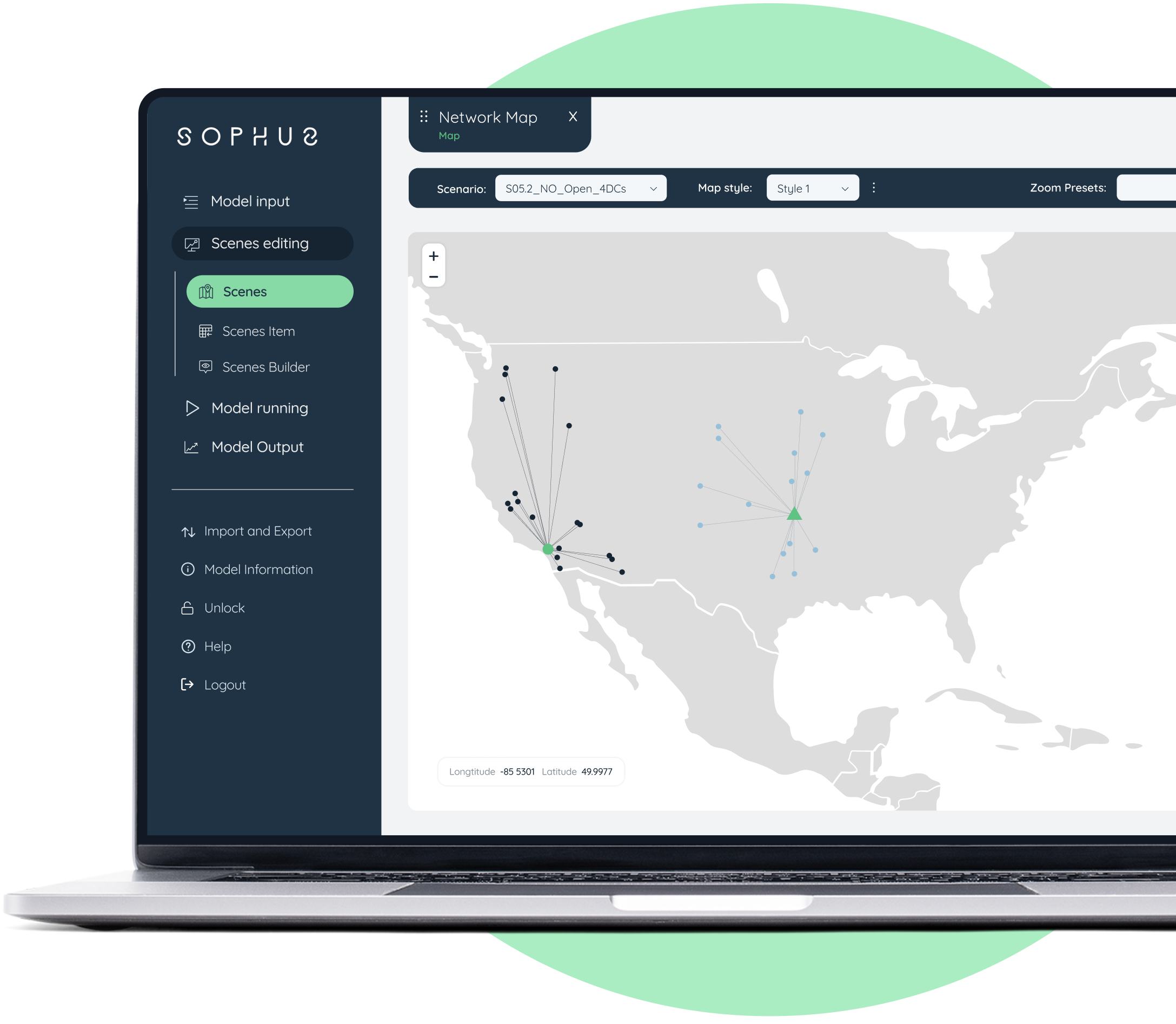
A baseline is thethe mirror of your network as it runs today the starting point for every scenario, optimization, or redesign that comes after it.

When the mirror takes weeks to build, every decision downstream inherits the delay.

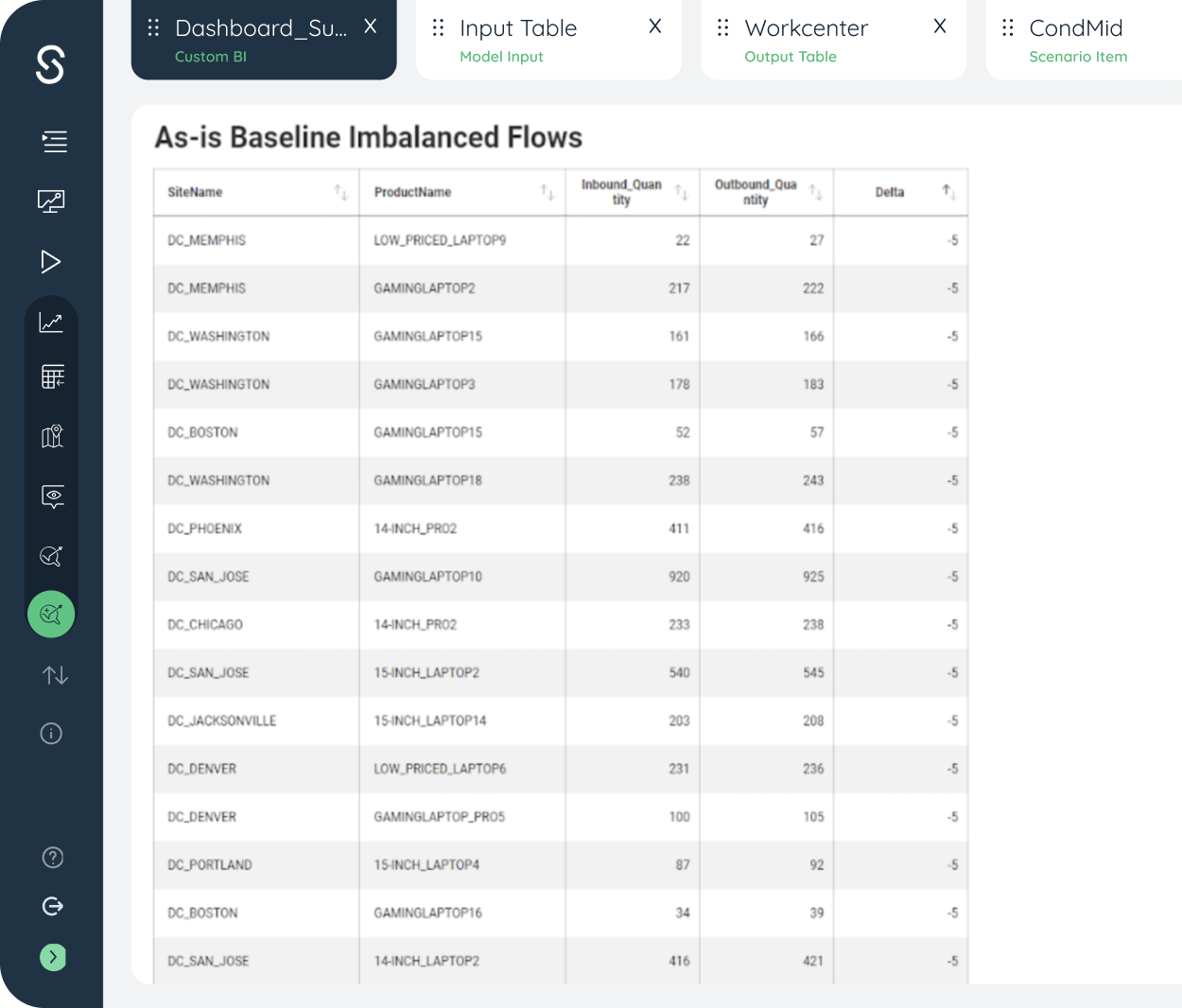
Inbound Flows
Every lane, supplier, and volume feeding the network.

Outbound Flows
Every route, destination, and demand pulling from it.

Cost & Service Metrics
The scoreboard every future scenario gets measured against.
The Problem

The eight-week bottleneck of building a baseline

Stuck in setup

Baseline modeling eats weeks

Traditional network design software takes up to 8 weeks to model a baseline, largely due to rigid requirements like balancing inbound and outbound flows.
Manual Balancing

Balancing by hand, again and again

Manually reconciling inbound against outbound flows isn’t analysis — it’s data janitor work. And every time you refresh the baseline, the treadmill starts over.

Delayed Insight

Insight that arrives after the decision

By the time a traditional baseline is usable, the disruption has passed, the opportunity has closed.
The Sophus Solution

A living model, not a one-time project.

A baseline in hours, not weeks and months.

Sophus eliminates the manual balancing step entirely, standing up a working network baseline in hours — the work that stretches traditional builds to 8 weeks.


One unified insight

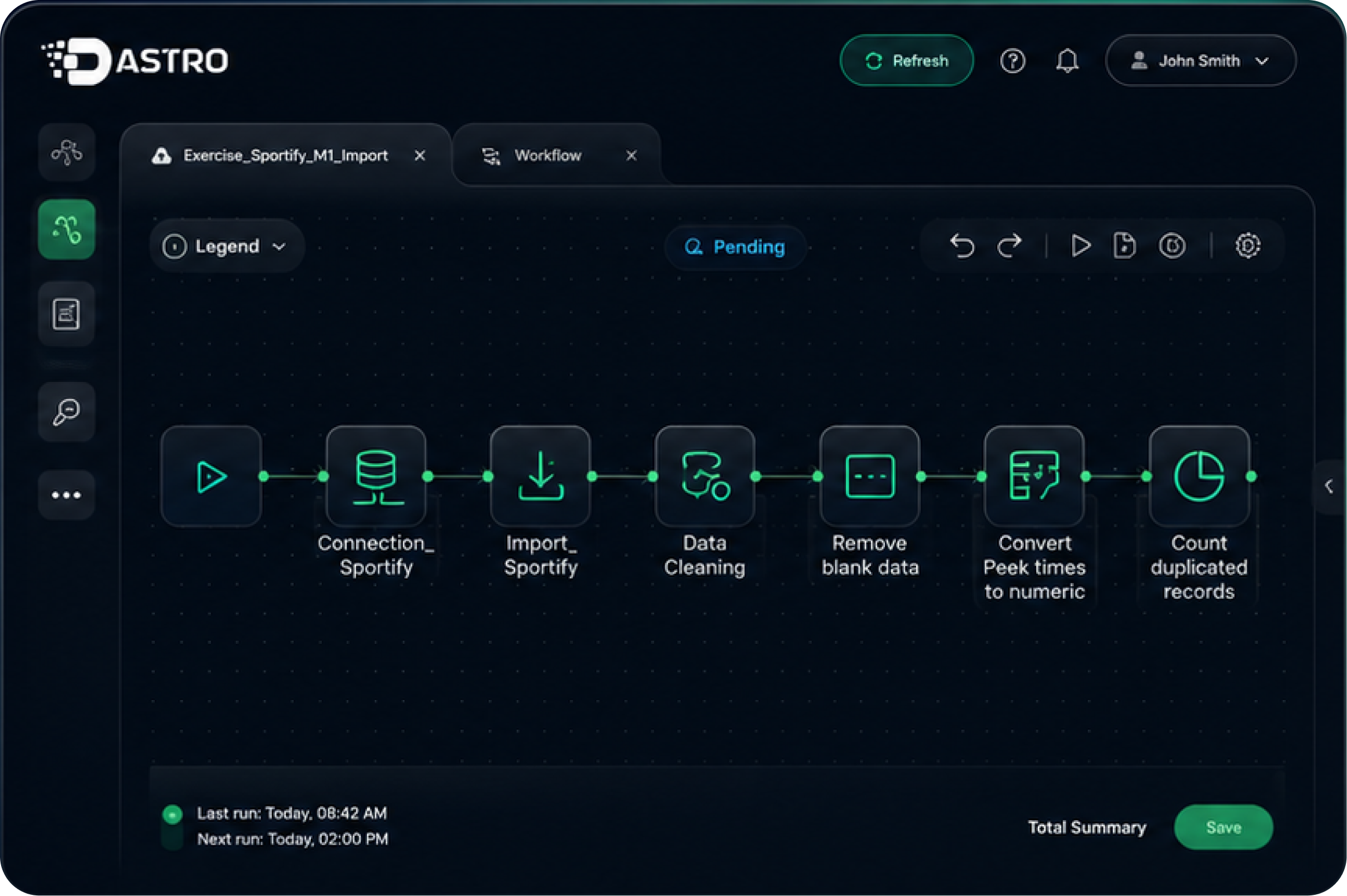
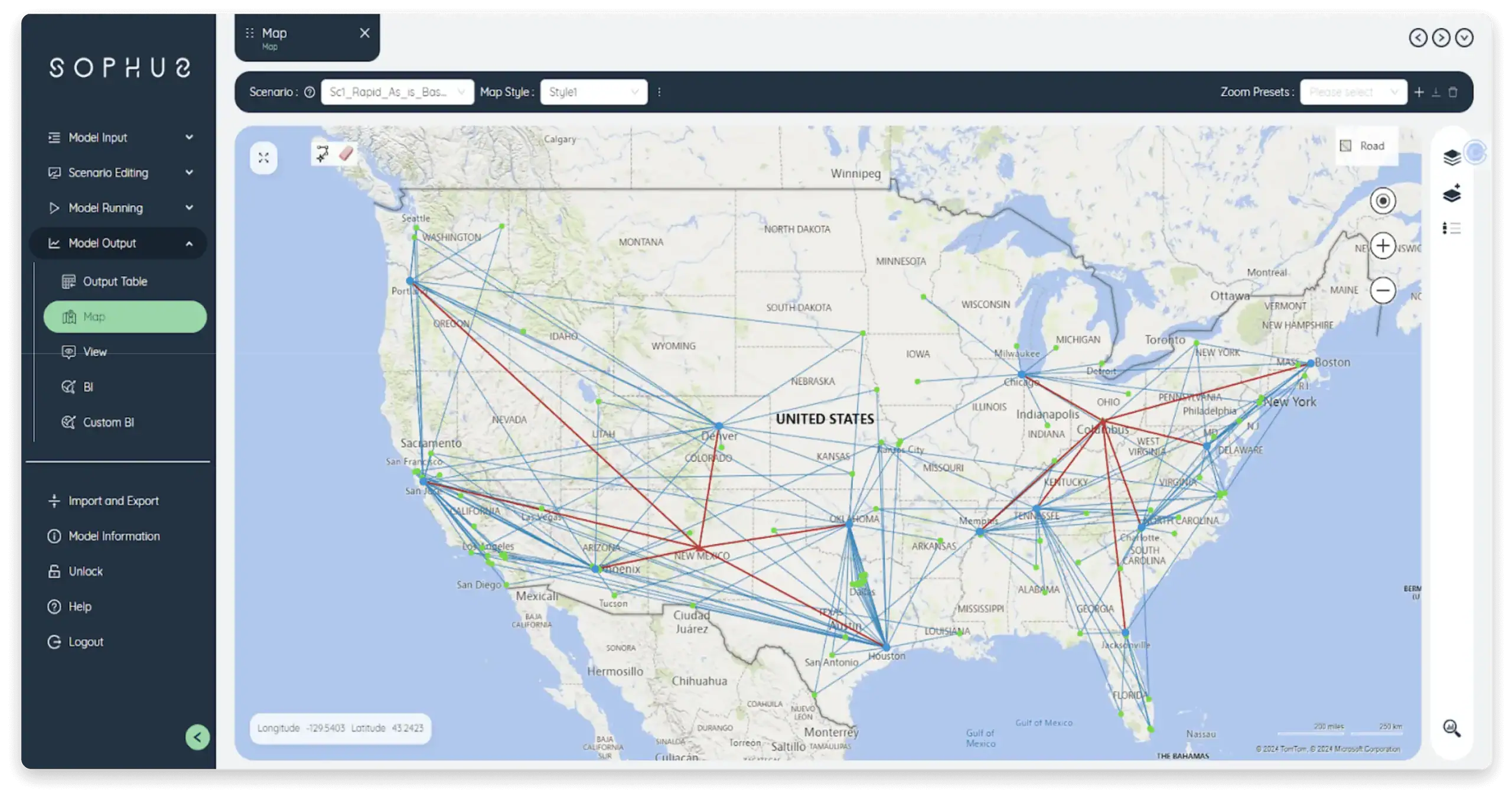
Cost, revenue, and operational metrics come together in a single view, powered by Dastro, Sophus’s ETL tool, which keeps a continuously synced digital twin of your network.

Ask again. And again. And again

Test demand shifts, disruptions, and redesigns directly against your as-is network. The baseline never needs rebuilding, so the tenth scenario is as fast as the first

The Platform

The engine behind the always-on digital twin

Rapid baselining looks effortless from the outside. Underneath, two tools split the work.
Dastro – Data Automation

The part of the build that never stops running

Dastro extracts and reconciles inbound and outbound data automatically, Then it keeps going, refreshing your twin on a schedule you set. 

Inbound Flows
Every lane, supplier, and volume feeding the network.

System translation
Legacy models convert into a format Sophus X can use.

Sophus X – Special Algorithm

The algorithm that skips the balancing act

Sophus designed a proprietary algorithm specifically to build baselines fast. Unlike traditional solvers, it doesn’t require inbound and outbound flows to reconcile before it can run — so there’s no balancing step at all. That’s why the baseline is done in hours, and why the engine itself runs fast: it never burns compute forcing flows to balance.

Built for speed
Freed from balancing constraints, scenarios and optimizations run in a fraction of the time.

Scenario planning & what-if analysis
Test demand shifts, disruptions, and rerouting against the baseline, and see cost and service impact before you commit.
Debugging & Infeasibility Free

What an always-on network digital twin gets you

10-20X

Faster from question to answer. Time-to-insight drops from months to days, enabling rapid responses

1 Twin

A living replica of your entire network. One continuously synced digital twin — every decision starts from what your network actually looks like today

Talk to experts for supply network digital twin

Build Around Your Baseline

Baseline is just the beginning

An always-on network digital twin is the foundation. Here’s what your team builds on top of it.
supply chain network design

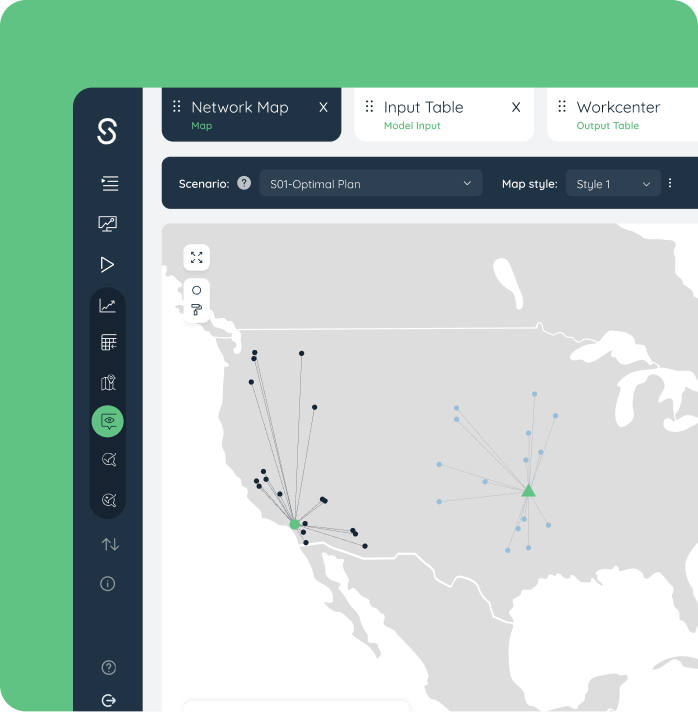
Supply Chain Network Design

Design Supply Chain network for cost, service, and resilience, starting from your live baseline.
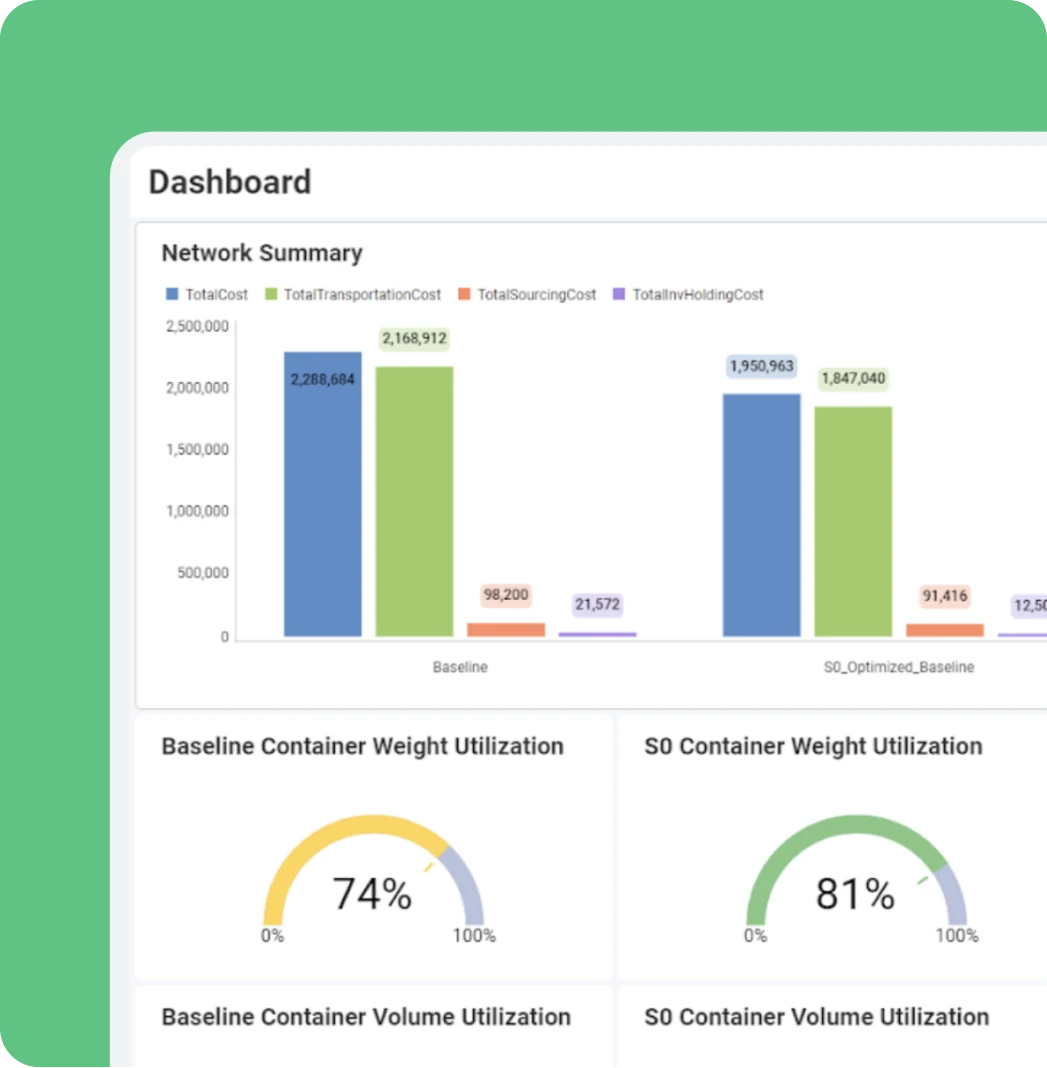
Supply Chain Network Optimization

Run optimization as conditions change.
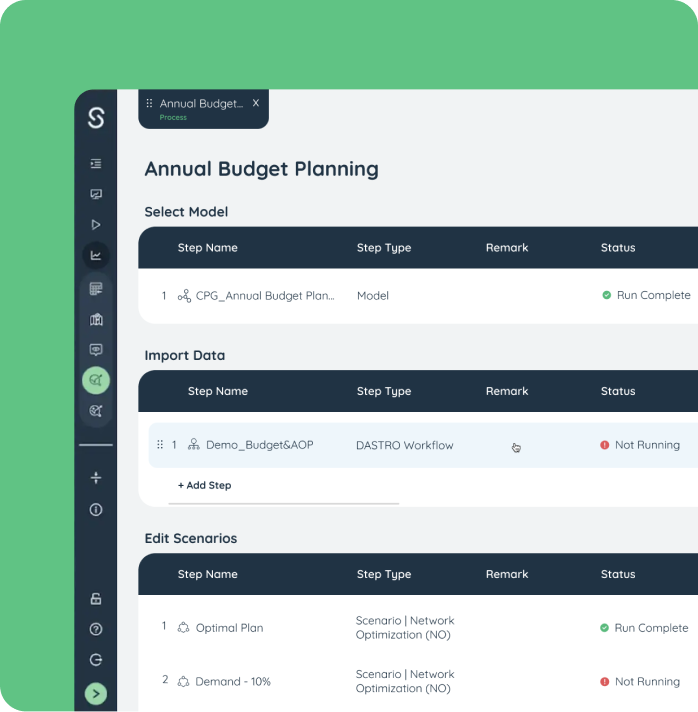
Supply Network Planning

Turn your baseline into an operating plan that aligns supply, capacity, and demand.
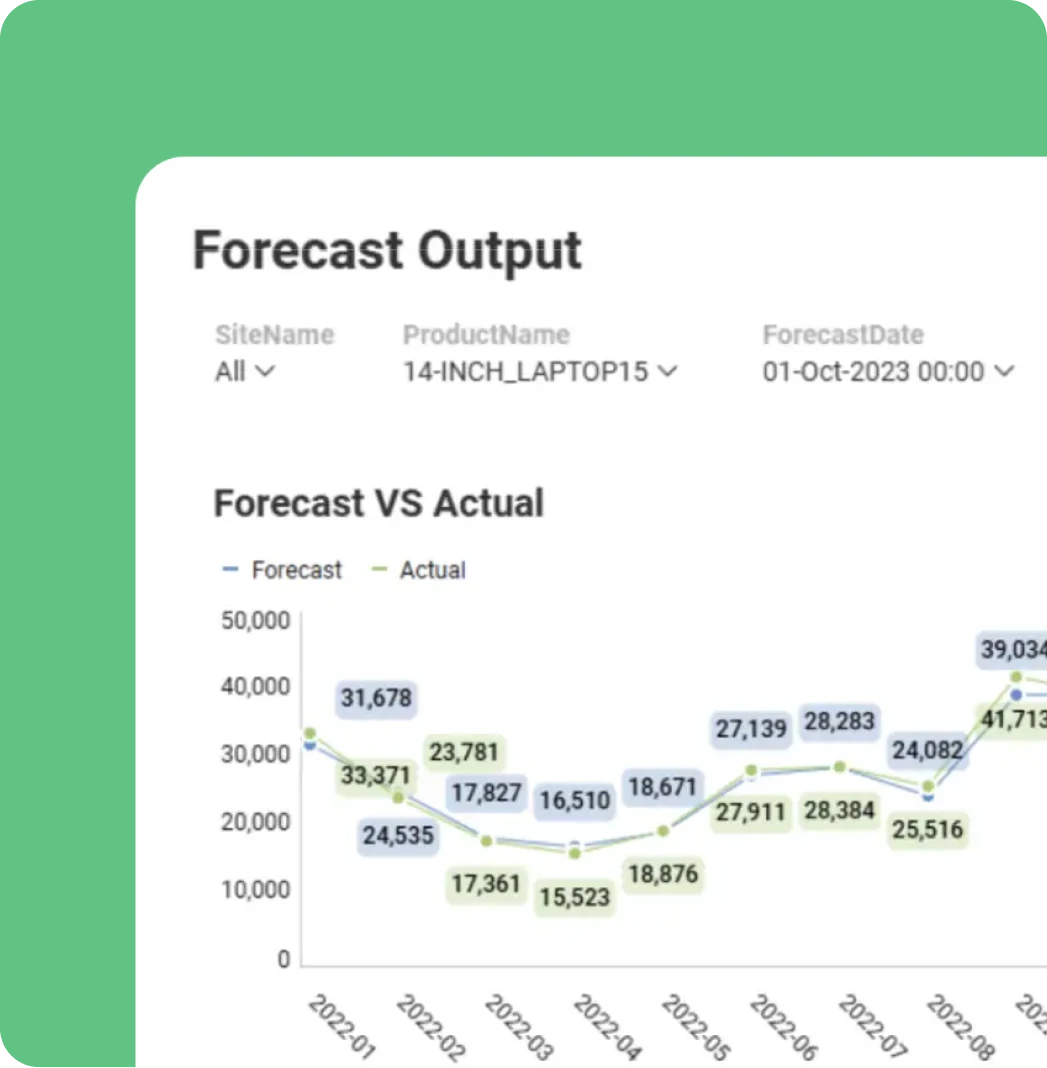
Demand Forecasting

Feed your baseline with better demand forecast so not only it reflects today but also you can see what the future looks like
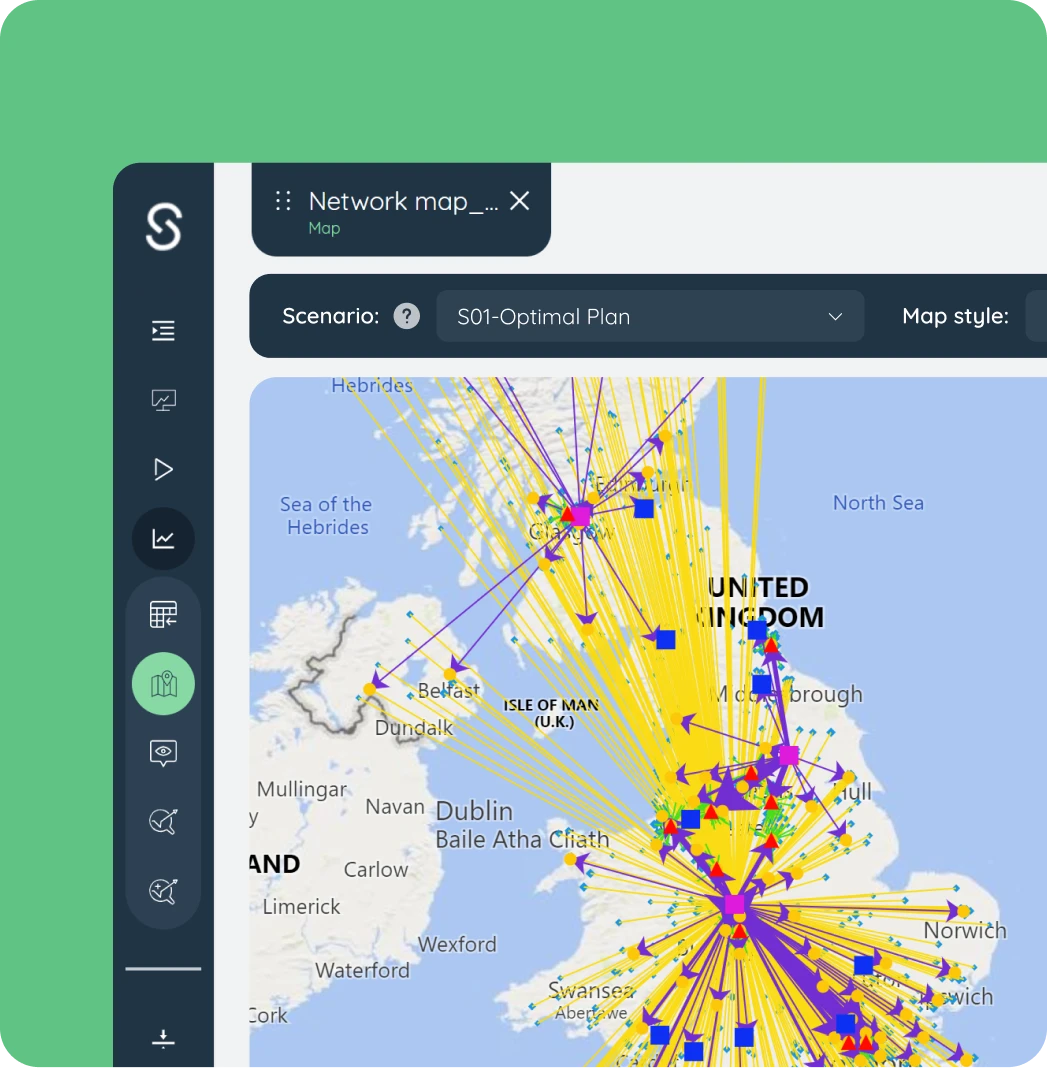
Tax & Duties Optimization

Layer tax and duty impact onto your network change.

Verified By Gartner Peer Insights

What Verified Users Say on Gartner

4.8 ratings on Gartner Peer Insight

Common Questions

Rapid Baselining Analysis FAQs

What is baselining in supply chain optimization?

Baselining means building a model of your current network exactly as it runs today: inbound flows, outbound flows, cost, and service levels. It is the starting point every scenario or optimization run gets compared against.

How long does it normally take to build a supply chain baseline?

Traditional network design software can take up to 8 weeks, mostly spent manually balancing inbound and outbound flows before the model is usable.

How does Sophus reduce baseline time to hours?

Sophus X is built on a proprietary algorithm designed specifically for fast baseline construction. It doesn’t require inbound and outbound flows to be reconciled before modeling — the step that consumes weeks in traditional tools — so a usable baseline stands up in hours, with Dastro feeding it data automatically.

What is the difference between a baseline and a digital twin?

A baseline is a single as-is snapshot of your network. A digital twin keeps that snapshot continuously synced with your fresh data, so it reflects the network as it changes.

Can I run what-if scenarios directly on the baseline?

Yes. Once the baseline is built, Sophus X runs what-if scenarios directly on top of it, so you can test a change without rebuilding the model from scratch.

Get Started

Ready to build your baseline in hours?
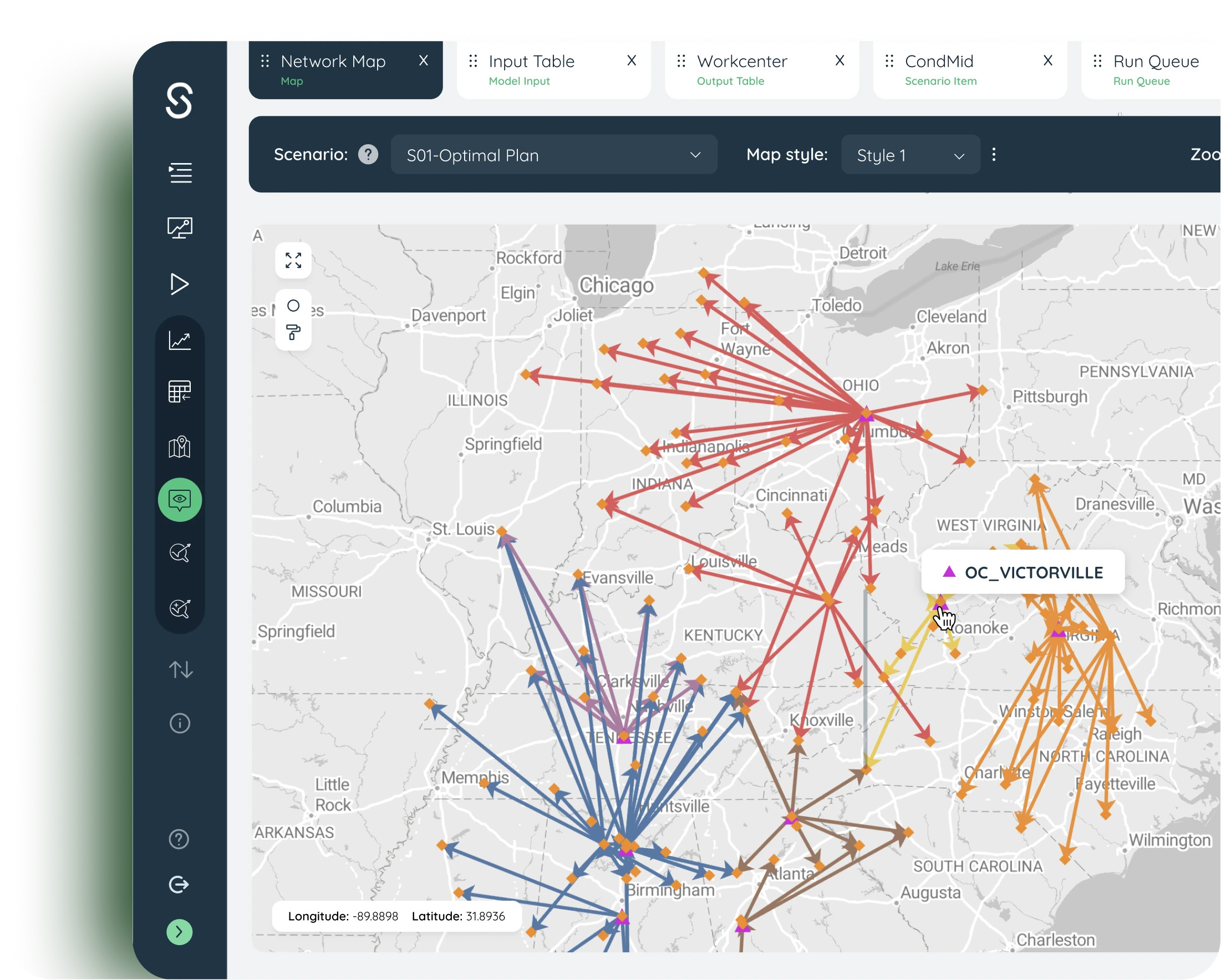
Stop losing weeks to manual balancing. Get an always-on baseline of your network — and start asking the questions that actually move it forward.