
If you have these questions in your mind, you are not alone! 99% of the companies ask these same questions over and over again.
Sophus Solutions has a new way to predict demand that goes beyond traditional methods. Our approach combines precision and innovation to solve even the toughest inventory challenges. This blog explains how AI-driven demand forecasting works and what makes Sophus different. We explore the technology behind it, explain how it works, and show how it can help businesses plan for the future confidently and accurately.
Our technology ensures that you will always have the right inventory levels to meet demand, increasing profitability and customer satisfaction.
At Sophus Solutions, we understand that traditional forecasting tools are limited and that current AI models can leave users feeling like they are working in a black box. We all know that with a better forecast lot of things can become easier, but why is making a better forecast so hard? Let’s look at some of the challenges that one can face in traditional forecasting tools.

- In legacy forecasting tools, it may look like you have a lot of algorithms embedded in them to choose from. However, in reality, you can not choose a different algorithm for each SKU at each channel because there are millions of possible combinations. Using only one algorithm would not give you the desired accuracy.
- Therefore, Forecast accuracy is so hard to achieve as there could be so many alternative results. Piecing these results together is like giving you a bag of Lego pieces and expecting you to come up with a piece of Lego artwork without instruction. It can be challenging and time-consuming, especially when you have to start over every week. As a result, forecasts can sometimes be no better than wild guesses.
- Can we use AI to solve this? Yes! For the past many years, data scientists have been employed in many companies to help develop machine learning algorithms to do forecasts. The biggest challenge is that these algorithms are like black boxes; you don’t know why the numbers they produce are what they are. Sometimes it is accurate but other times they are not.
- How can you trust the results without knowing why they are the way they are? The second challenge is that some companies can’t afford to invest in a big team of AI scientists, especially if the result can’t be used or understood by the business.
Is there an alternative to this? The answer is yes! Sophus has developed an AI based demand forecasting tool that is different from the traditional approach and achieved an amazing result.
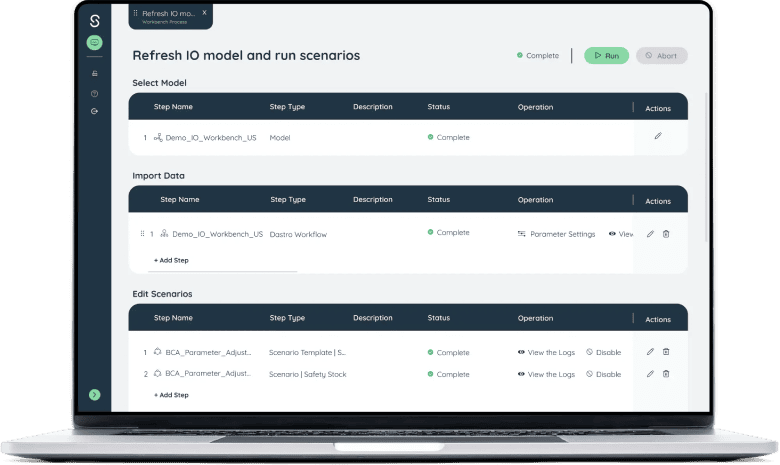
Our tool is just one part of our inventory optimization solution. It provides insights into the latest inventory management trends. This can help you make informed decisions about your business. With Sophus, you can trust that we will support your business every step of the way, from predicting demand to optimizing inventory to designing your supply chain.
Let us give you an example.
A leading home application company saw its forecast accuracy by product/channel/week doubled by implementing this new demand forecasting tool. Yes, doubled! The result blew their mind away and completely exceeded their expectations.

How did that work? In the following ways:
1. The biggest differentiator is that instead of making the users select from a list of 10-20 algorithms, Sophus uses AI to learn and decide the best algorithm for the product-channel combination. It can keep learning and change whenever you need to re-run the forecast each week. This AI algorithm is called gradient boosting.
2. Apart from the AI-self learning which increases the forecast accuracy automatically, another key thing is that this tool is explainable and allows users to intervene. This eliminates the “black box” effect. This tool will tell you what factors are most likely to impact your demand such as weather, temperature, price, promotion, competitor pricing, company’s sales target, etc.
3. Last but not least, another challenge is forecasting for new product phases. Who knows how much it would sell right? What’s cool about this tool is that users can assign certain tags to the new product. These tags can include color, size, style, and product family. The AI will learn the pattern of these tags and come up with a good forecast result
In the case of this home application company, the new product forecast accuracy reached 50% using this new capability. This accuracy is high compared to competitors when considering SKU, channel, and week.
We may not be time travellers, but well using AI, it sounds like we can tune into the rhythm of time. As more people use it, we believe our AI-powered demand forecasting tool will do amazing things in predictive analytics. But that’s not all – our supply chain design and planning software is also revolutionary. Are you ready to go beyond the ordinary? Join us on an exploration where the extraordinary becomes the new normal.
Contact us today to schedule a demo or explore our software through a complimentary trial.