
What is market expansion?
Market expansion refers to a company increasing its sales by entering new geographic regions, customer segments, or distribution channels. It often requires adjustments to the supply chain, including sourcing, production capacity, logistics, and inventory management to support broader demand.
Expanding into new markets is one of the highest leverage growth moves a business can make, but it only works when your operations, supply chain, and network are ready to support it.
The global e-commerce market is estimated to reach $18.81 trillion by 2029, and Amazon alone has committed over €1.2 billion to European logistics expansion. The opportunity is real, but so is the complexity.
This guide covers the main market expansion strategies, how to assess whether your business is ready, and what a solid expansion plan looks like step by step.
Why Should Businesses Consider Market Expansion?
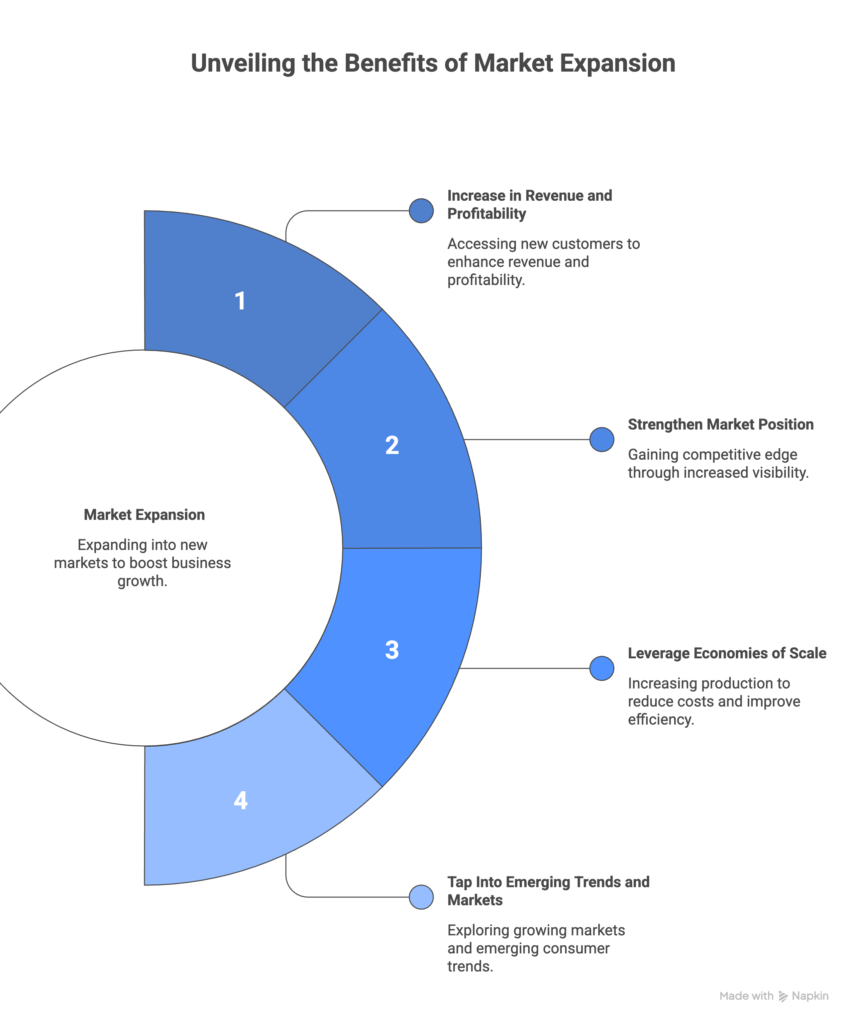
Here are a few reasons why businesses should consider expanding into new markets:
- Increase in Revenue and Profitability: Expanding into new markets opens up additional revenue streams by accessing new customers and growing the customer base.
- Strengthen Market Position: By expanding, businesses can gain a competitive edge by becoming more visible and recognized across different regions.
- Leverage Economies of Scale: Market expansion allows companies to increase production, which can reduce costs per unit and improve profitability.
- Tap Into Emerging Trends and Markets: Businesses can explore growing markets, benefiting from trends such as the increasing demand for e-commerce and sustainable products.
Types of Market Expansion Strategies
Expanding into new markets is not just a commercial decision. It directly impacts your supply chain structure, cost base, and service levels.
Each strategy comes with different operational requirements, and the right approach depends on how your network is designed to support it.
1. Geographic Expansion
Entering new cities, regions, or countries to reach customers who do not yet have access to your products. This is the most supply chain intensive form of expansion. A consumer goods brand expanding from Western Europe into Eastern Europe, for example, needs to redesign its entire distribution network before the first order ships.
2. Targeting New Customer Segments
Selling your existing product to a different demographic or psychographic group within markets you already operate in. A B2B manufacturer moving into direct to consumer, for instance, or a premium brand introducing an entry level line to capture a younger audience.
3. Product Diversification
Introducing new variations of an existing product to meet the specific needs of a new audience. A food manufacturer launching a smaller pack format for Southeast Asian retail channels, or adding a market specific variant that would not sell in the home market.
4. Mergers and Acquisitions
Acquiring or merging with a business that already has a foothold in the target market. This is the fastest route to expansion but also the most complex operationally. Integrating two supply chains, two distribution networks, and two sets of supplier relationships is rarely straightforward.
How to Develop a Successful Market Expansion Plan
A well-thought-out market expansion plan is essential for ensuring your business succeeds in new markets. Each step of the process builds the foundation for sustainable growth and long-term profitability.
Below are the steps you need to follow when developing an expansion strategy.
1. Conduct Thorough Market Research
Market research is the first and most important step in any expansion plan. It involves gathering insights about the market’s demand, customer behavior, and potential competitors. Understanding these aspects helps identify the right entry point and avoid costly mistakes.
- Use Google Trends to understand market trends and emerging customer needs.
- Analyze competitor strategies to find gaps your product can fill.
- Conduct SWOT analysis to evaluate your strengths, weaknesses, opportunities, and threats in the new market.
In the Table below, you can see some of the tools and methods useful for conducting effective market research.
| Research Method | Purpose | Example Tools |
|---|---|---|
| SWOT Analysis | Identify business strengths and weaknesses | Internal assessments |
| Competitor Analysis | Understand competitor strategies | Similarweb, SpyFu |
| Consumer Surveys | Gather direct customer feedback | Google Forms, Typeform |
| Market Reports and Trends | Analyze industry trends | IBISWorld, Statista |
2. Identify and Define Your Target Market
Once you have researched the market, it’s time to define your target audience. This ensures that your products or services resonate with the right customers. A detailed target market profile will help you craft messaging and marketing campaigns that appeal directly to these customers.
- Demographic Information: Age, gender, income level, and education.
- Behavioral Patterns: Purchase behavior, brand loyalty, and buying frequency.
- Geographic Data: Location-specific preferences or needs.
You can also create buyer personas, fictional profiles representing your ideal customers, to personalize your strategies.
3. Assess Product-Market Fit
Product-market fit ensures that what you’re offering aligns with the expectations and needs of the new audience. Expanding into a new market may require adjustments to the product or service you currently offer. These changes could include packaging modifications, language translations, or adding new features.
- Ensure the product or service solves a problem for the new market.
- Check whether customers need localized versions of the product.
- Assess competitors’ offerings to position your product more effectively.
Below, Table shows some key areas where product adjustments may be necessary for different markets.
| Product Element | Adjustment Needed | Example |
|---|---|---|
| Packaging | Size, material, and design | Smaller packaging for Japan |
| Language | Translation or adaptation | Instructions in local languages |
| Features | Market-specific preferences | Extra spicy variant for U.S. |
4. Evaluate the Financial Feasibility of Expansion
Financial planning is essential to determine whether the expansion will yield the desired returns. This involves budgeting for operations, marketing, and logistics, while also accounting for potential risks.
You can perform a cost-benefit analysis to assess if the investment in expansion is justified by the expected profits.
Consider these financial aspects:
- Budgeting: Allocate funds for marketing campaigns, product customization, and logistics.
- Taxes and Regulations: Account for region-specific duties, tariffs, and compliance costs.
- Break-Even Analysis: Calculate how long it will take to recover your investment.
A break-even date depends on where the capacity goes, as much as on how much you spend. Model the return on each expansion option before you commit, and you can see which one pays back first.
5. Build a Targeted Marketing Strategy
Your marketing strategy should align with the preferences and behaviors of the new audience. Successful campaigns often incorporate localized messaging to connect with customers on a cultural level.
You should also explore using digital platforms, such as social media and email marketing, to create brand awareness.
Tips for crafting a marketing strategy:
- Localized Campaigns: Adapt advertising content to align with regional cultures and preferences.
- Social Media Marketing: Use platforms popular in the target region. For instance, WeChat is widely used in China, while Instagram is prominent in the U.S.
- SEO and Content Marketing: Optimize your website and blogs to improve discoverability in the new market.
6. Create a Sales and Distribution Plan
A reliable sales and distribution strategy ensures your products are accessible to the new audience. You may opt for direct sales, collaborate with local distributors, or leverage e-commerce platforms. Your supply chain must also be scalable to handle increased demand.
Consider these distribution models:
- Direct Sales: Selling directly to customers through your website or stores.
- Third-Party Distributors: Partnering with local distributors who know the market.
- E-commerce Platforms: Listing your products on platforms like Amazon or Flipkart.
Note: When planning your supply chain for market expansion, network design plays a direct role in how distribution is structured and optimized for new regions.
The Supply Chain Side of Market Expansion
Expanding into a new market is not just a marketing or sales decision, it is a supply chain decision. Adding a new region means redesigning your distribution network, recalculating safety stock levels, evaluating new sourcing locations, and modeling the cost to serve for customers you have never served before.
Most expansion failures are not caused by bad products or weak marketing. They are caused by supply chains that were not built to support the new market. By the time that becomes clear, the cost is already sunk.
The most common supply chain mistakes during market expansion:
-
Underestimating last mile logistics costs in an unfamiliar region
-
Not modeling demand variability in a market you have never operated in
-
Overlooking customs, duties, and cross border lead time changes
-
Assuming the supply chain that works in your home market will scale directly into the new one
What to model before you commit
Before spending on new warehouses, distribution centers, or regional hubs, you should be able to answer:
-
Where should new facilities be located to minimize cost and maximize service levels?
-
What inventory levels does the new region require, and how does that affect the rest of the network?
-
How does adding this market change your total network cost?
-
What happens to service levels if demand in the new region is 20% higher or lower than forecast?
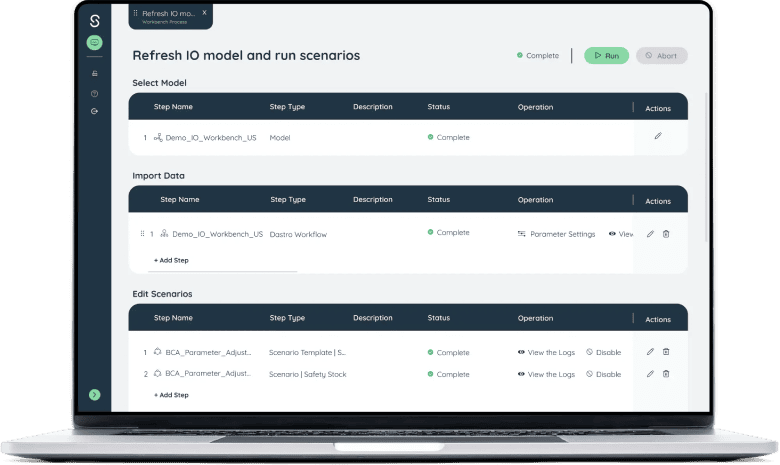
Running these scenarios before you commit is the difference between a well planned expansion and an expensive course correction six months in. Sophus X lets you model new market scenarios, compare cost to serve across regions, and stress test your network against different demand assumptions before a single dollar is spent on infrastructure.
Market Expansion Trends to Watch in 2026
The way companies approach market expansion is changing. The shift is moving from efficiency driven models to resilience driven ones, and most of that change sits in the supply chain.
Nearshoring Is Becoming a Market Entry Strategy
Instead of exporting from a central manufacturing base, more companies are setting up regional production closer to demand. This improves speed and reduces risk.
The shift is already visible. Trade between the United States and Mexico reached over 839 billion dollars, showing how nearshoring is reshaping regional supply chains. Companies are building networks that support faster and more stable market entry.
Network Design Is Preceding Market Commitment
Companies are no longer entering markets based on sales forecasts alone. They are using supply chain models to test feasibility before committing capital.
Digital twin adoption is growing as a result. These models allow teams to simulate disruptions, test scenarios, and evaluate cost to serve before making physical investments. This reduces risk and improves decision quality at the entry stage.
Tariff Volatility Is Creating New Regional Opportunities
Trade policy uncertainty is forcing companies to rethink where and how they operate. Tariffs, regulations, and geopolitical shifts are changing the economics of entire regions.
A 100 point increase in trade policy uncertainty has been linked to a drop of up to 4.4% points in investment levels in export driven economies. This is pushing companies to rebalance toward regional production and distribution.
Digital First Entry Is Lowering the Infrastructure Barrier
E-commerce and third party logistics providers are making it easier to test new markets without heavy upfront investment. Companies can enter quickly, validate demand, and scale later.
The global B2B e-commerce market is growing at over 14 percent annually, while the 3PL market is expected to expand by more than 130 billion dollars in the next few years. This allows companies to enter new regions with lower risk and build infrastructure only after demand is proven.
Unlock New Growth Opportunities with Sophus X
Planning to expand into a new market? Before you commit to new warehouses, distribution centres, or regional hubs, model it first.
Sophus X gives supply chain teams a complete network design and decision intelligence platform to test new market scenarios, compare cost-to-serve across regions, and optimize inventory before a single dollar is spent on infrastructure. It is not positioned as just a simulation tool. Instead, it brings simulation, optimization, and planning into one unified environment so teams can move from data to decisions faster.
If you want to validate your next market move with real data, not assumptions, book a call with Sophus and see how quickly you can turn scenarios into confident decisions.
Frequently Asked Questions
What is the difference between market expansion and market development?
Market expansion is a broad strategy where a business grows by entering new regions, segments, or channels. Market development is a specific type of expansion focused only on taking existing products into new markets. In simple terms, all market development is expansion, but not all expansion is market development.
What are the 4 main types of market expansion strategies?
The four common approaches are:
-
Geographic expansion into new regions or countries
-
Market development targeting new customer segments
-
Product expansion by introducing new or adapted products
-
Channel expansion through new sales or distribution channels
Each strategy depends on your growth goals, risk appetite, and operational readiness.
How do you create a market expansion plan?
Start by analyzing demand, competition, and regulatory conditions in the target market. Then map your supply chain, estimate costs, and test different scenarios before committing. A strong plan includes location strategy, inventory planning, logistics setup, and clear financial projections.
What does market expansion mean for supply chain operations?
Market expansion increases complexity across your supply chain. You need to rethink warehouse locations, transportation routes, inventory levels, and service expectations. Without proper planning, costs rise and service levels drop, which is why modeling the network early becomes critical.
What are common challenges in market expansion?
The most common issues include poor demand forecasting, high logistics costs, regulatory barriers, and lack of visibility across the network. Many companies also struggle with slow decision-making because they rely on disconnected tools and manual analysis.
How long does market expansion typically take?
It depends on the scale and complexity of the market. Small regional expansions can take a few months, while large international moves often take 6 to 18 months or more. Companies that use data-driven modeling and scenario planning usually move faster and with less risk.