

Across the world, tensions are rising. Trade routes are being questioned. Energy markets are reacting overnight. Political conflicts in key regions are no longer distant news — they’re affecting shipping lanes, supplier timelines, and production costs in real time.
This is not business as usual. Geopolitics, trade controls, regional conflicts, cyber risk, and sustainability mandates now shape how goods move across the world. What once felt like rare disruptions has become a permanent operating condition, forcing leaders to rethink geopolitical risk in supply chains and long-term resilience.
Most supply chains were built for efficiency in a stable world. That world no longer exists. Decisions made years ago around sourcing, production, and logistics are exposed every time a border tightens, a port shuts down, or a regulation changes overnight. Without strong supply chain design, organizations are left reacting instead of steering.
This is where supply chain network design must change. Not with more dashboards, but with better modeling. The ability to test disruptions through supply chain scenario planning, run what-if analysis for supply chains, and understand how risk moves across the network before it compounds. This shift enables companies to move from short-term fixes toward designing resilient supply chain networks that hold up under pressure.
In this blog, we break down how geopolitics is reshaping supply chain risk and how scenario-based supply chain planning helps organizations build future-ready networks with confidence.
Geopolitical Risk Is Now a Design Constraint, Not a Surprise
Geopolitical shocks are no longer “once in a decade” events. They are a constant input into how your network performs. If your supply chain still relies on a few critical routes, single-country sourcing, or fixed trade assumptions, then risk is already baked into cost and service.
What “design constraint” really means
Geopolitical risk now changes the rules your network runs on:
- Routes can disappear overnight (Red Sea detours, airspace restrictions, port congestion).
- Lead times become unstable when carriers reroute or capacity shifts.
- Tariffs can flip landed costs and make the “cheapest” option the worst option.
- Trade rules and compliance requirements shift by region and product category.
- Regional conflicts create ripple effects across sea, air, and cross-border trucking.
So resilience starts earlier than execution. It starts at design.
From Vulnerability to Resilience
The Red Sea crisis is a clear reminder of these exposures. Carriers moved away from the Suez Canal and redirected shipments around the Cape of Good Hope, which pushed schedules out and increased transport costs. At the same time, rising tariffs and changing trade regulations have forced organizations to rethink sourcing, while regional instability continues to disrupt established freight lanes.
How to Navigate Geopolitical Risks in Supply Chains
Geopolitical risk cannot be eliminated, but it can be modeled, measured, and managed. The key shift is moving away from reactive planning toward design-led decision making that accounts for uncertainty upfront. This is how you can design your supply chain for uncertainty.
Design the Network for Volatility, Not Resilience
Most networks are optimized for average conditions. That approach fails when tariffs change, routes close, or regions become restricted. Companies need supply chain network design that evaluates multiple sourcing and production options across regions.
A Sophus case study on a European supply chain shows this shift in action. The business faced growing complexity from changing regulations and cross-border constraints. Instead of reacting after disruptions hit, the team used network modeling and scenario testing to compare alternative configurations and choose a design that could absorb volatility while still protecting cost and service performance. The result was a network built to handle change as a normal condition, not an exception.
Use a Supply Chain Digital Twin to Test Disruption Scenarios
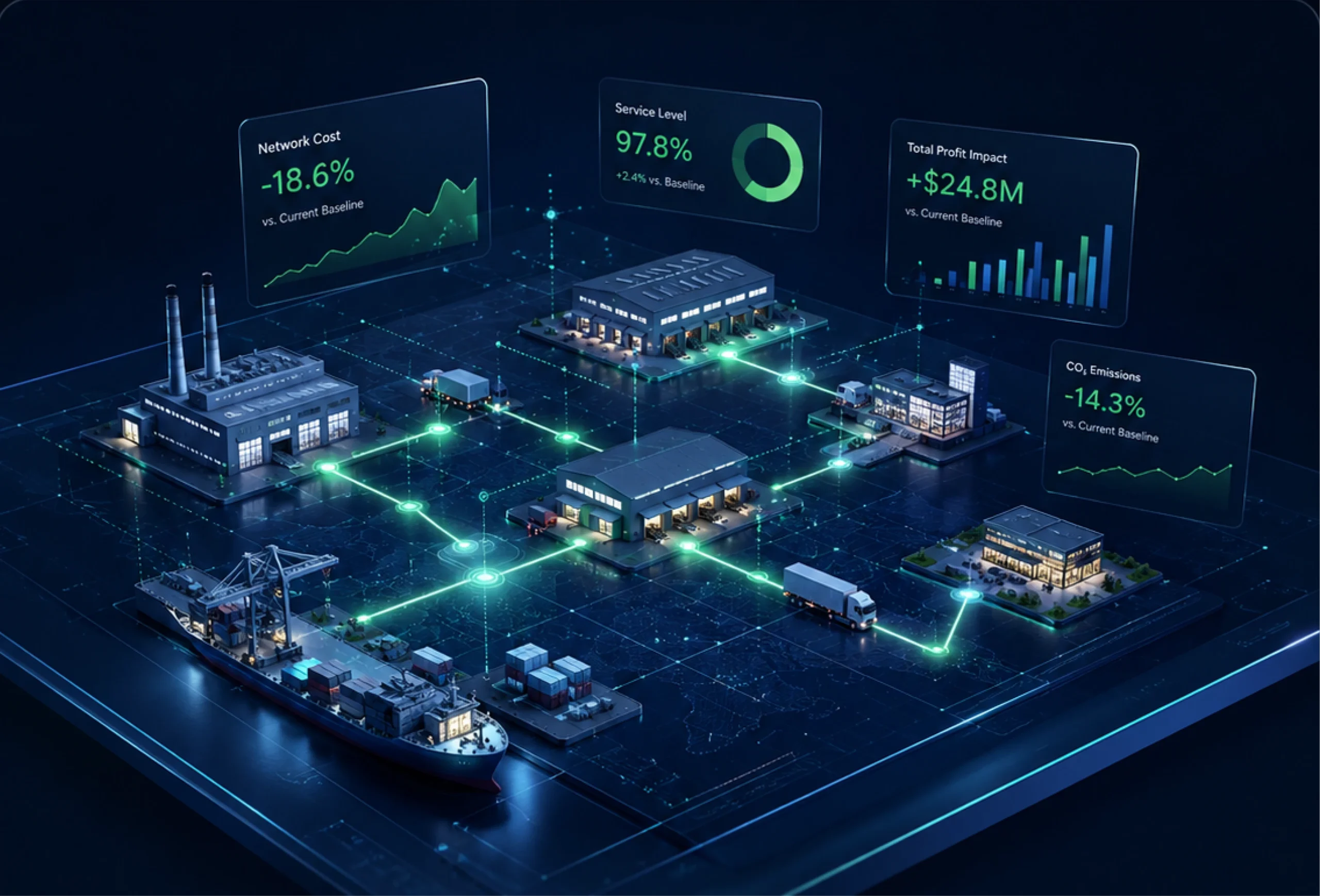
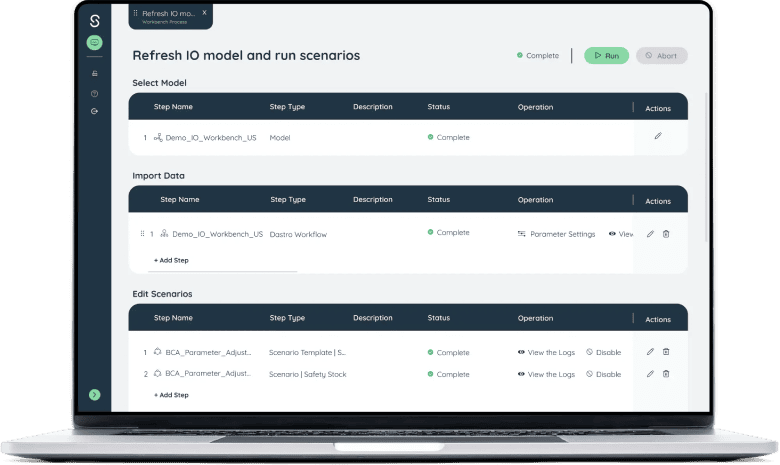
A supply chain digital twin allows organizations to simulate geopolitical events before they happen. This includes trade restrictions, port closures, supplier shutdowns, or shifts in demand. With Sophus’ supply chain digital twin capability, teams can run scenario-based simulations to see how disruptions impact cost, lead times, and service levels, and compare alternatives side by side.
Run Scenario Modeling Instead of Static Forecasts
Traditional planning assumes fixed rules. Geopolitical risk breaks those assumptions. Supply chain scenario modeling helps planners test “what if” situations such as reshoring, nearshoring, or multi-sourcing strategies. Sophus supports this by allowing planners to stress-test the network under different geopolitical and regulatory conditions.
Build Flexibility Through Multi-Sourcing and Network Options
Resilient supply chains are not built on single routes or suppliers. They are built with options. Sophus helps organizations evaluate multi-sourcing strategies and alternative logistics paths, showing the trade-offs between cost, resilience, and service so decisions are grounded in data, not guesswork.
Make Risk a Design Input, Not an Afterthought
Geopolitical risk is often handled outside planning tools. That separation creates blind spots. Sophus integrates risk considerations directly into end-to-end supply chain design, ensuring network decisions account for uncertainty from the start rather than reacting after disruption occurs.
The Role of Expert Guidance in a Resilient Supply Chain
In today’s volatile landscape, resilience takes more than a plan. It takes clear visibility, constant monitoring, and the ability to respond fast when conditions change. That is where expert guidance matters.
At Sophus, we help teams stay ahead of disruption by turning supply chain complexity into decisions leaders can act on. We support organizations with network design, scenario modeling, and a supply chain digital twin that lets you test options before you commit.
Want to reduce risk without slowing down the business?
Talk to experts at Sophus to see how data-driven network design and scenario planning can help you build a supply chain that holds up under pressure.