
Global supply chains are moving into a new phase of complexity. Demand volatility, geopolitical tensions, and rising cost pressures are forcing companies to rethink how they design and plan their networks.
According to Gartner, supply chain leaders are increasingly investing in advanced planning technologies to improve resilience and speed up decision-making.
At the same time, disruptions have shown that static planning is no longer enough. Analysts at McKinsey & Company note that companies with strong scenario planning capabilities respond far faster to disruptions than those relying on traditional forecasting models.
As we move into 2026, supply chains will rely more on data-driven planning and network optimization to stay competitive.
The Capabilities Supply Chains Need in 2026
To manage rising complexity, companies must move toward integrated planning environments that connect demand, production, inventory, and logistics decisions. Instead of working across disconnected tools, organizations need unified data and faster scenario analysis to evaluate trade-offs across the network.
These capabilities allow leaders to test strategies quickly, assess risks, and make decisions with greater confidence in a constantly changing environment.
Key Trends Shaping Supply Chains in 2026
The predictions for 2026 are not happening in a vacuum. They are direct responses to a few specific shifts and geopolitical risks. New tariffs and trade uncertainty are forcing companies to replan faster than ever. AI shopping agents are scattering demand across thousands of small sellers instead of a few major hubs.
At the same time, AI in supply chain optimization is spreading through operations without a clear strategy, while businesses are shifting from long-term sustainability pilots toward immediate, practical wins.
Each of these forces creates a pressure that makes the next prediction more urgent.
Here is how they fit together and what they mean for supply chain leaders.
1. Digital Twins Will Become Core Planning Tools
Because demand is now scattered across so many sellers and hubs, companies can no longer manage inventory using simple spreadsheets. They are turning to digital replicas of their supply chains to simulate disruptions and demand shifts in a virtual space.
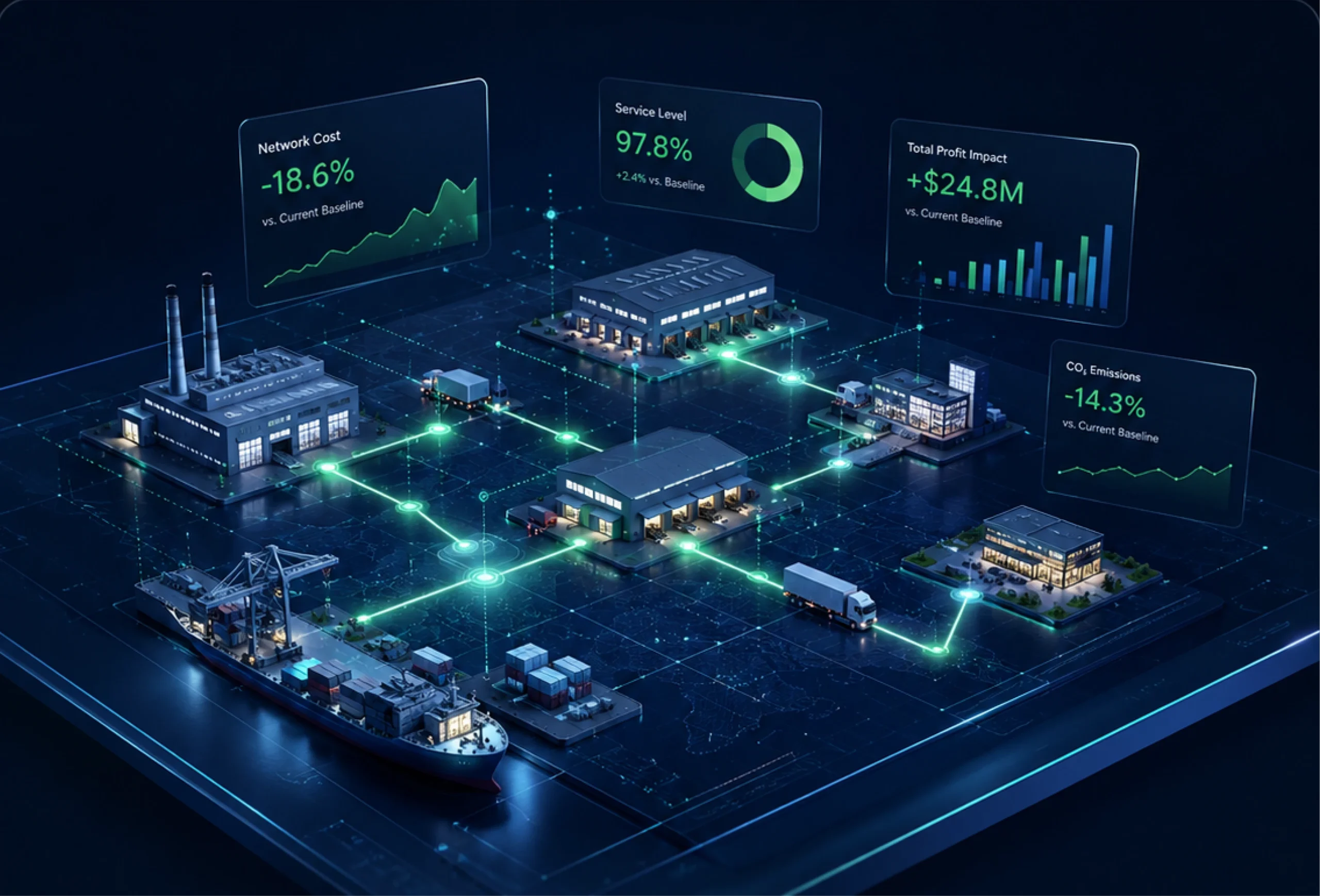
Supply chain digital twins allow leaders to see the entire network at once. Instead of guessing how a new tariff might impact costs, they can run a simulation to see the exact trade-offs before making a physical change.
2. Scenario Planning Will Replace Static Forecasting
Since uncertainty makes it impossible to rely on one single “correct” forecast, organizations are moving to scenario planning. Instead of betting on one future, they test multiple “what-if” scenario paths for both supply and demand.
This shift helps leaders stay prepared for different market outcomes. If a shipping route closes or a supplier fails, the company already has a pre-tested plan ready to go. It moves the focus from trying to be right to being ready for anything.
3. Geopolitical Risk Will Reshape Supply Networks
Rising trade tensions and regional conflicts are the primary reasons companies are redesigning their supply chain networks for resilience. The old goal of finding the lowest cost has been replaced by the goal of finding the most secure and stable sourcing.
To handle these pressures, leaders are adopting supply chain survival strategies and moving production closer to customers and diversifying their suppliers across different regions. This geographic diversity acts as a hedge against sudden policy changes or international disputes.
4. AI-Driven Optimization Will Guide Decisions
With AI already accelerating inside operations, companies need a way to guide these tools toward specific goals. Advanced algorithms are now used for safety stock optimization and the most efficient transportation routes.
These tools handle the massive amounts of data generated by modern logistics. They find hidden efficiencies and suggest the best actions to take, such as moving production to a different facility to save on costs or avoid a delay.
5. Continuous Planning Will Replace Periodic Planning
The need for immediate sustainability wins and the speed of modern trade mean that quarterly planning is too slow. Supply chains are moving toward continuous decision-making driven by advanced data.
By constantly refreshing the plan, businesses can react to new information the moment it arrives. This ensures that production and distribution stay aligned with the latest reality, allowing the organization to capture new opportunities and avoid risks as they happen.
How Sophus Helps in This Environment
As supply chains become more complex, companies need tools that help them evaluate decisions across the entire network rather than within isolated functions. Sophus supports this shift by enabling organizations to design and optimize their supply chains using a unified planning environment.
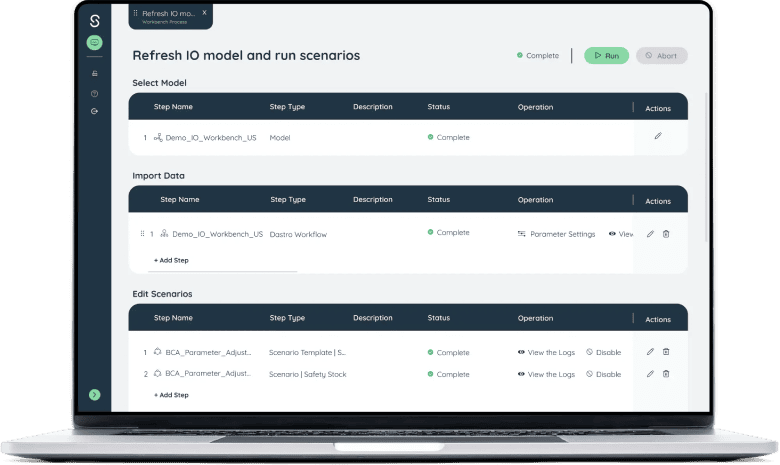
By integrating data from systems like Data lake, ERP, WMS, and TMS, the platform creates a digital twin of the supply network, allowing planners to analyze how changes in demand, capacity, or transportation affect overall performance.
With this digital model in place, companies can run scenario analyses to evaluate different strategies before implementing them. Planners can compare trade-offs across inventory levels, production allocation, logistics routes, and facility locations to determine the most efficient network configuration. This helps organizations make more informed decisions while balancing cost, service levels, and operational constraints.
The ability to run scenarios quickly also improves how companies respond to disruptions. Whether dealing with demand fluctuations, geopolitical risks, or supply shortages, faster analysis allows businesses to test alternative strategies and redesign their networks with greater confidence. By turning complex supply chain data into actionable insights, Sophus helps organizations move from reactive planning to more proactive, data-driven decision-making.
Turning Predictions into Supply Chain Strategy
As we move through 2026, the gap between traditional supply chains and resilient ones is widening. Success in this environment requires extreme agility and the ability to make high-stakes decisions in a fraction of the time.
Organizations that invest in advanced planning and optimization tools today are doing more than just cutting costs. They are building a foundation of stronger scenario planning that turns global disruptions into manageable tasks.
Is your supply chain ready for the pressures of the year ahead? Don’t let disconnected data and slow planning cycles hold your business back.
Book a call with Sophus to see how our digital twin and scenario modeling tools can help you navigate trade uncertainty, optimize your inventory, and build a truly resilient network.