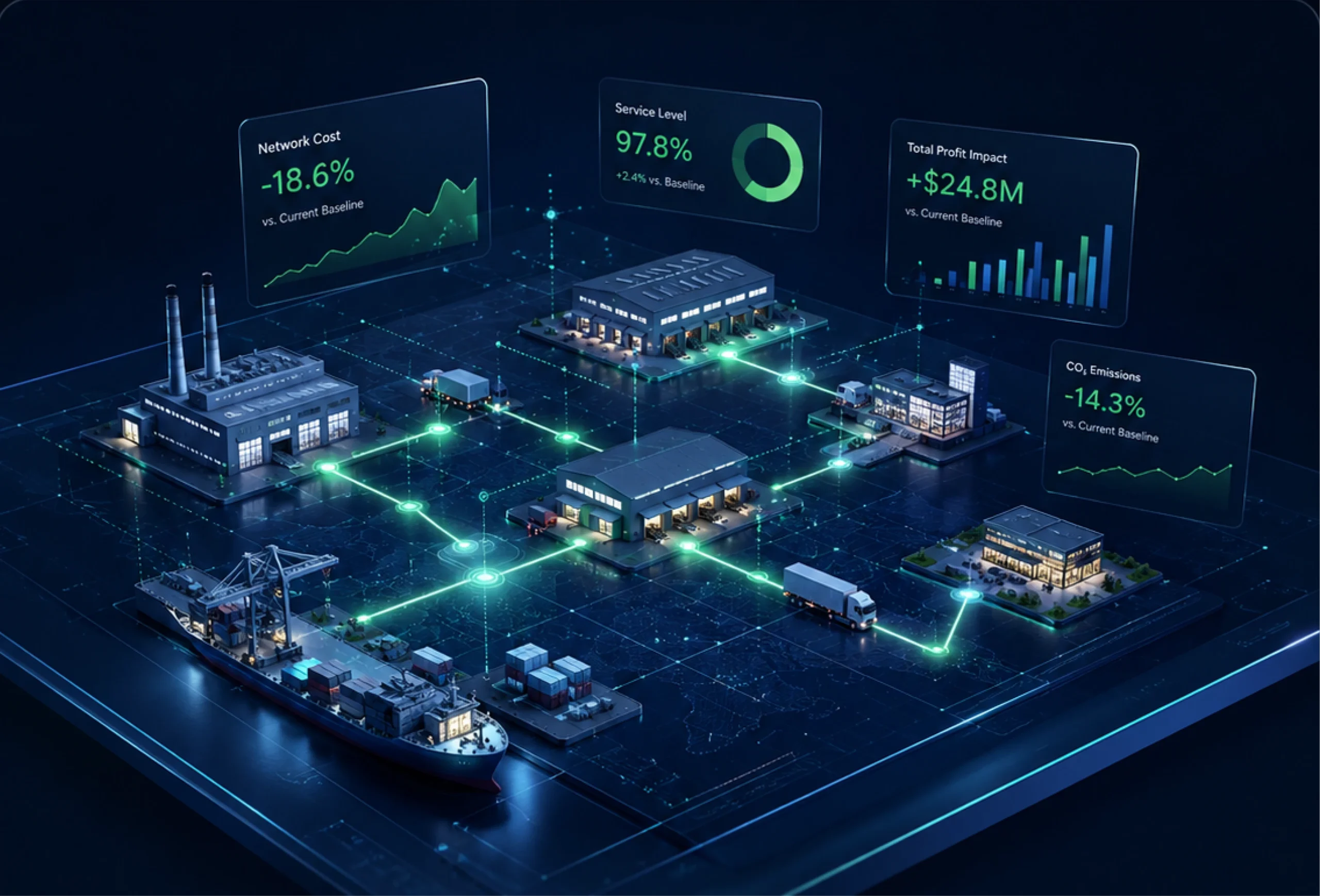


Supply chain network design is the strategic process of determining how your supply chain is physically structured. It covers the number and location of facilities, how goods flow between them, where inventory is positioned, which transport modes connect each node, and how sourcing decisions feed into the overall configuration.
This is different from supply chain management, which handles the day-to-day running of operations. Network design handles the structural questions that shape what is possible operationally and what it costs.
Getting network design right has a direct financial impact. Companies with optimized supply chain networks operate with up to 15% lower costs and hold more than 50% less inventory than those that have not systematically redesigned their networks.
In this guide, we’ll explain what supply chain network design involves, what decisions it covers, what factors drive those decisions, and what network design software supports the process.
What Does Supply Chain Network Design Actually Cover?
Supply chain network design covers five interconnected decision areas. Each one affects cost, service level, and resilience across the whole network.
Facility location and number
Deciding how many facilities you need. It includes warehouses, distribution centers, manufacturing plants and where they should be positioned relative to suppliers, production sites, and customers. This is the most consequential network design decision because facility locations are difficult and expensive to reverse.
Inventory positioning
Determining where to hold stock across the network and how much to hold at each node. Inventory positioning is a network design decision, not just an inventory management one — where you hold stock affects your total safety stock requirement, your service levels, and your transport costs simultaneously.
Transportation flows and modes
Identifying the optimal routes and transport modes connecting each node. This includes decisions about which DC serves which customer geography, whether to use FTL or LTL on specific lanes, and how to structure inbound flows from suppliers.
Sourcing and supplier network
Sourcing and supplier network tells where suppliers are located and how they connect into your production and distribution footprint. Supplier location determines lead times, which affects inventory requirements, which affects network cost. These decisions interact and need to be modelled together.
Scenario and resilience planning
Testing how the network performs under different conditions — demand changes, supplier disruptions, tariff shifts, or new market entries. A network designed only for average conditions carries structural risk.
Key Factors That Drive Supply Chain Network Design Decisions
The main factors that drive supply chain network design decisions are:
1. Customer geography and service requirements
Where your customers are and what delivery lead times they expect determines which distribution configurations can realistically serve them. A network designed without hard service level constraints will optimize cost at the expense of delivery performance.
2. Demand volume and variability
How much demand you have and how variable it is by region and product affects how many facilities you need and where they should be. High variability typically favours more distributed stock positions. Stable, predictable demand can support centralised inventory models.
3. Supplier and production location
Where your raw materials and production capacity sit determines the starting point for all outbound distribution flows. Changing your sourcing geography, whether through nearshoring, reshoring, or diversification directly changes the optimal distribution footprint.
4. Freight costs and transport infrastructure
The cost and availability of transport modes between potential facility locations affects which configurations are cost-effective. This changes over time as freight rates shift, which is why network models need to be updated regularly rather than treated as static plans.
5. Inventory carrying costs
The cost of holding stock is a function of the network design. More distributed networks hold more total inventory but deliver faster. The right balance depends on your service requirements and your cost-to-serve targets for different customer segments.
6. Regulatory and tariff environment
In 2026, tariff changes have made this factor more significant than it was five years ago. Where goods cross borders, what duties apply, and how trade rules might change all affect the cost of different sourcing and distribution configurations.
7. Resilience requirements
How much redundancy the network needs to absorb disruptions without failing service commitments. Single-source, single-route networks are cheap to run but fragile. Networks with alternative sourcing and distribution options cost more to maintain but protect revenue continuity.
How Supply Chain Network Design Reduces Costs
Supply chain cost reduction comes from the structure of the network, not just how well it is operated. A poorly structured network with too many underutilized DCs, routes that were designed for old demand patterns, inventory spread across the wrong locations will absorb cost regardless of how efficiently the day-to-day operations are run.
The mechanism works in three ways.
Facility rationalization
Consolidating two underutilized distribution centres into one right-sized facility eliminates duplicate fixed costs — rent, staffing, systems, utilities — while creating inventory pooling benefits that reduce total safety stock requirements across the network. The savings compound.
Transportation lane optimization
A network designed around current demand concentrations produces shorter average routes and higher load factors on the lanes that remain. Both reduce per-unit transport cost without any change to carrier contracts or operational processes.
Inventory reduction
Companies with optimized supply chain networks hold more than 50% less inventory than those that have not redesigned, according to Invesp. That reduction is a direct consequence of positioning stock correctly relative to demand, not of managing existing stock more tightly.
The results are measurable.
Longi saved millions of dollars in logistics costs after redesigning their European supply chain with Sophus.
Lee Kum Kee achieved over $20 million in sustainable savings from a cost-to-serve led network redesign across their global distribution network.
These outcomes reflect what happens when supply chain best practices are applied at the network design level, not just in day-to-day operations.
Supply Chain Network Design vs Supply Chain Management
Supply chain network design is the strategic layer. It determines the structure of your supply chain. How many facilities, where they are, how goods flow between them, where inventory sits. These decisions happen infrequently but have long-lasting cost and service implications.
Supply chain management is the operational layer. It handles how the network you have designed is run day to day. Demand planning, replenishment, carrier management, warehouse operations. These decisions happen continuously within the structure the network design has created.
The distinction matters because many companies invest heavily in operational optimization. They want better planning software, smarter routing, tighter inventory management without addressing the structural decisions that set the ceiling on what is achievable.
The difference is simple but important. Here is how supply chain network design compares to supply chain management.
| Aspect | Supply Chain Network Design | Supply Chain Management |
|---|---|---|
| Focus | Strategic structure of the network | Day-to-day execution |
| Decisions | Facility locations, network size, flows, inventory placement | Planning, replenishment, routing, warehouse operations |
| Frequency | Infrequent, every 1–2 years | Continuous |
| Impact | Long-term cost, service, and resilience | Short-term efficiency within constraints |
A poorly designed network is expensive to run regardless of how well it is managed.
Real Examples of Supply Chain Network Design in Practice
Hisense operates a complex distribution network across Africa with multiple tiers, limited visibility, and high logistics costs. The company carried out a full network review using Sophus, focusing on transportation planning and distribution design. This led to the relocation of regional hubs and a restructuring of warehouse positions. The result was a 3% reduction in operational costs and a 15% improvement in productivity.
LonGi faced a different challenge in Europe. Its distribution network had grown over time without a clear design and was not aligned with service requirements. The company used Sophus to redesign the network, modeling optimal distribution configurations across the region. This resulted in millions of dollars in logistics cost savings.
Supply Chain Network Design Software: What to Look For
Supply chain network design software models your full network at once. It connects facility locations, inventory positioning, transport flows, demand patterns, and service constraints in a single model. When one variable changes, you see the impact across cost and service before making a decision.
This is different from tools that optimize parts of the network in isolation. Route planning improves how goods move within your current structure. A warehouse system improves efficiency inside facilities. Network design software answers a deeper question. It evaluates whether the structure itself is right.
The core capabilities to look for in supply chain network design software:
- Greenfield analysis to identify optimal facility locations from scratch
- Brownfield optimisztion to redesign an existing distribution footprint
- Scenario planning to test changes before committing capital
- Automated data integration so the model stays current
What separates advanced platforms from basic ones:
-
- Solver speed: How quickly the tool evaluates complex models with hundreds of facilities and thousands of demand points
- Data integration: Whether it connects directly to your ERP or requires manual preparation
- Scenario flexibility: Whether planners can run what-if analysis without specialist support
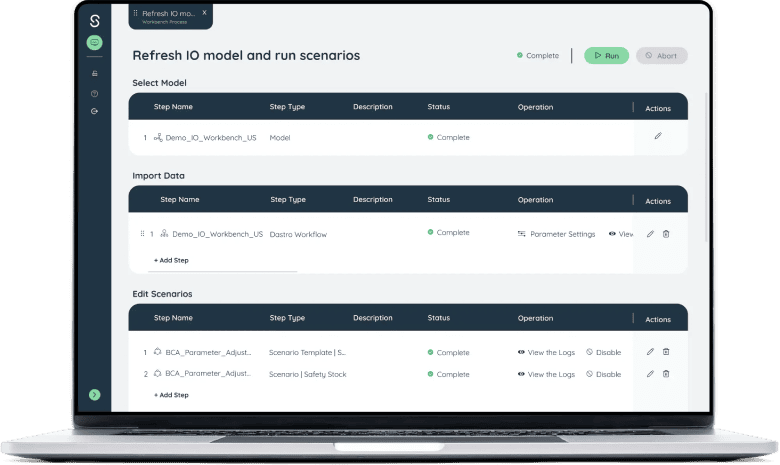
Sophus builds a working baseline model from ERP data in 48 hours and runs complex network scenarios 50 to 100 times faster than traditional solvers. This changes how often teams can run scenarios and how much complexity they can handle.
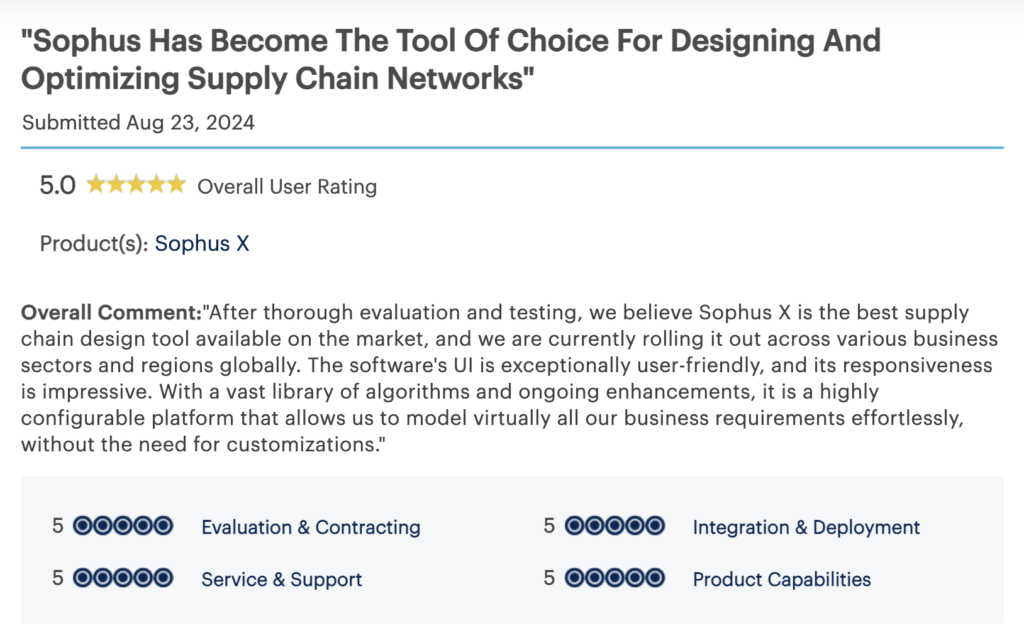
Here’s what users say about Sophus on Gartner Peer Insights.
When evaluating platforms, it helps to understand how these capabilities fit into broader supply chain design best practices, especially when decisions affect long-term cost and service performance.
Most teams spend more time on data preparation than on actual analysis. Sophus builds a working network model from your ERP data in 48 hours.
Contact Sophus and see your supply chain modeled, not a simplified example, your actual network.
Is Your Supply Chain Network Built for Today?
Supply chain network design is the structural layer that determines what your supply chain costs and what it can deliver. Getting it right produces savings that operational improvements alone cannot reach.
The companies achieving the most significant cost reductions are not doing so by working harder within an existing network. They are asking whether the network itself is built correctly for their current reality.
Your network is worth understanding properly. Request a Demo with Sophus, bring your data and we will show you what Sophus finds.
FAQs
What is supply chain network design?
Supply chain network design defines the structure of your supply chain, where facilities are, how goods move, and where inventory sits. It is a strategic process that sets long-term cost and service performance.
What are the key factors in supply chain network design?
Key factors include demand patterns, customer locations, supplier and production sites, transport costs, and inventory levels. Network optimization evaluates all of these together to find the best overall configuration.
What is the difference between supply chain design and supply chain management?
Supply chain design defines the structure of the network. Supply chain management runs daily operations within that structure. Optimization at the design level sets the limit for what operations can achieve.
What software is used for supply chain network design?
Supply chain network design software models the full network and runs optimization scenarios across cost, service, and risk. Platforms like Sophus build models quickly and allow teams to test multiple configurations.
How does supply chain network design reduce costs?
Network optimization reduces costs by aligning facilities, flows, and inventory with actual demand and cost drivers. Companies with optimized networks can reduce costs and inventory significantly compared to unoptimized setups.